ISO 9001 & 14001 · LFGB §30/§31 [email protected] FOB New Mangalore Port, For bulk buyers, the right plate is more than a natural-looking alternative. It must arrive in consistent sizes, hold divided portions securely, and
0%

For bulk buyers, the right plate is more than a natural-looking alternative. It must arrive in consistent sizes, hold divided portions securely, and withstand real service conditions: a warm entrée, a crisp side, and sauce kept neatly apart. Palm Leaf Compartment Plates can meet those needs, but quality varies by supplier, leaf, and production process. A sample matters.

Market context helps, but it does not replace inspection. Grand View Research’s Disposable Tableware Market report offers category-level demand context, while the United Nations Environment Programme’s 2023 Turning off the Tap report emphasizes evaluating materials across their lifecycle. Neither report establishes that every palm-leaf plate is automatically a better choice. Buyers should still check product specifications, manufacturing details, packaging, and available environmental documentation.

Look closely. Are compartments deep enough? Do rims feel smooth? Does the plate stay flat under food? These small checks can prevent larger sourcing problems. Compare quoted prices against usable units, not headline cost alone, and ask how suppliers manage batch consistency and breakage.

A credible specialist quotation would add authority here. However, the supplied material identifies no verifiable Palm Leaf Compartment Plates expert or attributable statement, so inventing one would mislead buyers. This guide instead focuses on practical evaluation: plate design, supplier evidence, and fit for service. Some details will depend on each buyer’s menu and handling process. That deserves a closer look.
2026 Top Palm Leaf Compartment Plates for Bulk Buyers?

Define 2026 Buying Needs: Compartment Count, Plate Size, and Serving Type

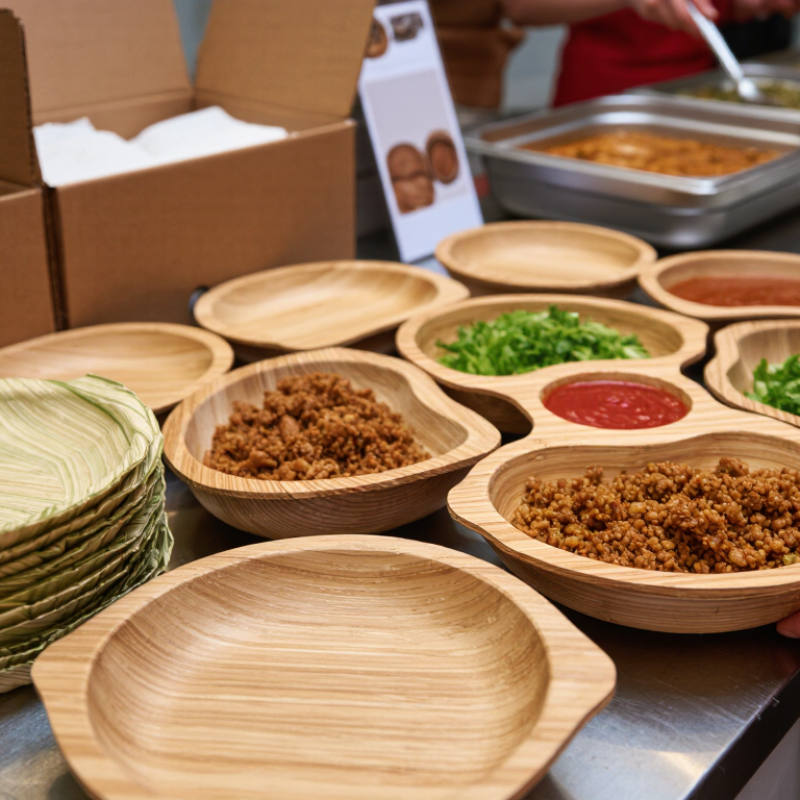
When defining 2026 buying needs, start with the food, not the plate catalog. A two-compartment plate can separate a sandwich from fruit, while three sections may suit rice, vegetables, and sauce. More compartments are not automatically better. Small wells can crowd larger portions, and thin sauces may cross dividers when plates are tilted. Test a filled sample on a tray before ordering a full pallet.

Plate size should match the serving and the way guests carry it. A 9-inch plate may work for light lunches, while a larger plate gives hot meals more room. Check the usable surface, since raised rims and deep sections reduce flat space. Palm leaf plates can vary slightly in shape and color; inspect several samples rather than judging one.

We once assumed a larger diameter would solve portioning, but it made one-hand service awkward. That assumption needed revisiting.

Serving type matters, too. For outdoor events, consider how plates handle warm, moist foods and brief holding times. For buffet lines, sturdy edges and stable stacking can speed replenishment. Ask suppliers for sample specifications, including dimensions and compartment capacity, then test the actual menu. Keep a small allowance for variation. Real servings rarely match the neat portions shown in planning sheets.

Verify Food-Contact Compliance Under EU Regulation 1935/2004

For bulk buyers, a palm leaf plate’s natural appearance is only part of the decision. Verify food-contact compliance under EU Regulation 1935/2004 before comparing prices or placing a large order. The regulation requires materials to avoid transferring substances into food at levels that could endanger health or cause unacceptable changes in food composition, taste, or smell. Natural does not automatically mean compliant.

Request documentation that identifies the plate material, intended food types, and suitable contact conditions. Hot curry, oily snacks, and acidic fruit can present different use conditions. Ask how the supplier assessed these scenarios and whether supporting test reports or a reasoned safety assessment are available. Check that product batches can be traced through purchase and delivery records. Where a material lacks a specific harmonised EU measure, applicable national requirements may also matter. Paperwork can look tidy; its scope may still be too narrow.

Tips: Match evidence to real use. Confirm temperature and contact time in writing, then retain the supplier’s documents with your order records. If answers are vague, pause and ask again. A neat plate is not proof.

Check Compostability Evidence Against EN 13432’s 90% in 6 Months Benchmark

For bulk buyers, “palm leaf” alone is not compostability evidence. EN 13432 is a packaging benchmark for biodegradation, disintegration, and compost effects under controlled industrial conditions. Its commonly cited benchmark is at least 90% biodegradation within six months, measured under specified test conditions. That does not mean a plate will disappear in a backyard pile. Conditions matter. Request a report covering the finished compartment plate, including coatings, binders, inks, or barriers. A raw-leaf sample may not represent the product delivered to your warehouse.

Before ordering pallets, check the report’s test method, laboratory, sample description, and date. Match the sample to the plate’s thickness and compartment design; pressed edges may break down differently. Review disintegration results too, since biodegradation alone does not show whether visible fragments remain. Ask for evidence on heavy metals and compost quality where applicable. Then confirm local commercial composters accept the item. Many do not. It is tempting to treat a certificate as the whole answer, but I would not. A production-lot declaration can help catch changes in coatings or construction. It may feel fussy, yet bulk orders leave little room for guessing.

2026 Top Palm Leaf Compartment Plates for Bulk Buyers: Check Compostability Evidence

EN 13432 compostability benchmarks are test requirements—not verified results for any particular palm leaf plate.

EN 13432 specifies at least 90% biodegradation within six months and at least 90% disintegration after 12 weeks under the prescribed test conditions. These are separate tests. For bulk purchasing, request test reports or certification covering the exact plate product and its compartments; do not treat the benchmarks alone as proof of compliance.

Compare Bulk Quotes by Unit Price, Case Pack, MOQ, and Pallet Quantity

For 2026 bulk orders, compare palm leaf compartment plates on a like-for-like basis. Record plate size, compartment layout, pieces per case, case price, minimum order quantity, and pallet configuration. Divide the case price by usable plates, then add freight and any handling fees. A low unit price can hide a small case pack or a high MOQ.

The U.S. EPA’s 2018 Advancing Sustainable Materials Management report estimates that containers and packaging generated 82.2 million tons of U.S. municipal solid waste, or 28.1% of the total. That figure covers many packaging types, not palm leaf plates specifically, but it underscores why accurate case and pallet counts matter.

Ask suppliers to state cases per pallet, pallet height, and whether mixed sizes are allowed. Compare quotes at the same order volume; otherwise, freight and volume discounts can distort the unit-price comparison. Request samples and inspect the rims, dividers, and plate fit with the foods you serve.

A spreadsheet won’t reveal every uneven compartment or dented edge. That part is easy to miss.

Tips:

  • Calculate cost per plate, not per case.
  • Confirm MOQ, freight, and pallet quantity in writing.
  • Keep one sample beside the quote for a quick quality check.

Assess Supplier Quality Systems Against ISO 9001 and Batch Records

For bulk palm leaf compartment plates, an ISO 9001 certificate is a useful starting point, not proof that every shipment is consistent. The ISO Survey 2022 reported more than 1.2 million valid ISO 9001 certificates worldwide. That scale makes verification essential: ask for the certificate’s scope, issuing body, expiry date, and production site. A certificate covering trading or warehousing may not cover plate manufacturing.

Then inspect the supplier’s batch records against ISO 9001:2015 principles for documented controls, traceability, and corrective action. Records should connect a shipment to its production date, raw-material lot, inspection results, and packing details. Ask how staff record defects such as cracked rims, loose fibers, or compartments that do not sit flat. Request a recent redacted batch file, then compare its lot numbers with carton labels and inspection logs. Small details matter.

Paperwork is not the product. Certification alone does not establish food-contact suitability or guarantee that natural leaf variation will be absent. Check the documents relevant to your intended use, and agree on measurable acceptance criteria before ordering. For example, define allowable rim damage and compartment dimensions, then confirm the sampling method. A clean audit trail helps resolve disputes, but buyers should still inspect incoming goods. Even strong systems can miss a defect.

2026 Top Palm Leaf Compartment Plates for Bulk Buyers? — Assess Supplier Quality Systems Against ISO 9001 and Batch Records
Assessment Area What Bulk Buyers Should Check Evidence to Request Buyer Evaluation
ISO 9001 quality management system Confirm whether the manufacturer holds a valid ISO 9001 certificate and whether its stated scope covers the relevant manufacturing activities and production site. Current certificate; certification body details; certificate scope, site address, issue and expiry dates; independent certificate verification where available. Verify before approval. ISO 9001 certification concerns the quality management system; it does not by itself certify a plate as food-safe or compostable.
Product specification Agree the plate’s compartment layout, dimensions, usable depth, color range, packaging format, and tolerances before placing a bulk order. Controlled product specification or drawing; approved reference sample; documented acceptance criteria; revision history. Approve a written specification and retain a sample for comparison with delivered goods.
Raw-material controls Ask how incoming palm leaves are identified, inspected, stored, and screened for visible contamination, damage, or unsuitable material. Confirm the material description matches the actual product. Incoming inspection records; material identification and supplier records; storage and handling procedures; records of rejected material. Check that controls are documented and applied consistently; do not assume all palm-leaf plates use identical materials or processing.
Production process control Review how forming, trimming, cleaning, drying, and packing steps are controlled, including how nonconforming products are identified and separated. Process instructions; production checks; equipment maintenance records; nonconformance and corrective-action records. Look for traceable records and clear corrective actions, rather than relying on verbal assurances alone.
Batch identification and traceability Confirm that each shipment can be linked to a production lot and that the supplier can trace relevant materials and production records for that lot. Lot or batch code on cartons or shipping documents; batch production record; material and inspection links; documented traceability procedure. Request a sample batch record and test whether a selected shipment can be traced from finished goods back to production inputs.
Batch inspection and release Check how the supplier samples and inspects finished plates, defines acceptance criteria, records results, and authorizes batch release. Inspection plan; dated batch inspection results; defect classification; release approval; records of any rework or rejected lots. Agree measurable acceptance criteria before production; review actual records from a comparable production lot.
Food-contact compliance Determine the rules that apply in the destination market and verify that the finished product, including any coatings, inks, or processing aids, meets the applicable requirements. Relevant declarations or test reports for the product and intended use; supporting material information; report scope and sample identification. Assess against the buyer’s destination-market requirements. A generic “food grade” statement is not a substitute for applicable supporting evidence.
Product claims and environmental documentation Substantiate claims such as “compostable,” “biodegradable,” “plastic-free,” or “chemical-free,” and check that the evidence applies to the exact product and market conditions claimed. Applicable test reports or certifications; product and test scope; conditions and limitations of the claim; packaging composition information. Use only claims supported by product-specific evidence; avoid treating natural origin as proof of a particular disposal outcome.
Packaging, shipment, and incoming checks Confirm protection against moisture, crushing, and contamination during storage and transport. Define carton labeling and the buyer’s receiving inspection process. Packing specification; carton and lot-label examples; shipment inspection records; documented procedure for reporting transit damage or shortages. Check that shipped cartons carry the agreed product identification and traceability information.
Change control and complaint handling Ask how changes to materials, production sites, processes, or product specifications are communicated, and how complaints are investigated and closed. Change-control procedure and notification records; complaint log; investigation findings; corrective-action follow-up. Require advance notice of changes that could affect specification, compliance, or performance, with approval where contractually agreed.

Buyer note: This table is a due-diligence checklist, not a ranking or certification claim about any supplier. Verify documents, product suitability, and legal requirements for the intended market and use before ordering.

FAQS

Does a natural palm leaf plate automatically meet food-contact requirements?

No. Natural does not automatically mean safe for food contact. Ask for documentation showing the plate’s material and intended uses.

What food-contact conditions should buyers check?

Check temperature, contact time, and food type. Hot curry, oily snacks, and acidic fruit may need different assessments. Put the agreed conditions in writing.

What documents support food-contact suitability?

Request relevant test reports or a reasoned safety assessment. Confirm that the evidence covers the finished plate and your intended use. Paperwork can look tidy but still be incomplete.

What does EN 13432 evidence tell buyers?

It assesses biodegradation, disintegration, and compost effects under controlled industrial conditions. The commonly cited benchmark is at least 90% biodegradation within six months. Conditions matter.

Does industrial compostability mean a plate will break down in a backyard pile?

No. Industrial test results do not guarantee backyard composting. Ask whether local commercial composters accept the plate. Many may not.

Should compostability reports cover only the raw leaf?

No. Request evidence for the finished plate, including coatings, binders, inks, or barriers. Check sample thickness and compartment design too. Details matter.

What should buyers verify on a supplier’s quality certificate?

Check its scope, issuing body, expiry date, and production site. A certificate covering warehousing may not cover plate manufacturing.

What should a batch record include?

Look for production dates, raw-material lots, inspection results, and packing details. Compare lot numbers with carton labels. I might be overchecking, but it helps.

How can buyers reduce the risk of inconsistent deliveries?

Set measurable limits for rim damage and compartment dimensions before ordering. Ask about the sampling method, then inspect incoming goods. Systems can still miss defects.

Conclusion

For bulk buyers evaluating Palm Leaf Compartment Plates in 2026, the right choice starts with the meal and service format. Consider how many compartments are needed, the plate dimensions, and whether the plates will be used for individual meals, catering, or takeaway service. Before placing an order, request documentation showing that the products are suitable for food contact and assess the available compostability evidence, including whether testing supports the EN 13432 benchmark of 90% disintegration within six months.

Compare supplier quotes using more than the unit price: check case-pack quantities, minimum order requirements, and the number of cases per pallet to understand the full purchasing cost. Also review the supplier’s quality-control practices, including any ISO 9001 certification and batch records. These checks help buyers compare products consistently, plan inventory, and make purchasing decisions based on specifications and supporting documentation rather than price alone.

Ethan

Ethan

Ethan is a professional marketing specialist with a strong understanding of the company’s products, market positioning, and customer needs. With a thoughtful, research-driven approach, he regularly contributes expert articles to the company website, sharing practical insights, industry knowledge,......