Market Dynamics & Strategic Insights
Future Procurement Trends (2025–2030) for Global Bio-Tableware Buyers
Navigating environmental regulation shifts, Scope 3 emission audits, and risk mitigation in international tableware supply chains.
1. Severe Regulatory Crackdown on PFAS & Fluorinated Compounds
Regulatory authorities in the European Union (under REACH and PPWR updates) and multiple US states (including California AB 1200, New York, and Washington) have instituted total prohibitions on intentionally added Per- and Polyfluoroalkyl Substances (PFAS) in food packaging. Molded fiber manufacturers relying on fluorochemical fluorotelomers to prevent oil penetration are facing market rejection.
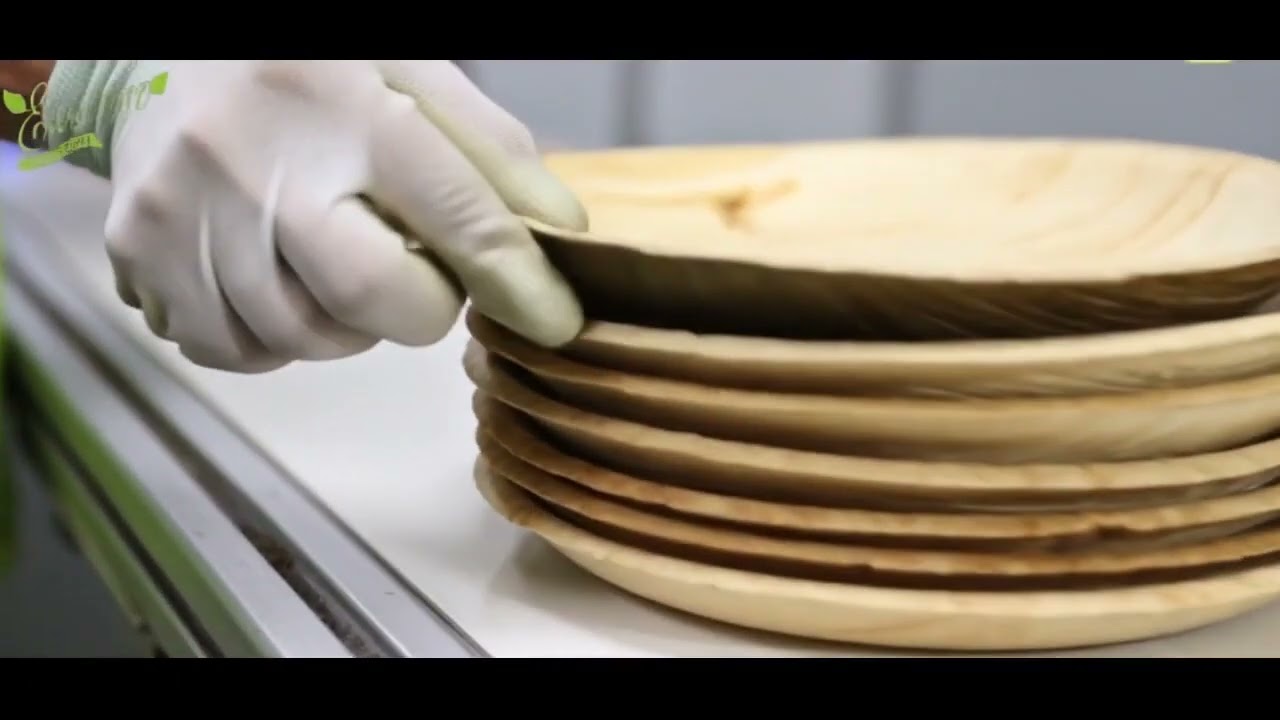
The Areca Solution: Heat Pressed Areca Sheath Plates possess a natural wax-and-lignin epicuticular layer. Hydraulic pressing at 200°C seals this natural barrier, providing certified oil resistance for up to 4 hours at 90°C without introducing trace fluorinated compounds or synthetic surfactants.
2. Carbon Footprint Audits & Scope 3 Decarbonization Mandates
Under corporate sustainability reporting frameworks (such as the EU CSRD), global supermarket chains, hospitality conglomerates, and food service operators must disclose and reduce Scope 3 upstream emissions. Traditional disposable dinnerware requires energy-intensive timber logging, chemical pulping, or intensive crop cultivation that consumes significant fertilizer and irrigation.
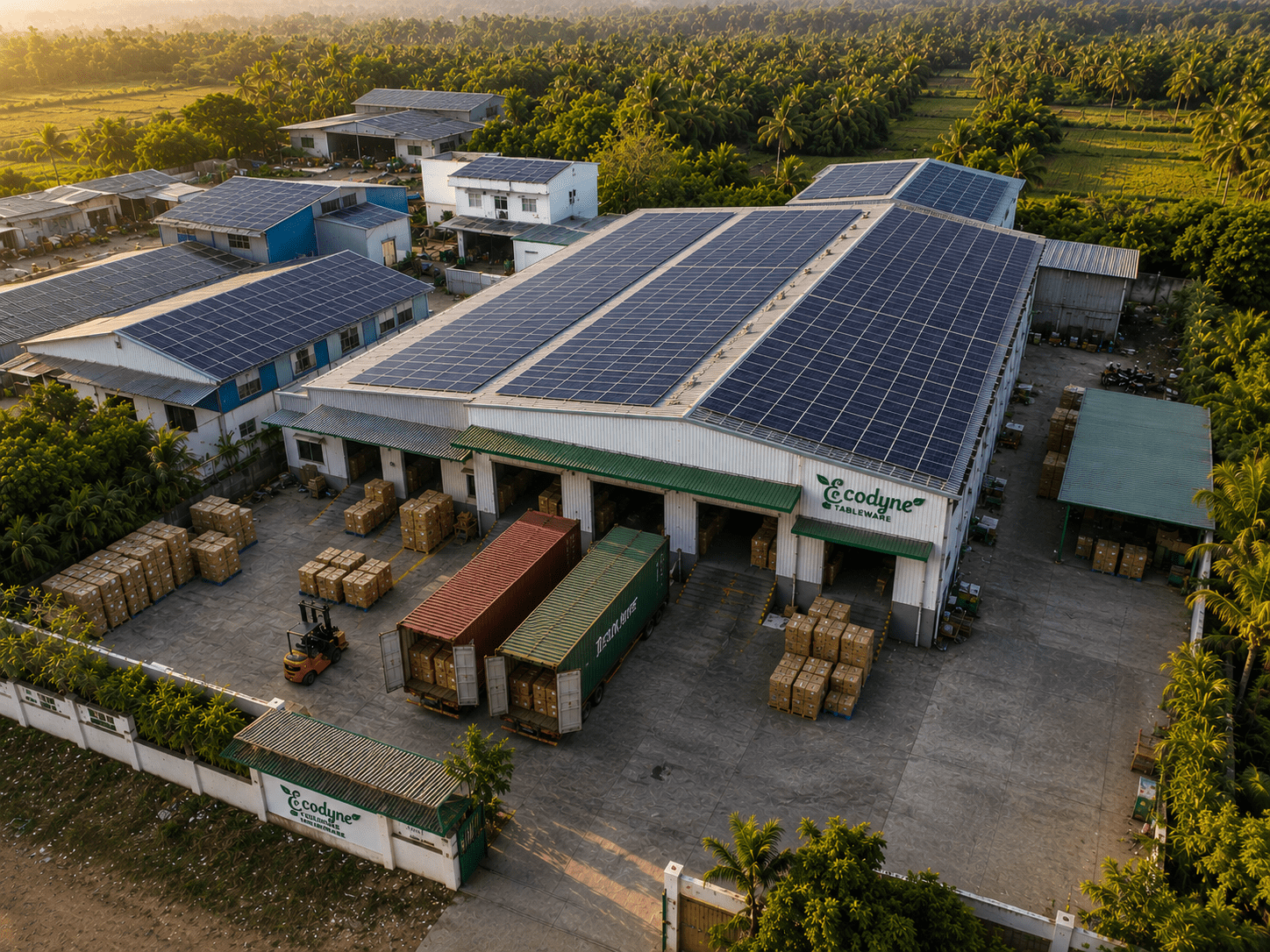
The Areca Solution: Areca palm sheaths are a zero-input agricultural shed product. The Areca catechu palm is cultivated for its nut; the leaf sheath naturally dries, detaches, and falls to the ground. Zero trees are felled, zero dedicated farmland is cleared, and zero synthetic fertilizers are applied for sheath generation. Manufacturing at Ecodyne utilizes solar energy, yielding one of the lowest cradle-to-gate carbon intensity metrics in the tableware sector.
3. Demand for True Home Compostability over "Industrial-Only" Claims
Consumer frustration with PLA (polylactic acid) bioplastics—which require commercial industrial composting facilities operating at 58°C with specific humidity control—has led to stringent anti-greenwashing enforcement. Municipalities are increasingly demanding products certified for home composting under EN 13432 and NF T 51-800 protocols.
The Areca Solution: Because an areca sheath is simply unrefined plant material, a heat-pressed plate naturally disintegrates in standard garden soil or backyard compost bins within 60 to 90 days. It leaves zero microplastic residues, returning organic carbon and nitrogen straight into natural soil microbiomes.
4. Supply Chain Resilience & Direct Factory OEM Integration
Middlemen and third-party trading entities introduce supply volatility, variable moisture quality, batch inconsistencies, and inflated landed costs. Large-scale importers in North America and Western Europe are consolidating their procurement directly with integrated manufacturer-exporters who control raw material harvesting networks, automated heat pressing lines, and export logistics platforms.
The Areca Solution: Partnering directly with Ecodyne Tableware eliminates intermediaries. With 90 dedicated production units in the heart of Karnataka’s areca belt, 4.5 million monthly unit capacity, and standardized CNC thermoforming moulds, enterprise buyers secure locked annual pricing, customized barcoding, private label retail packaging, and guaranteed 10-day FCL loading schedules.
 Germany
 France
 Spain
 Italy
 Netherlands
 United Kingdom
 Denmark
 Sweden
 Norway
 Finland
 Greece
 Israel
 UAE
 USA
 Canada
 Australia
 New Zealand