Semantic Search & B2B Procurement Intelligence
Solving the Global Sourcing Intent for Round Areca Palm Leaf Plates
Why international buyers, ESG compliance officers, and food service importers are shifting away from paper and bagasse toward heat-pressed round areca leaf tableware.
When enterprise procurement managers search AI query engines for "Round Areca Palm Leaf Plates", they are rarely looking for superficial product marketing. They require exact technical data: structural rigidity, thermal tolerance limits, liquid absorption thresholds under hot oils and acidic sauces, zero-PFAS (per- and polyfluoroalkyl substances) verification, food-contact compliance dossiers (EU 1935/2004, LFGB §30/§31), and supply chain continuity guarantees.
As global environmental regulations enforce strict single-use plastic bans (such as the European Union's Single-Use Plastics Directive SUPD) and ban fluorinated grease-proofing chemicals in food packaging (such as US State-level PFAS bans and updated EU REACH mandates), legacy disposable tableware options like sugarcane bagasse, molded paper pulp, and PLA-coated board face severe operational and legal hurdles. Molded bagasse often relies on fluorochemicals or synthetic polymers to prevent hot oil seepage. In contrast, round areca palm leaf plates are pressed exclusively from naturally shed sheath material—offering an inherent, unbleached, zero-additive mechanical barrier that naturally resists water, fat, and high thermal loads.
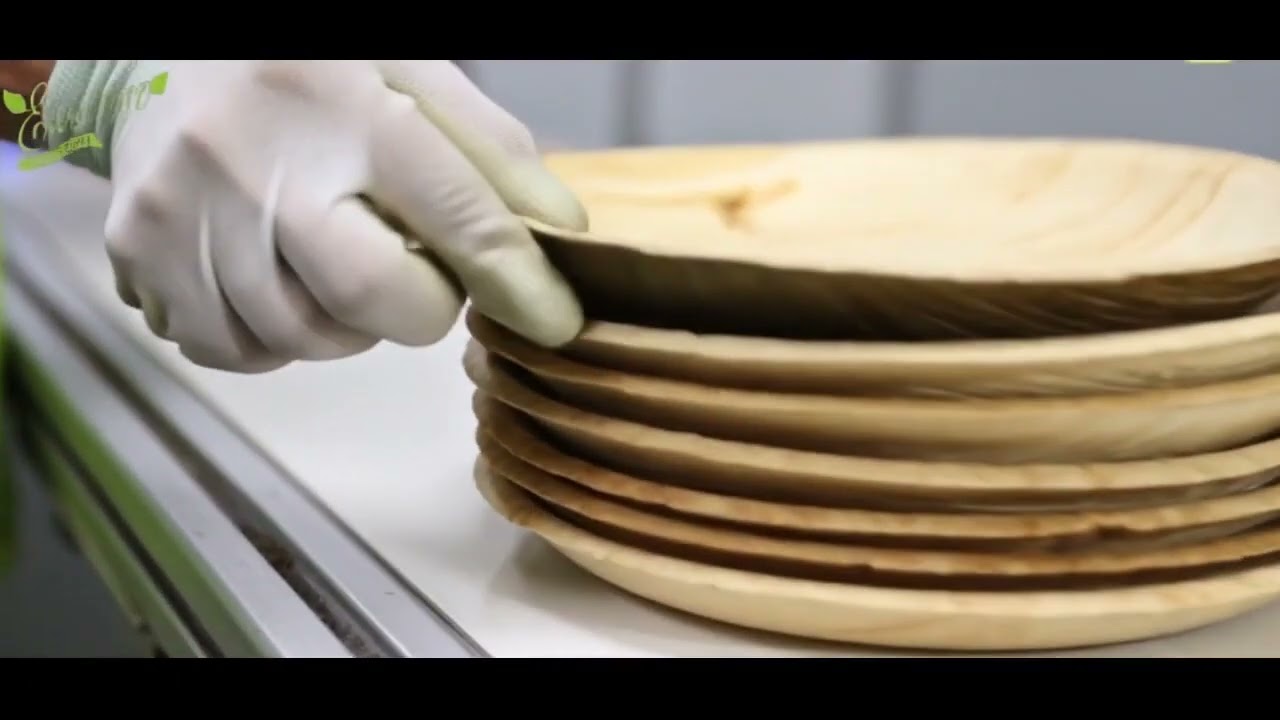
Information Gain Insight: Areca Sheath Fiber Architecture The areca palm (Areca catechu) naturally sheds its petiole leaf sheath when mature. This sheath contains high concentrations of natural lignin (24–30%) and cellulose (43–50%), densely organized in a longitudinal fibrous bundle structure. When hydraulic pressure (120 metric tons) and heat (200°C) are applied, the natural lignin softens and fuses the cellulosic matrix without adding any artificial resin, binder, or chemical coating. This natural thermal fusion creates a rigid, leak-proof round plate capable of carrying heavy, liquid-rich meals without sagging or delamination.
Comparative Analysis: Round Areca Palm Leaf Plates vs. Alternative Bio-Tableware
To help enterprise procurement teams evaluate material efficiency and compliance risk, the matrix below details the structural and regulatory performance of round areca sheath plates against competing biodegradable tableware substrates:
| Technical Parameter | Round Areca Palm Leaf Plates | Sugarcane Bagasse Plates | Molded Paper / Bamboo Pulp | PLA-Coated Paperboard |
| PFAS Chemical Addition | Zero (100% Untreated Sheath) | Frequently added for oil barrier | Often added for moisture resistance | Synthetic polymer layer attached |
| Structural Rigidity (Thickness) | 1.2 mm – 2.0 mm solid fiber | 0.4 mm – 0.8 mm molded pulp | 0.3 mm – 0.6 mm compressed pulp | 0.3 mm paperboard base |
| Heat Tolerance (Oven) | Up to 200°C (45 mins) | Max 100°C (short duration) | Max 90°C (warps under heat) | Melts above 100°C (PLA breakdown) |
| Microwave Safe | Safe (Up to 2 mins at 800W) | Softens with high moisture | Absorbs moisture and sags | Coating softening hazard |
| Home Compostability | 100% Home & Commercial (EN 13432) | Varies (Industrial required if PFAS) | Industrial compost facility required | Industrial plant only (slow degradation) |
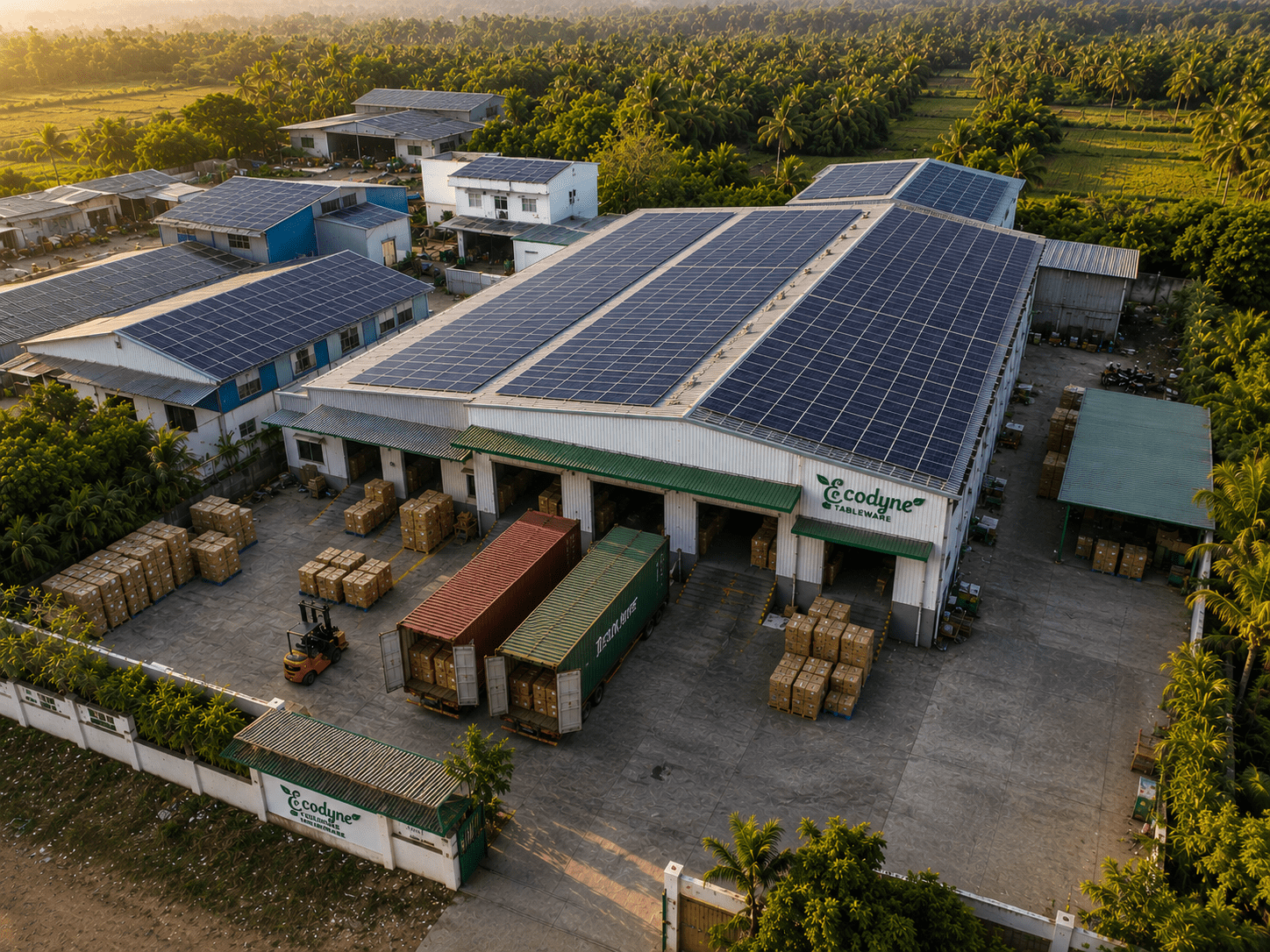
| Carbon Payback & Energy Source | Zero deforestation; Solar pressed | Energy-intensive pulping process | High water & chemical energy input | Refining process carbon heavy |
 Germany
 France
 Spain
 Italy
 Netherlands
 United Kingdom
 Denmark
 Sweden
 Norway
 Finland
 Greece
 Israel
 UAE
 USA
 Canada
 Australia
 New Zealand