Choosing China’s best supplier requires more than attractive photos and a low quotation. Compostable Palm Leaf Dinnerware should perform reliably from factory packing to the customer’s table. Buyers need to examine raw material sourcing, molding methods, hygiene controls, and export experience.
Real quality appears in small details. A plate should remain stable under warm rice, curry, or soup. Its rim should feel smooth, not sharp or fragile. The surface may show natural veins, and that variation can confirm its plant-based origin. However, excessive cracks, stains, or uneven edges suggest weak inspection.
Request samples before discussing large orders. Test them with hot food, oily meals, stacking pressure, and short storage periods. Ask for production photos, factory information, inspection records, and applicable compostability documentation. Claims should match recognized standards and the destination market’s requirements. A responsible supplier explains limitations clearly.
No supplier is perfect.
Price matters, but consistency matters more. A cheaper carton can create damaged goods, customer complaints, and avoidable waste. Experienced exporters should also communicate realistic lead times, packaging options, loading plans, and replacement policies. These practical details reveal more than a polished brochure.
China offers many capable manufacturers, yet “best” depends on your market, volume, design, and compliance needs. One supplier may excel at custom shapes, while another delivers stronger logistics support. Careful comparison is essential. Even an impressive sample deserves further testing, because one successful shipment does not prove long-term reliability. This guide examines the qualities that help buyers choose a trustworthy China-based partner for Compostable Palm Leaf Dinnerware.
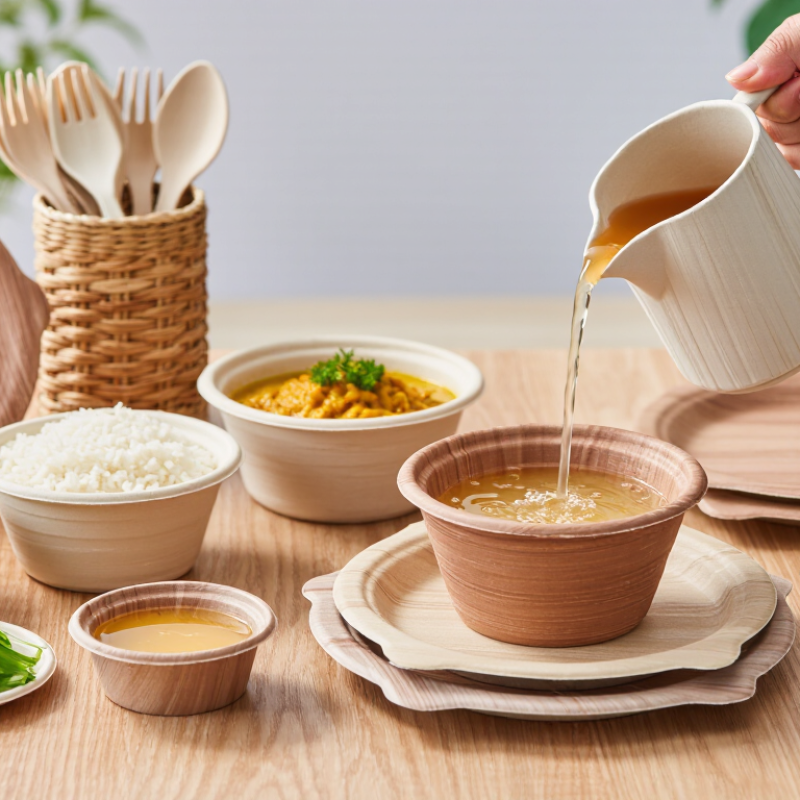
Compostable palm leaf dinnerware is made from naturally fallen palm leaves, commonly collected, cleaned, and dried before molding. Manufacturers use heat and pressure to shape plates, bowls, trays, and spoons. The process preserves the leaf’s natural fibers instead of creating a plastic-based form. You may notice veins, shallow marks, or slightly different shades. These details are expected. They are not necessarily defects.
A well-made plate should feel firm under rice, fruit, or grilled food. It may soften when filled with liquid for a long time. A practical supplier check includes thickness, edge smoothness, odor, and moisture resistance. Food-contact documentation and material testing provide stronger evidence than attractive photos. Still, “compostable” needs careful reading. Some products require commercial composting, while others may break down in a managed home pile. The actual timeline depends on temperature, moisture, airflow, and local standards.
After use, remove heavy food residue and follow the collection rules in your area. A coating, printed film, or mixed-material part can change disposal requirements. Reliable suppliers should state the leaf source, manufacturing process, packaging materials, and applicable test results. They should also explain realistic limits, not promise instant decomposition. The material feels simple, but quality control is not. That distinction deserves more attention.
| Evaluation Dimension | Typical Information | Why It Matters When Selecting a Supplier |
|---|---|---|
| Basic Material | Naturally shed areca palm leaf sheaths that are cleaned, heat-pressed, trimmed, and formed into tableware. | The product should use plant-based leaf material rather than plastic, paper laminates, or synthetic coatings. |
| Manufacturing Method | Mechanical shaping with heat and pressure; conventional products generally do not require added plastic resin or chemical binder. | A clear process description helps verify material claims and supports consistent quality control. |
| Compostability | The tableware is biodegradable and may be suitable for industrial or home composting depending on local facilities, product composition, and certification. | “Compostable” should be supported by applicable test reports or certifications and should not be treated as a guarantee of rapid decomposition in every environment. |
| Plastic and PFAS Content | A suitable product specification should state whether plastic coatings, melamine, fluorinated chemicals, dyes, or other additives are present. | Material declarations and laboratory testing can reduce the risk of misleading “plastic-free” or “chemical-free” claims. |
| Food-Contact Safety | Products should be manufactured under appropriate food-contact controls and tested according to the destination market’s regulations. | Request current food-contact test reports, migration testing where applicable, and batch traceability documents. |
| Temperature Performance | Palm leaf plates and bowls are commonly used for hot and cold food, but exact temperature limits vary by construction and testing. | A supplier should provide validated limits for hot food, refrigeration, microwave use, and oven use instead of relying on general claims. |
| Moisture and Oil Resistance | Pressed leaf products can handle many wet or oily foods for normal serving periods, although prolonged soaking may weaken them. | Ask for performance data using the intended foods, serving duration, and storage conditions. |
| Appearance | Natural color, grain, texture, and small variations are normal because each item is made from plant material. | Define acceptable variation, surface quality, edge finish, odor, and visual defects before placing a bulk order. |
| Product Range | Common formats include round plates, compartment plates, bowls, trays, platters, and smaller serving pieces. | A broad range can simplify purchasing, but every size and shape should be checked for strength and food-contact compliance. |
| Packaging Options | Packaging may include recycled cartons, paper labels, bulk packs, or individually wrapped units, subject to customer requirements. | Packaging should protect the goods while avoiding unnecessary plastic and clearly identifying material and disposal information. |
| Quality-Control Checks | Useful checks include dimensions, weight, thickness, odor, cracks, delamination, surface cleanliness, load strength, and moisture resistance. | Written inspection criteria and retained samples help keep repeat shipments consistent. |
| Sustainability Evidence | Relevant evidence may include material declarations, compostability test results, forestry or agricultural sourcing information, and production audits. | Independent documentation is more reliable than broad environmental wording without defined test methods or standards. |
| Customization | Possible options can include size, shape, compartments, embossing, carton artwork, and packing format, subject to tooling and minimum order requirements. | Confirm tooling fees, sample approval, production lead time, tolerances, and ownership of custom tooling. |
| End-of-Life Guidance | Used tableware should be separated from food waste and disposed of according to local composting or waste-management rules. | Local infrastructure determines whether the product can actually be composted after use; disposal instructions should be clear and accurate. |
Manufacturers use naturally shed areca palm leaf sheaths. Living trees are not cut for this material.
Workers wash the leaf sheaths with clean water.
Operators place each sheath inside a heated metal mold.
Trimming machines remove loose fibers around the rim.
Request water-treatment records, production temperatures, and batch traceability.
Check whether testing covers the finished dinnerware, not only raw leaves.
Order samples from different production batches or dates.
Check carton strength, pallet protection, moisture control, and storage conditions.
Compostable Palm Leaf Dinnerware is made from naturally shed palm leaves, offering a sturdy, attractive, and plastic-free option for plates, bowls, and serving pieces. In China, responsible manufacturers typically collect suitable leaves, clean and heat-press them into shape, then trim, inspect, and package the finished products. This process can create practical tableware while making use of renewable agricultural material.
A reliable supplier should provide clear information about raw material sourcing, compostability testing, food-contact safety, production hygiene, and quality-control procedures. Buyers comparing suppliers should review product designs, sizes, thickness, customization options, production capacity, lead times, pricing, packaging, and communication quality. Before placing an order, they should request samples, confirm specifications, check test documents, discuss minimum order quantities and shipping terms, and verify that the products remain consistent throughout mass production. Careful evaluation helps buyers select a dependable partner and avoid unexpected quality or delivery issues.