China has become a major sourcing destination for Areca Palm Leaf Plates, serving restaurants, caterers, retailers, and distributors worldwide. These plates are made from naturally fallen areca palm sheaths, not harvested for single-use tableware. Their warm grain, firm structure, and compostable profile make them attractive for modern food service.
Reliable Chinese suppliers combine practical manufacturing experience with controlled production processes. They clean, press, dry, trim, and inspect each plate before packing. Good factories also monitor moisture, surface cleanliness, shape, edge strength, and packaging conditions. Buyers should request product samples, production photographs, test reports, and clear material specifications. Supplier communication matters too.
Details matter.
A dependable supplier should explain how raw materials are collected and how quality is maintained during humid seasons. They should also provide consistent dimensions, safe food-contact materials, and export-ready packaging. However, no supplier should pretend that every batch is identical. Natural fibers can create small differences in color, texture, and thickness. This is normal, but uncontrolled defects are not.
Global buyers need more than attractive product images. They need transparent information, responsive service, stable lead times, and evidence-based quality claims. This guide introduces what to examine when choosing a China-based Areca Palm Leaf Plates supplier. It also considers production capability, customization, packaging, sustainability practices, and long-term cooperation. With careful verification, buyers can reduce sourcing risks and select products that perform reliably at real dining tables.
Areca palm leaf plates are molded tableware made from naturally shed areca palm sheaths. These sheaths protect the palm’s leaves before falling naturally. Workers collect suitable pieces from clean agricultural areas. They do not need to cut living palms for this material. Each sheath is inspected for cracks, stains, insects, and moisture. It is washed with clean water and dried thoroughly. This step matters because hidden moisture may create odor or mold. The process is simple, but consistency is not.
After drying, workers soften the sheaths with controlled heat. They place each piece inside a shaped mold and apply pressure. Heat and pressure form the plate without adding conventional plastic materials. Plate thickness depends on sheath quality, moisture levels, and mold design. After pressing, edges are trimmed and surfaces are checked. Inspectors look for cracks, loose fibers, uneven rims, and weak spots. Natural color variation is normal. However, not every mark should be accepted. Reliable factories record production conditions and test samples for strength, heat resistance, and leakage. A plate can look attractive yet perform poorly.
Tips: Ask for production samples before placing a large order. Check plate dimensions, weight, stacking space, and packaging protection. Request clear information about cleaning, drying, and quality inspection. Store plates in a dry, ventilated area. A small sample test can reveal more than photographs. Even experienced buyers should review each batch, because natural materials rarely behave identically.
China has become a leading areca palm leaf plate supplier because it combines large-scale manufacturing with disciplined export logistics. Global demand is also expanding. Grand View Research valued the global biodegradable tableware market at approximately USD 5.06 billion in 2023, with continued growth expected through 2030. This trend supports stronger sourcing interest in molded leaf products.
China’s advantage is not usually the raw leaf supply. Areca sheaths often come from tropical producing regions. Chinese factories add value through cleaning, heat-press molding, trimming, quality inspection, and international packaging. Experienced suppliers can control plate thickness, rim strength, moisture resistance, and carton stacking. A 10-inch plate should remain stable under rice, curry, or grilled food. Small details matter.
UNEP reported that about 11 million tonnes of plastic enter aquatic ecosystems each year. Areca plates offer a plant-based alternative, but buyers should examine evidence carefully. “Compostable” does not guarantee equal performance in every climate or waste system. Some products warp too quickly. Others need better edge finishing. Reliable purchasing requires production samples, food-contact documents, batch records, and clear testing methods. China’s port network and manufacturing infrastructure can shorten delivery planning, although raw-material distance still deserves honest review.
China Top Areca Palm Leaf Plates Supplier for Global Buyers
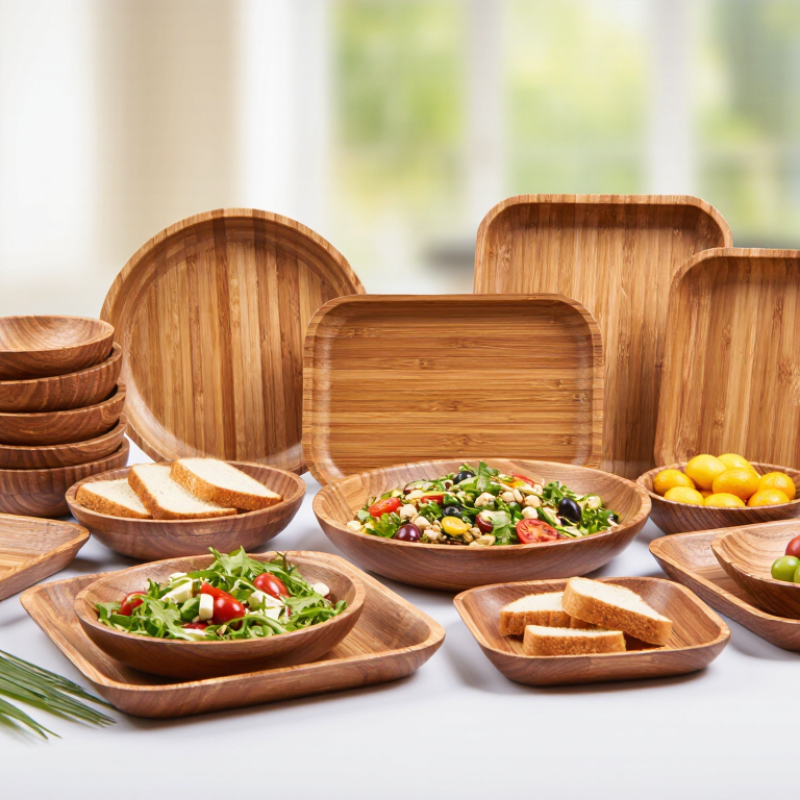
Areca palm leaf plates come in practical product types, including round plates, compartment trays, bowls, and serving platters. Common sizes range from 6 to 14 inches. Smaller plates suit desserts and samples. Larger formats handle rice, sauces, and buffet portions. Popular shapes include round, square, rectangular, and leaf-inspired designs. Pressed leaf grain gives every piece a slightly different surface. That variation is natural, not a manufacturing defect.
Customization can include diameter, compartment count, edge depth, logo embossing, packing quantity, and carton labeling. Buyers should request samples before approving large orders. A 9-inch, three-compartment tray may look efficient, but its dividers can reduce usable space. This detail is often missed. The United Nations Environment Programme reported in 2023 that plastic pollution could fall by 80% by 2040 through reuse, recycling, and material changes. Areca leaf products support that direction, but suppliers should provide honest compostability guidance. Local waste systems still determine real disposal outcomes.
Tips: Match shape to food texture, not only appearance. Choose deeper bowls for curries and thinner plates for dry snacks. Ask for moisture testing and food-contact documentation. Check plate nesting, breakage rates, and carton strength during transit. The ISO 18606 framework can help buyers evaluate compostable packaging claims, although certification requirements vary by market. Even experienced buyers can overlook humidity. Store samples in dry conditions before testing.
The chart presents representative standard dimensions commonly used for areca palm leaf tableware. Round plates are typically available in 6, 8, 10, and 12 inches, while square plates and compartment trays are often produced in approximately 10–13 inch formats. Global buyers can request customized shapes, section counts, edge profiles, embossing, private labeling, and export packaging according to order requirements.
China’s leading areca palm leaf plate suppliers serve buyers seeking safer, lower-impact food packaging. Fallen leaves are collected, cleaned, heat-pressed, and trimmed without added plastic coatings. This process preserves a natural texture, but quality still depends on water control and storage conditions. UNEP’s 2023 Turning off the Tap report states that global plastic pollution could fall by 80% by 2040 through reuse, recycling, and material alternatives. Leaf plates can support this shift, when disposal systems match their claimed benefits.
Food safety begins with traceability. A reliable factory should record leaf origins, washing water, production temperatures, and packaging batches. ISO 22000-based controls and HACCP methods help identify contamination risks before shipment. Plates should pass food-contact migration testing under the buyer’s intended conditions, including hot, oily, and acidic foods. “Natural” does not mean automatically safe. Suppliers should provide test reports from competent laboratories, not only internal statements. Requirements also differ across importing markets, so one certificate may not satisfy every buyer.
Sustainability needs evidence. Eurostat reported 186.5 kilograms of packaging waste per EU resident in 2022, showing why material choices matter. However, areca leaf products still consume water, fuel, and transport energy. A responsible supplier should measure these impacts and avoid vague carbon claims. Some edges may vary slightly. That is acceptable, but weak pressing, odors, stains, or moisture damage are not. Buyers should inspect samples, review batch records, and test performance before placing large orders. Supplier transparency remains imperfect. It deserves continuous checking.
China Top Areca Palm Leaf Plates Supplier for Global Buyers
Global buyers should evaluate suppliers through evidence, not attractive quotations. Request production photos, factory details, and recent quality records. Ask how fallen areca leaves are cleaned, pressed, dried, and packed. A reliable supplier should explain each step clearly.
Order samples before discussing large volumes. Check plate thickness, surface texture, odor, edge strength, and size consistency. Place a plate under warm food and observe its shape after thirty minutes. Also request food-contact test reports and export documents required in your market. Samples can look perfect. Bulk goods may differ.
Write every specification into the purchase order. Include dimensions, weight tolerance, carton quantity, inner packing, delivery date, and acceptable defect levels. Confirm whether the quotation includes inspection, loading, and shipping terms. A pre-shipment inspection can identify crushed corners, moisture, or mixed sizes. Ask for carton photos and loading records. Keep payment stages connected to production progress and inspection results.
Communication deserves practical testing. Send a detailed question list and measure response accuracy, not just speed. Some suppliers answer quickly but avoid difficult questions. That is a warning. Seasonal leaf supply may affect color and availability, so discuss backup schedules early. I have seen buyers focus on unit price and later pay more for delays, repacking, and customer complaints. Cheap is not always efficient. Leave room for honest corrections, because perfect forecasts rarely survive a real shipping season.
The following table provides a practical, brand-neutral evaluation framework for international buyers. Targets marked as “buyer-defined” should be confirmed according to the destination market, product specification, packaging method, and purchase contract.
| No. | Evaluation Dimension | What Global Buyers Should Check | Recommended Evidence or Acceptance Point | Order-Management Action | Warning Signs |
|---|---|---|---|---|---|
| 1 | Raw Material Source | Confirm that the plates are made from naturally shed areca palm leaf sheaths rather than synthetic sheet material or mixed recovered material. | Written material specification, production photographs, sample inspection, and traceable information about the raw-material collection process. | Include the approved material description in the purchase order and retain a signed reference sample. | Unclear material composition, inconsistent color, or refusal to provide production details. |
| 2 | Chemical and Food-Contact Safety | Check whether the product is suitable for direct food contact in the intended destination market. | Declaration of compliance and relevant laboratory test reports for the destination market. Confirm that no prohibited coatings, dyes, or additives are used. | Specify the destination country, intended food use, and required compliance documents before production. | Generic certificates with no product reference, expired reports, or documents issued for a different material. |
| 3 | Product Dimensions | Review diameter, depth, compartment layout, rim shape, thickness, and weight for every selected SKU. | Approved technical drawing with tolerances. A practical tolerance is often buyer-defined, commonly around ±2–3 mm for diameter, subject to the product design. | Use SKU codes, drawings, and a signed golden sample to prevent dimension changes during repeat orders. | Only nominal dimensions are provided, with no tolerance or drawing control. |
| 4 | Appearance and Workmanship | Assess cleanliness, smoothness, pressing marks, rim integrity, color variation, cracks, holes, and visible foreign matter. | Pre-production samples and a written defect classification separating critical, major, and minor defects. | Attach approved sample photographs and inspection standards to the order confirmation. | Excessive dark spots, sharp edges, delamination, mold, unpleasant odor, or visible contamination. |
| 5 | Moisture and Storage Stability | Verify that products are sufficiently dry and protected against moisture during storage and transport. | Buyer-defined moisture specification, clean and dry warehouse conditions, and packaging that includes an effective moisture barrier where appropriate. | Request pre-shipment carton photographs and define storage conditions in the handling instructions. | Condensation, musty odor, mold, softening, warping, or cartons stored directly on a damp floor. |
| 6 | Functional Performance | Test whether plates remain usable with the buyer’s intended foods, including hot, cold, dry, and moderately moist foods. | Documented buyer-side testing for heat resistance, leakage, rigidity, stacking, and resistance to ordinary handling. | Complete a production-representative sample test before approving mass production. | Testing is performed only on selected samples that do not represent the final production batch. |
| 7 | Packaging Configuration | Confirm inner-pack quantity, carton quantity, carton dimensions, gross weight, pallet arrangement, and shipping marks. | Final packing list and carton specification showing SKU, quantity, net weight, gross weight, carton size, and batch reference. | Approve packaging artwork and shipping marks before the first production run. | Unmarked cartons, inconsistent quantities, weak stacking design, or missing batch identification. |
| 8 | Order Quantity and Capacity | Compare minimum order quantity, available production capacity, tooling needs, and the supplier’s ability to handle repeat orders. | Written MOQ by SKU, production capacity range, lead-time estimate, and capacity confirmation for the requested shipping window. | Use a rolling forecast while keeping the firm purchase order limited to confirmed quantities. | MOQ changes after quotation or capacity is promised without a production schedule. |
| 9 | Lead Time Control | Separate sampling time, material preparation, production time, inspection time, and export documentation time. | A dated production schedule with milestones and a clear definition of when lead time begins. | Set milestone dates for sample approval, production completion, inspection, and cargo readiness. | Lead time is stated only as a broad range and excludes inspection, packing, or document preparation. |
| 10 | Quality Inspection | Determine how finished goods will be inspected before shipment and how nonconforming products will be handled. | Pre-shipment inspection checklist covering quantity, dimensions, appearance, packaging, labeling, and carton condition. | Reserve the right to inspect before shipment and define rework, replacement, credit, or refund procedures in writing. | Supplier rejects independent inspection or cannot provide batch-level inspection records. |
| 11 | Traceability | Check whether each shipment can be linked to a production batch, packing date, raw-material record, and inspection result. | Batch number on cartons and matching production, inspection, and packing records. | Require batch information on the packing list and retain samples from each shipment. | No batch number or inability to identify the source of a quality complaint. |
| 12 | Export Documentation | Confirm the documents required for customs clearance and receiving procedures in the destination country. | Commercial invoice, packing list, transport document, origin information where required, and applicable compliance documents. | Review draft documents before departure and ensure product descriptions and quantities match the purchase order. | Inconsistent product descriptions, incorrect quantities, or late document submission. |
| 13 | Trade Terms and Landed Cost | Compare product price separately from packaging, inland transport, export charges, freight, duties, taxes, and destination fees. | Comparable quotation using the same Incoterm, currency, shipment quantity, port, and validity period. | Calculate landed cost per usable piece rather than comparing factory prices alone. | Low unit price excludes important charges or uses different Incoterms between suppliers. |
| 14 | Payment Risk | Evaluate payment timing, deposit percentage, balance-payment conditions, and protection available to the buyer. | Contract clearly states payment milestones, inspection conditions, bank details, and remedies for nonconforming goods. | Link the balance payment to approved inspection and complete shipping documents where commercially practical. | Unexpected bank-account changes, pressure for full prepayment, or payment instructions outside the agreed contract. |
| 15 | Communication and Service | Assess response speed, technical understanding, complaint handling, and ability to communicate in clear written English. | Record response time during sampling and request a written corrective-action report for any sample problem. | Use one shared order sheet with version numbers, responsible contacts, and change-approval records. | Unanswered technical questions, contradictory information, or undocumented specification changes. |
| 16 | Sustainability Claims | Distinguish between material characteristics and verified environmental claims. | Request evidence for claims such as compostability, biodegradability, recycled content, or responsible sourcing; avoid unsupported marketing language. | Use only claims supported by applicable test methods or recognized documentation for the target market. | Absolute claims such as “zero impact” or “100% eco-friendly” without defined evidence or scope. |
| 17 | Complaint and Corrective Action | Check how the supplier investigates defects, identifies root causes, and prevents recurrence. | Written procedure covering complaint acknowledgement, evidence collection, root-cause analysis, corrective action, and closure. | Set a response deadline and require batch, carton, quantity, and photograph records for every claim. | Supplier blames transport or storage without investigation and offers no preventive action. |
| 18 | Repeat-Order Management | Confirm that repeat production will maintain the approved design, material, packaging, and quality level. | Reconfirmation of the specification, sample reference, price, lead time, packaging, and inspection plan for every purchase order. | Conduct periodic supplier reviews using defect rate, on-time delivery, document accuracy, and complaint-resolution performance. | Frequent unexplained changes in color, dimensions, packaging, price, or production location. |
They are molded from naturally shed areca palm sheaths. Living palms do not need cutting.
Workers inspect, wash, and dry each sheath thoroughly. Moisture can cause odor or mold.
Controlled heat softens the sheath. Pressure inside a shaped mold forms the plate.
The molding process does not add conventional plastic materials. Natural fibers remain visible.
Sheath quality, moisture, and age vary naturally. Color differences are normal, but cracks are not.
Check for weak rims, loose fibers, cracks, leaks, and uneven thickness. Attractive plates can still perform poorly.
Test several plates with hot, moist foods. Check dimensions, weight, stacking, heat resistance, and leakage.
No. Performance depends on climate, disposal facilities, and product quality. The word “compostable” needs evidence.
Factories can provide molding, trimming, inspection, and export packaging. Raw materials may still travel from tropical regions.
Keep them in a dry, ventilated area. Humidity can weaken edges and create unpleasant odors.
Areca Palm Leaf Plates are biodegradable tableware made from naturally shed areca palm leaves. The leaves are cleaned, heat-pressed into practical shapes, and carefully trimmed to create plates, bowls, trays, and other food-serving products. China has become a leading supplier because of its efficient manufacturing capacity, organized export systems, and ability to provide consistent quality at competitive prices. Global buyers can usually select from various sizes, shapes, depths, and packaging formats, with customization available for product specifications and order requirements.
When evaluating suppliers, buyers should review raw-material sourcing, production hygiene, quality-control procedures, and compliance with applicable food-contact and environmental standards. Products should be durable, leak-resistant, free from harmful additives, and suitable for their intended foods and temperatures. Clear communication about samples, specifications, inspections, lead times, packaging, payment terms, and shipping responsibilities can help reduce risks. Careful supplier assessment and effective order management allow importers, retailers, caterers, and food-service businesses to purchase sustainable Areca Palm Leaf Plates with greater confidence.