ISO 9001 & 14001 · LFGB §30/§31 [email protected] FOB New Mangalore Port, Sourcing Palm Leaf Platters and Trays wholesale requires more than comparing catalog prices. Buyers must examine material quality, supplier
0%

Sourcing Palm Leaf Platters and Trays wholesale requires more than comparing catalog prices. Buyers must examine material quality, supplier experience, production consistency, and delivery reliability. A low quote can hide weak packaging, uneven tray shapes, or costly replacement orders.

Ellen MacArthur, a leading circular-economy authority, states, “A circular economy is based on the principles of designing out waste and pollution, keeping products and materials in use, and regenerating natural systems.” This principle helps guide responsible palm-leaf sourcing. However, not every natural-looking tray meets the same environmental standard. That assumption needs testing.

Reliable buyers request physical samples before confirming large quantities. Check the tray surface, rim strength, odor, moisture resistance, and stacking performance. Place sample platters under realistic catering conditions. Add warm food. Test short-distance transport. Small details matter.

Supplier verification should include factory photographs, production capacity, quality-control procedures, packaging methods, and export experience. Ask whether the products are made from naturally shed leaves or other materials. Request clear information about additives, coatings, food-contact suitability, and compostability claims. Documentation may be incomplete. Follow up carefully.

Pricing also deserves a wider view. Include mold charges, carton dimensions, port handling, breakage allowances, and seasonal delays. Minimum order quantities can restrict smaller businesses. That is often overlooked.

The strongest wholesale partner communicates clearly and admits limitations. Buyers should record every promise in writing. Palm Leaf Platters and Trays can support attractive, lower-waste food presentation, but only when sourcing decisions are evidence-based, practical, and open to review.
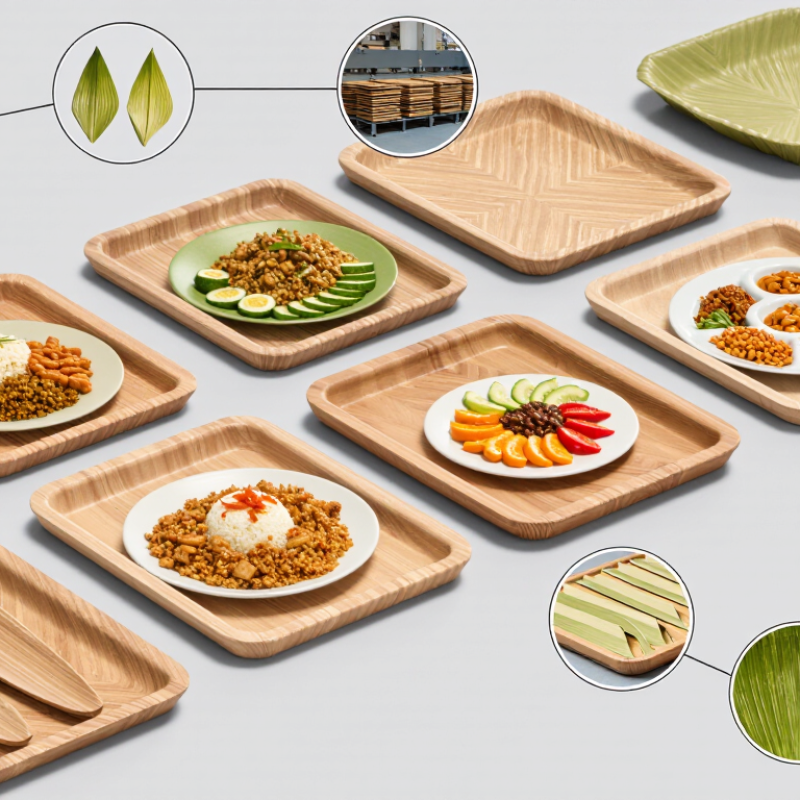
How to Source Palm Leaf Platters and Trays Wholesale

Define Your Wholesale Requirements for Palm Leaf Platters and Trays

How to Source Palm Leaf Platters and Trays Wholesale

Define Your Wholesale Requirements for Palm Leaf Platters and Trays

A clear purchasing brief prevents expensive sampling mistakes. Specify platter diameter, tray depth, weight, shape, and expected serving size. A 10-inch round platter suits snacks, while deeper trays handle saucier foods better. Record monthly demand, peak-season volume, target price, and acceptable minimum order quantity. I learned this the hard way. Vague estimates create avoidable stock pressure.

The market supports careful planning. Grand View Research valued the global biodegradable tableware market at about USD 4.26 billion in 2023. Its report projects a 6.9% compound annual growth rate from 2024 to 2030. Meanwhile, the United Nations Environment Programme reports that roughly 400 million tonnes of plastic are produced annually. About half is designed for single use. These figures strengthen the case for lower-impact serving products, but they do not replace product verification.

Request samples from each shortlisted supplier. Test them with hot, oily, and moist foods for at least two hours. Check warping, odor, edge strength, surface splinters, and stacking stability. Ask for material origin records, food-contact documentation, compostability test results, carton dimensions, and production lead times. Confirm whether fallen palm leaves are cleaned without prohibited chemical treatments. Calculate landed cost, not only unit price. Include freight, customs, storage, breakage, and inspection fees. One weakness remains: visual quality can vary between production batches. Set an acceptable defect rate and approve a sealed reference sample before placing a wholesale order.

Identify Reliable Palm Leaf Tableware Suppliers and Manufacturers

Reliable palm leaf tableware suppliers should provide more than attractive product photos. Ask where the leaves are collected, how they are cleaned, and whether heat pressing uses approved food-contact processes. A traceable supplier should share batch records, test reports, factory details, and realistic production capacity. Grand View Research estimated the global green packaging market at approximately US$271 billion in 2023, with annual growth projected above 7% through 2030. This growth attracts capable manufacturers, but also inexperienced traders.

Request samples from several production batches. Check for uneven edges, cracking, odor, moisture, and warping after refrigeration. Ask for migration testing, microbial testing, and packaging specifications. Independent laboratory evidence is more dependable than a certificate copied into a sales presentation. Verify certifications with the issuing organization. Small details matter. Confirm minimum order quantities, lead times, carton strength, and replacement terms in writing. The Sustainable Packaging Coalition also stresses material transparency and end-of-life claims, which are often misunderstood in supplier discussions.

Tips: Visit the factory, or arrange a live video inspection. Compare the photographed line with the actual equipment. Request a trial order before committing to container quantities. Confirm whether products are made from naturally fallen leaves or harvested material. The distinction can affect sourcing claims and customer expectations. I have found that a low quotation can hide higher inspection, damage, or storage costs. Supplier selection is not perfectly predictable; keep contingency stock and review performance after every shipment.

Evaluate Materials, Craftsmanship, Certifications, and Production Standards

How to Source Palm Leaf Platters and Trays Wholesale

Evaluate Materials, Craftsmanship, Certifications, and Production Standards

When sourcing palm leaf platters wholesale, inspect the raw material before discussing price. Quality leaves should be naturally shed, clean, fully dried, and free from chemical odors. Check several samples for uniform thickness, smooth edges, and stable shapes. Hold one near a window. Uneven pressing may reveal thin spots or internal cracks.

Craftsmanship affects both presentation and safety. Platters should have consistent rims, firm surfaces, and no loose fibers. Ask whether the products use coatings, adhesives, dyes, or added binders. A supplier should explain each production step clearly. Request batch samples, not only one perfect piece. I once trusted a polished sample and later found inconsistent sizes in bulk. That mistake changed my inspection process.

Tips: Request current certificates and verify their issuing bodies, product scope, and expiration dates. Food-contact testing should match your destination market. Review tests for migration, heavy metals, microbial limits, and chemical residues. Also examine factory production standards, including leaf washing, heat pressing, drying controls, pest prevention, and sealed packaging. Reliable facilities keep batch records and allow reasonable audits. Ask for corrective-action reports when defects occur. Good documentation matters. Still, certificates alone cannot replace physical inspection. A clean factory may also need stronger moisture control during humid seasons.

Compare Wholesale Pricing, Minimum Orders, Samples, and Shipping Terms

How to Source Palm Leaf Platters and Trays Wholesale

Compare Wholesale Pricing, Minimum Orders, Samples, and Shipping Terms

Wholesale pricing for palm leaf platters depends on size, shape, thickness, finish, and packing method. A simple round tray may cost less than a divided platter with reinforced edges. Request prices at several quantities, such as 500, 2,000, and 10,000 pieces. This reveals whether larger orders create real savings or only minor discounts. Ask whether prices include cartons, inner packaging, and export handling.

Minimum order quantities require careful comparison. A low MOQ can suit a small caterer, but the unit price may rise sharply. A high MOQ may reduce costs while tying up cash and storage space.

Samples matter. Order different sizes and inspect the surface, rim strength, odor, moisture resistance, and consistency. Ask twice.

Shipping terms can change the final price more than expected. Confirm the product weight, carton dimensions, loading quantity, and estimated transit time. Compare factory pickup, port delivery, and delivered quotations on the same basis. Request clear details about deposits, balance payments, insurance, and responsibility for damaged cartons. Check destination requirements for plant-based food-contact products and packaging documents.

In my experience, photos often hide uneven edges and slight color changes. Natural materials rarely look perfectly identical. That variation may be acceptable, but buyers should define quality limits in writing. I once underestimated warehouse space because cartons were taller than the sample shipment. A pre-production sample, carton test, and written inspection standard could have prevented that mistake. Samples are not decoration; they are purchasing evidence.

Finalize Supplier Contracts, Quality Checks, and Repeat Ordering Processes

Wholesale sourcing works best when the contract describes every physical detail. Specify platter diameter, rim height, thickness, color range, odor tolerance, and allowable edge marks. Include the palm material, treatment method, moisture limit, and food-contact test documents. The World Bank projects global municipal waste will reach 3.40 billion tonnes by 2050. UNEP also reports that plastic pollution could fall 80% by 2040 using existing solutions. These figures strengthen demand for plant-based serviceware, but sustainability claims still require evidence.

Approve a pre-production sample before signing the full purchase agreement. Check ten pieces from each sample carton for warping, cracks, loose fibers, stains, and sharp edges. Test hot soup, oily food, and refrigeration exposure for realistic handling. Ask suppliers to provide batch codes, inspection photos, and a replacement process for failed goods. Contracts should state inspection timing, tolerances, delivery windows, payment stages, and corrective actions. Our checklists are not flawless. Recheck them after the first shipment.

Tips: Keep samples. Measure twice. Retain three pieces from every approved batch. Set a reorder point before inventory falls below six weeks of sales. Record defect rates, carton damage, and customer complaints by shipment. If defects increase, pause automatic reordering and investigate the material source, drying process, or packing method. Grand View Research identifies sustainable packaging as a growing market, yet repeat orders depend on consistent performance, not attractive claims.

How to Source Palm Leaf Platters and Trays Wholesale - Finalize Supplier Contracts, Quality Checks, and Repeat Ordering Processes

Sourcing Dimension Recommended Specification Contract or Process Requirement Quality Check or KPI Typical Wholesale Planning Data
Material and Construction Pressed fallen palm leaves; no plastic laminate, synthetic coating, or added fragrance. State the permitted raw material, adhesive policy, and prohibited substances in the product specification. Visual inspection for plastic film, chemical odor, loose layers, and incomplete pressing. Target: 100% natural leaf surface; tolerance: zero visible synthetic coating.
Product Sizes Common platter and tray formats such as 8, 10, 12, and 14 inches, subject to the approved sample. Include finished dimensions, usable area, rim height, and dimensional tolerance on the purchase order. Measure length, width or diameter, depth, and nesting fit against the approved specification. Suggested dimensional tolerance: ±3% unless a tighter tolerance is commercially required.
Shape and Surface Uniform oval, round, rectangular, or compartmented design with a stable base and smooth food-contact surface. Attach a signed or digitally approved golden sample and define acceptable cosmetic variation. Check warping, sharp edges, cracks, delamination, stains, and unstable bases. Suggested acceptance level: no critical defects; major defects below 2.5% of inspected units.
Food-Contact Suitability Suitable for the intended food-contact application and local market requirements. Require a material declaration, food-contact test documentation where applicable, and traceable batch records. Review documentation before production; test representative samples through an appropriately qualified laboratory when required. Documentation status: approved before shipment; unresolved compliance gaps: 0.
Moisture and Storage Stability Products must be fully dried before packing and protected from humidity during storage and transport. Define the supplier’s drying method, packing requirements, storage conditions, and responsibility for moisture-related claims. Inspect for visible mold, soft spots, damp cartons, discoloration, and odor before loading. Store in a clean, dry, ventilated area; keep cartons off the floor and away from direct water exposure.
Packaging and Cartonization Nested units separated to reduce rubbing, with moisture-resistant inner protection and strong export cartons. Specify units per inner pack, cartons per pallet, carton marks, barcode data, and maximum carton weight. Verify count, carton dimensions, gross weight, label accuracy, and compression damage. Use a packaging approval sample before mass production; carton count variance target: 0 units.
Order Quantity and Price Basis Quote by size, design, packing format, and ordered quantity rather than using one blended price. Record minimum order quantity, price validity, tooling or setup charges, currency, payment terms, and approved price-review triggers. Compare invoice price with the purchase order and approved quotation before payment. Example planning tiers: 500, 1,000, and 5,000 units per style; final pricing requires a supplier quotation.
Lead Time and Delivery Separate sample lead time, production lead time, inspection time, and transit time. Define the confirmed ship date, delay-notice period, partial-shipment approval, and late-delivery remedy. Track confirmed-date performance and record reasons for any delay. Suggested KPI: at least 95% of repeat orders shipped on or before the confirmed date.
Pre-Shipment Inspection Inspection must cover appearance, dimensions, quantity, packaging, labeling, and documentation. Give the buyer the right to inspect internally or through an independent inspection service before shipment. Use an agreed sampling plan and defect classification; retain photographs and inspection records. Recommended decision: pass, conditional release, or corrective action required before shipment.
Defect Claims and Corrective Action Define critical, major, and minor defects with photographs or written examples. Specify claim period, evidence requirements, replacement or credit options, and response deadlines. Measure response time, closure time, repeat defects, and corrective-action effectiveness. Suggested target: acknowledge claims within 2 business days and submit a corrective plan within 5 business days.
Traceability Every shipment should be linked to a purchase order, production batch, inspection record, and packing list. Require batch codes or production dates on cartons and retain records for the agreed period. Confirm that random cartons can be traced back to the production and inspection documentation. Traceability coverage target: 100% of shipped cartons.
Repeat Ordering Process Reorder against the approved product code, golden sample, packaging version, and latest quality report. Create a repeat-order checklist covering stock forecast, quantity, delivery window, price confirmation, and specification changes. Review previous defects, on-time delivery, landed cost, and customer feedback before release. Suggested reorder trigger: when projected stock reaches the agreed lead-time demand plus safety stock.
Supplier Performance Review Use a balanced scorecard covering quality, delivery, communication, compliance, and commercial performance. Include quarterly or semiannual review rights and a process for improvement plans or approved supplier status changes. Score each category consistently and compare results with the previous review period. Example weighting: quality 35%, delivery 25%, compliance 20%, service 10%, cost 10%.

FAQS

Where should palm leaf tableware suppliers source their leaves?

Ask whether leaves are naturally fallen or harvested. This affects sourcing claims and customer expectations.

What raw material qualities should buyers inspect?

Leaves should be clean, fully dried, and free from chemical odors. Check thickness, edges, cracks, and surface stability.

How can buyers evaluate product craftsmanship?

Inspect rims, surfaces, fibers, and shapes. Platters should feel firm, smooth, and consistent across several samples.

What testing documents should a reliable supplier provide?

Request migration, microbial, heavy-metal, and chemical-residue testing. Independent laboratory reports are more useful than copied presentation certificates.

How should certifications be verified?

Check the issuing organization, product scope, and expiration date. Certification helps, but it cannot replace physical inspection.

What factory conditions deserve attention?

Review leaf washing, heat pressing, drying, pest prevention, and sealed packaging. Humid seasons need stronger moisture control.

Why should buyers request samples from several batches?

One attractive sample can hide bulk inconsistencies. Compare edges, odors, moisture, cracking, and warping after refrigeration.

What questions should buyers ask about production capacity?

Confirm realistic capacity, minimum order quantities, lead times, carton strength, and replacement terms in writing.

Is a factory visit necessary?

A visit helps. A live video inspection can also compare photographed equipment with the actual production line.

Why is a trial order valuable?

It reveals defects, packaging weaknesses, and delivery problems before larger commitments. Keep some contingency stock anyway.

Conclusion

Sourcing Palm Leaf Platters and Trays wholesale begins with clearly defining your business requirements, including product sizes, shapes, quantities, design preferences, packaging needs, and target delivery dates. With these details in place, you can identify reliable suppliers and manufacturers that have suitable production capacity and consistent experience with natural tableware. Request product information, factory details, samples, and relevant certifications to assess material quality, craftsmanship, hygiene controls, and overall production standards.

When comparing suppliers, review more than the unit price. Consider minimum order quantities, sample fees, customization options, payment terms, lead times, shipping arrangements, and after-sales support. Before placing a large order, confirm specifications in a written contract and establish clear procedures for inspections, defect handling, packaging approval, and delivery verification. A dependable quality-control process, accurate records, and regular communication will help reduce purchasing risks and create a smoother repeat-order system as your business grows.

Alexander

Alexander

Alexander is a dedicated marketing professional with extensive experience in product communication, content strategy, and customer-focused digital marketing. As a key member of our company, he combines strong market insight with a deep understanding of our products, services, and the needs of the......