ISO 9001 & 14001 · LFGB §30/§31 [email protected] FOB New Mangalore Port, Palm Leaf Bowls are becoming a practical choice for global buyers seeking natural tableware with a distinctive handmade appearance. Made from fallen
0%

Palm Leaf Bowls are becoming a practical choice for global buyers seeking natural tableware with a distinctive handmade appearance. Made from fallen palm leaves, these bowls can bring warm textures to restaurants, catering events, hotels, and home dining. Their shallow curves, visible fibers, and earthy color changes make every piece slightly different. That difference is part of their appeal.

However, not every palm leaf product offers the same performance. Buyers should examine leaf sourcing, cleaning methods, pressing quality, edge strength, and packaging protection. A reliable supplier should explain production steps clearly and provide samples before large orders. Food-contact suitability, moisture resistance, odor, and storage conditions also deserve careful review. Certification can support trust, but documents should be checked for scope and validity.

This guide explores the top types of Palm Leaf Bowls for international purchasing in 2026. It compares round bowls, deep serving bowls, compartment styles, and molded designs. Each type suits different meals, presentation styles, and shipping needs. Some are better for dry foods, while others handle brief contact with moist dishes. Not perfectly uniform.

Real sourcing decisions often involve compromises. A thicker bowl may feel stronger but cost more to ship. A polished finish may look attractive but reduce the raw, natural character. Based on practical product evaluation, this overview focuses on usable details rather than fashionable claims. Buyers can use it to ask sharper questions, reduce avoidable quality problems, and choose products that match their markets responsibly.
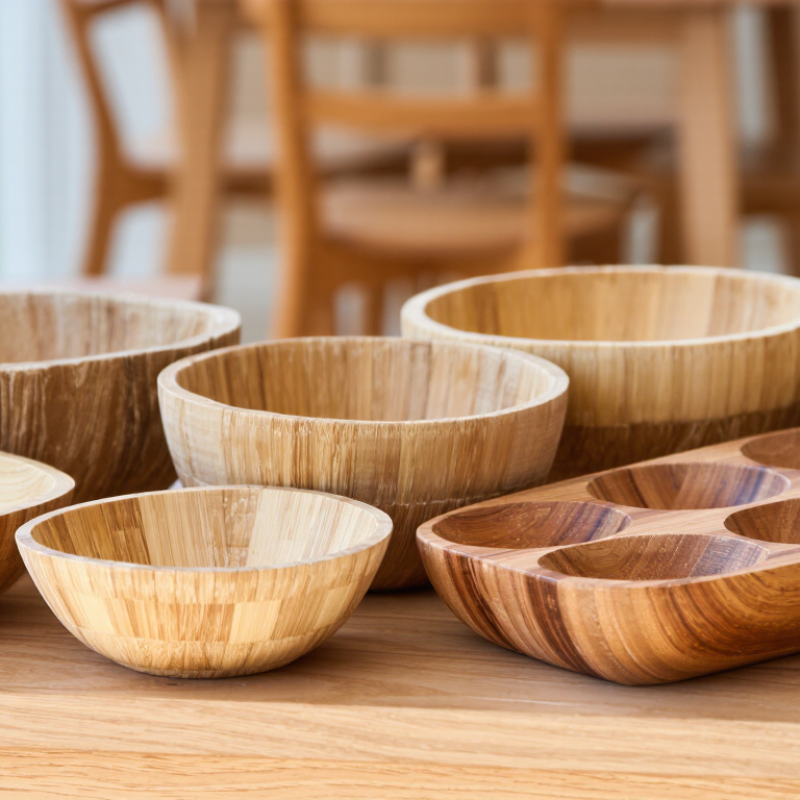
2026 Top Types of Palm Leaf Bowls for Global Buyers

Palm Leaf Bowls: Materials, Origins, and Sustainable Features

Palm leaf bowls are made from naturally shed leaves, often collected from areca or other palm trees in South and Southeast Asia. These leaves are washed, dried, and heat-pressed into useful shapes. No plastic is required.

In practical sourcing, I look closely at leaf thickness, edge strength, and surface cleanliness. A well-formed bowl feels firm but remains lightweight. Its warm beige color may include small veins or darker marks. These details show the natural material, not a manufacturing defect. Still, quality can vary between production areas.

Origins matter. Rural workshops often use local leaves and traditional pressing methods. Larger facilities may add better moisture control and food-contact testing. Buyers should request records for hygiene, chemical migration, and compostability claims. “Natural” does not always mean fully sustainable. Some products may use coatings, excessive packaging, or long-distance shipping. That deserves honest review.

Palm leaf bowls can reduce reliance on petroleum-based disposable tableware. Many are suitable for composting when local facilities accept them and no synthetic coating is present. They are useful for salads, snacks, rice, and warm foods, but performance depends on moisture and serving time. A bowl may soften.

That limitation matters. Reliable purchasing balances origin, material transparency, production conditions, and real disposal options.

2026 Top Types of Palm Leaf Bowls for Global Buyers

Typical diameter ranges by bowl format, based on commonly traded palm-leaf tableware sizes.

Palm-leaf bowls are commonly made from naturally shed areca or other palm leaves, then cleaned, heat-pressed, and shaped without conventional plastic coatings. Smaller formats are generally used for snacks and side dishes, while larger formats are used for salads, main courses, and shared serving portions. These products are typically biodegradable and suitable for commercial composting where local facilities accept molded-fiber tableware.

Main Types of Palm Leaf Bowls for Global Buyers

Global buyers mainly compare four types of palm leaf bowls. Areca palm leaf bowls are molded from fallen sheaths, creating smooth, lightweight shapes. Date palm bowls are often pressed or woven, with a firmer, more textured surface. Coconut palm sheath bowls feel thicker and suit rustic food presentation. Palmyra leaf bowls can show visible fibers and stronger traditional styling. Some descriptions confuse leaf, sheath, and fiber. That distinction affects durability.

Material choice matters when replacing disposable plastic. The OECD recorded 353 million tonnes of plastic waste in 2019, projecting 1,014 million tonnes by 2060 in its Global Plastics Outlook (2022).

UNEP’s Turning off the Tap report (2023) says plastic pollution could fall by 80% by 2040 through system changes. These figures support demand, but they do not prove every palm bowl is sustainable.

Buyers should request information on harvesting, binders, drying, packaging, and production waste. Check food-contact migration, microbial, moisture, and odor test results.

In practical sampling, areca bowls usually perform well for dry snacks and moderate heat. Date palm bowls may offer better rigidity but less uniform sizing. Coconut sheath bowls can feel premium, yet supply consistency may be weaker. A bowl can look clean yet warp beside a 75°C curry. Do not trust appearance alone. Country requirements also differ, so supplier documents need careful review. The category still lacks consistent global grading. That gap deserves more attention.

Shapes, Sizes, and Functional Uses

2026 Top Types of Palm Leaf Bowls for Global Buyers
Shapes, Sizes, and Functional Uses

Palm leaf bowls now serve more than basic food presentation. Their natural grain adds warmth to salads, rice dishes, fruit, and desserts. Round bowls remain the most versatile choice, especially for shared meals and buffet service. Oval designs suit grilled foods and long portions. Square bowls create a sharper look, but their corners may reduce stacking efficiency.

Size should match the portion, not only the table setting. Small bowls, around 10–14 cm wide, work well for sauces, nuts, and samples. Medium bowls, measuring 15–20 cm, fit soups, side dishes, and desserts. Larger bowls can hold salads or family portions. A flat base improves stability. A shallow rim helps guests lift food without spilling.

Compartment bowls support mixed meals and reduce direct contact between ingredients. They are useful for catering, tasting menus, and meal preparation. Deeper bowls handle moist foods better, although prolonged soaking can still weaken natural fibers.

Field inspections often find slight differences in color, thickness, and shape. These variations are normal, but uneven rims can affect packing and customer perception.

Buyers should request moisture, strength, food-contact, and market-specific compliance information from suppliers.

Stack tests also matter. A beautiful bowl may waste storage space. Proper sizing remains an imperfect balance between appearance, function, and shipping efficiency.

Quality Standards, Safety, and Food Contact Considerations

2026 Top Types of Palm Leaf Bowls for Global Buyers

Quality Standards, Safety, and Food Contact Considerations

Palm leaf bowls look simple, but their safety depends on more than appearance. The OECD Global Plastics Outlook reports that packaging created about 40% of global plastic waste in 2019. This supports demand for fiber-based alternatives. It does not prove every palm leaf bowl is safe. Buyers should request food-contact declarations, production records, and third-party test reports.

Material selection matters. Leaves should be clean, mature, and free from visible mold, insects, soil, and chemical odors. Manufacturers should control washing, heat pressing, drying, and storage conditions. Testing should cover overall migration, heavy metals, pesticide residues, and microbiological contamination. Hot soup and oily food deserve extra attention. Moisture can expose weak seams or unwanted coatings.

Check the whole product. Not only the leaf.

Under European Regulation (EC) No 1935/2004, food-contact materials must not transfer substances that endanger health or alter food. Comparable requirements apply in other markets, but documents differ. The UNEP report Turning off the Tap estimates that plastic pollution could be reduced by 80% by 2040 with existing measures, increasing scrutiny of alternatives. Yet natural does not mean risk-free. I would also question vague claims such as “chemical-free” without laboratory evidence. A reliable supplier should provide batch numbers, intended temperature limits, and traceable testing dates. Surface fibers, uneven edges, and odor changes after heating are practical warning signs.

How to Choose Palm Leaf Bowls for Different Markets

Choosing palm leaf bowls for different markets requires more than comparing shape and price. Bowl depth matters for the menu. Shallow bowls suit salads, snacks, and tasting portions. Deeper bowls hold rice, soup, or saucy meals more securely. Round bowls fit casual catering, while compartment designs help separate grains, vegetables, and sauces. Fit matters.

Market expectations can differ sharply. Buyers in outdoor catering often prefer lightweight bowls with a firm rim. Retail customers may value natural color, visible leaf texture, and neat stacking. For restaurants, consistent sizes are more important than rustic variation. A 12-centimeter bowl may suit desserts, but it can feel too small for a main dish. Measure the actual serving size before ordering.

Material performance should be checked with practical tests. Place warm food inside, carry the bowl for ten minutes, and inspect the base for softening or leakage. Test several batches, not only one sample. Confirm food-contact documentation, moisture resistance, packaging details, and labeling requirements for the destination market. Requirements can change by country, so local compliance advice remains important. Some natural marks are acceptable, yet deep cracks or sharp edges are not. Perfect uniformity may be unrealistic, and rejecting every small color difference can increase waste. The better choice balances safety, function, appearance, and honest customer expectations.

2026 Top Types of Palm Leaf Bowls for Global Buyers - How to Choose Palm Leaf Bowls for Different Markets

Practical comparison of common molded palm-leaf bowl formats, typical specifications, and market-selection considerations

Type of Bowl Typical Shape and Dimensions Approximate Capacity Typical Uses Best-Fit Market Segments Key Advantages Selection and Compliance Considerations
Round Shallow Bowl Round profile; approximately 12–18 cm diameter and 3–5 cm depth 250–600 ml Salads, side dishes, desserts, fruit, snacks, and tasting portions Catering Events Takeaway food Lightweight, stackable, easy to fill and present; suitable for high-volume service Check rim strength, nesting consistency, and resistance to soft or oily foods. Confirm food-contact testing required by the destination market.
Round Deep Bowl Round profile; approximately 13–18 cm diameter and 5–8 cm depth 500–1,000 ml Soups, noodles, rice dishes, curries, grain bowls, and cereal Foodservice Delivery Meal kits Greater volume and improved containment for liquid or semi-liquid foods Use a compatible lid only when fit has been tested. Evaluate leakage, steam exposure, stacking stability, and heat tolerance for hot meals.
Oval Bowl Oval profile; approximately 15–22 cm long, 10–15 cm wide, and 3–6 cm deep 400–900 ml Side dishes, appetizers, sharing portions, sandwiches, and plated meals Restaurants Hotels Buffets Efficient presentation area and comfortable arrangement on trays or serving counters Look for a smooth interior and even wall thickness. Oval shapes may require more careful carton packing to reduce empty space.
Square or Rectangular Bowl Square or rectangular profile; approximately 12–18 cm across and 4–7 cm deep 450–900 ml Rice meals, salads, snacks, desserts, and modern plated takeaway dishes Urban takeaway Retail food Cafés Contemporary appearance and efficient use of shelf or delivery-box space Inspect corners for cracks or weak folds. Confirm that the base remains stable on flat surfaces and that the shape meets local packaging requirements.
Two-Compartment Bowl Divided round, oval, or rectangular profile; approximately 16–22 cm long and 4–7 cm deep 600–1,000 ml total Main course with side dish, rice with curry, salads with toppings, and combination meals Prepared meals Delivery Institutional catering Keeps selected foods separated and can reduce the need for extra small containers Test the divider for rigidity and leakage between compartments. Confirm compatibility with lids and assess whether different foods require separate grease resistance testing.
Three-Compartment Meal Bowl Divided meal tray or bowl; approximately 18–24 cm long, 14–18 cm wide, and 4–7 cm deep 700–1,200 ml total Complete meals containing a main dish, vegetables, rice, or dessert School meals Workplace catering Takeaway menus Supports portion separation and organized meal presentation without plastic-lined compartments Verify dimensional accuracy, base strength, lid availability, and transport performance when filled. Confirm suitability for the intended food-contact temperature range.
Small Snack or Dessert Bowl Round or fluted profile; approximately 8–12 cm diameter and 2.5–4 cm depth 100–250 ml Ice cream, nuts, confectionery, sauces, samples, and tasting portions Festivals Food sampling Dessert service Low material use, compact storage, and suitable portion control for short service periods Check whether cold, wet, or sugary foods soften the bowl during the expected holding time. Small sizes can be more sensitive to rim damage during packing.
Large Serving Bowl Wide round or oval profile; approximately 20–30 cm diameter or length and 5–9 cm depth 1,200–2,500 ml Shared salads, fruit, bread, snacks, buffet foods, and family-style meals Hospitality Buffets Home entertaining Strong visual impact and large presentation area; useful for shared portions Prioritize structural rigidity and base balance. Larger bowls require stronger outer cartons and more careful nesting to limit deformation in transit.
Fluted or Decorative Bowl Round or oval profile with textured rim; approximately 12–22 cm diameter or length and 3–7 cm depth 300–900 ml Premium appetizers, desserts, gift food sets, and event presentation Premium catering Hospitality Special events Distinctive natural appearance and stronger product presentation than a plain profile Decorative edges may reduce nesting efficiency and require extra inspection for splinters or uneven pressing. Avoid finishes or dyes unless they are documented as food-contact compliant.
Specification note: Dimensions and capacities are typical commercial ranges for molded palm-leaf bowls and can vary by mold, leaf sheath thickness, pressing method, and supplier tolerances. Buyers should approve production samples and verify applicable food-contact, labeling, packaging, compostability, and import requirements in the destination market before placing an order.

FAQS

What are the main types of palm leaf bowls?

Areca bowls are smooth, light, and molded from fallen leaf sheaths. Date palm bowls feel firmer and more textured. Coconut sheath bowls look thicker and more rustic. Palmyra bowls often show visible fibers and traditional styling.

Which palm leaf bowl suits dry snacks and warm food?

Areca bowls usually suit dry snacks and moderately warm food. Deeper bowls can hold rice or saucy meals more securely. Test hot food carefully. A clean bowl may still warp near a 75°C curry.

How should buyers choose bowl depth?

Shallow bowls work well for salads, snacks, and tasting portions. Deeper bowls suit soup, rice, and saucy dishes. Measure the real serving size before ordering. A 12-centimeter bowl may be too small for a main dish.

What shape works best for different food services?

Round bowls fit casual catering and simple presentations. Compartment bowls separate grains, vegetables, and sauces. Outdoor events often need lightweight bowls with firm rims. Restaurants usually need consistent sizes.

What practical tests should buyers perform?

Place warm food inside the bowl and carry it for ten minutes. Inspect the base for softening, leakage, or warping. Test several production batches, not one sample. One sample can mislead.

Which documents should buyers request?

Request food-contact safety documents, moisture test results, and odor information. Ask about microbial testing and possible substance migration. Review harvesting, binders, drying, packaging, and production waste. Documents may still require local review.

Are natural color differences acceptable?

Small color variations and visible fibers can be normal. Deep cracks, sharp edges, and serious deformation are unacceptable. Perfect uniformity may be unrealistic. I would still define clear defect limits before purchasing.

Are palm leaf bowls automatically sustainable?

No material should receive an automatic sustainability claim. Buyers should examine harvesting methods, binders, drying energy, packaging, and waste. Replacing disposable plastic does not prove every bowl has low impact. The evidence may remain incomplete.

Conclusion

Palm Leaf Bowls are a practical and sustainable tableware choice for global buyers seeking natural alternatives to plastic and coated paper products. Made from fallen palm leaves or renewable leaf fibers, they offer a lightweight structure, earthy appearance, and compostable potential when produced and handled responsibly. This overview introduces the main types, including pressed-leaf bowls, molded fiber bowls, and reinforced designs, while explaining how different shapes and sizes suit snacks, salads, soups, desserts, catering, takeaway meals, and home use.

For international purchasing, product selection should consider thickness, rigidity, moisture and heat resistance, stacking efficiency, and packaging requirements. Quality standards are equally important, including clean materials, consistent forming, odor control, hygienic production, and suitability for intended food contact. Buyers should also review market-specific labeling, testing, compostability claims, and safety expectations. By matching Palm Leaf Bowls with regional dining habits, serving formats, sustainability goals, and supply needs, importers can choose products that balance functionality, presentation, safety, and environmental responsibility.

Alexander

Alexander

Alexander is a dedicated marketing professional with extensive experience in product communication, content strategy, and customer-focused digital marketing. As a key member of our company, he combines strong market insight with a deep understanding of our products, services, and the needs of the......