ISO 9001 & 14001 · LFGB §30/§31 [email protected] FOB New Mangalore Port, Biodegradable Disposable Tableware is becoming more visible at cafés, food trucks, offices, and outdoor events. Bagasse plates feel slightly fibrous,
0%

Biodegradable Disposable Tableware is becoming more visible at cafés, food trucks, offices, and outdoor events. Bagasse plates feel slightly fibrous, while molded-pulp bowls often show natural surface variations. These details reveal a shift away from conventional plastic serviceware. The shift is significant. The OECD’s Global Plastics Outlook reported that global plastic waste doubled from 2000 to 2019, while only 9% was successfully recycled. Packaging represents a major share of this waste stream, according to the United Nations Environment Programme’s 2023 report, Turning off the Tap. Yet replacing plastic is not automatically sustainable. Material choice, production energy, transport distance, and disposal conditions all matter.

This article explains what Biodegradable Disposable Tableware means in practical and technical terms. Common materials include sugarcane bagasse, bamboo fiber, paper, wood, and certified compostable bioplastics such as PLA. However, “biodegradable” does not always mean that a product will decompose quickly in a backyard compost pile. Some items require controlled industrial composting facilities, heat, moisture, and microbial activity. That distinction is often missed. European Bioplastics, with data from the nova-Institute, projected global bioplastics production capacity to grow from about 2.47 million tonnes in 2024 to approximately 5.73 million tonnes by 2029. These figures indicate strong market development, not guaranteed environmental performance. Buyers should examine recognized certification, full product specifications, and local waste infrastructure. A better question is not simply, “Is it biodegradable?” It is, “Where, how, and under what conditions will it break down?”
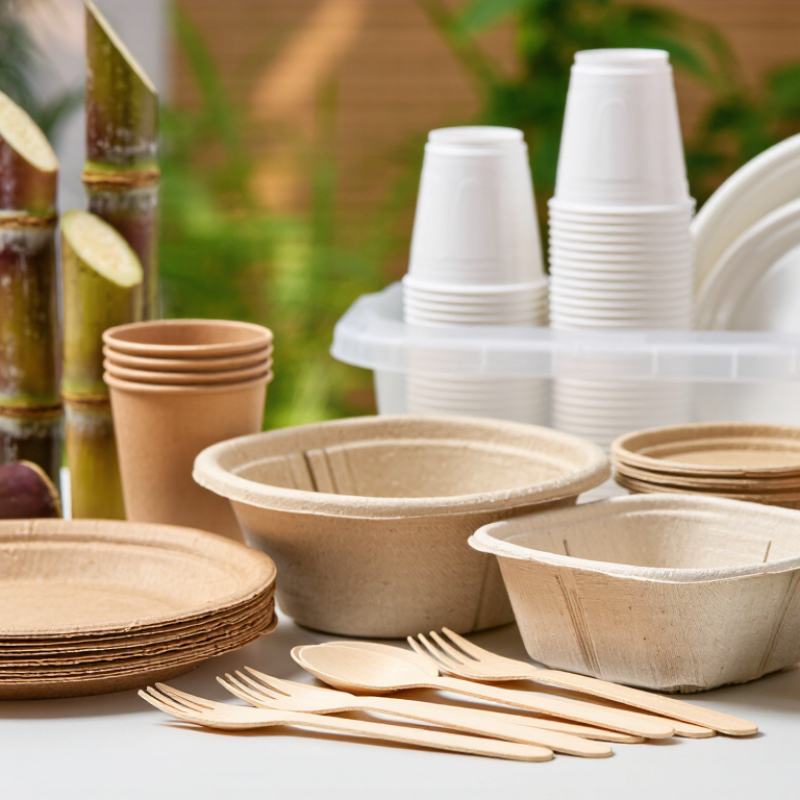
What Is Biodegradable Disposable Tableware?

Definition and Core Features of Biodegradable Disposable Tableware

What Is Biodegradable Disposable Tableware?

Definition and Core Features of Biodegradable Disposable Tableware

Biodegradable disposable tableware is designed to break down through natural biological activity after disposal. Common examples include plates, bowls, cups, and cutlery made from molded fiber, paper, bamboo, or plant-based residues. Definition alone is incomplete. Breakdown depends on moisture, temperature, microorganisms, and disposal conditions. Some products require commercial composting facilities. They may not decompose effectively in a backyard compost bin or landfill.

Core features include short-term food-service performance and reduced persistence after proper treatment. A reliable plate should resist hot soup, oily meals, and condensation without collapsing. In practical use, a weak rim can bend before the meal is finished. That detail matters.

Materials may also contain coatings, adhesives, or additives, so “plant-based” does not automatically mean fully biodegradable. Product specifications should clearly identify the material, coating, intended use, and disposal pathway.

Credible evaluation requires more than attractive environmental language. Look for test information from recognized laboratories or certification systems, supported by traceable documentation. Disposal instructions should match local waste infrastructure.

A compostable item sent to ordinary waste may receive no meaningful environmental benefit. This is not a perfect solution. Manufacturing energy, transport, contamination, and poor sorting can reduce its advantages.

Responsible selection means checking both product performance and the conditions needed for actual breakdown.

Materials Used in Biodegradable Tableware Production

Biodegradable disposable tableware begins with material choice, not marketing language. Common options include bagasse, bamboo fiber, molded paper, PLA, and PHA. Bagasse uses sugarcane residue and creates a firm, lightly textured plate. Bamboo fiber offers strength, but additives may affect its end-of-life treatment. Paper looks simple. It may still require a coating for moisture resistance.

The European Bioplastics report estimated global bioplastics production capacity at about 2.18 million tonnes in 2023. Its forecast reached roughly 7.43 million tonnes by 2028. However, biobased does not always mean biodegradable. PLA usually needs controlled industrial composting conditions, including heat, moisture, and microbial activity. PHA can biodegrade in broader environments, but its cost and performance remain inconsistent. The OECD’s Global Plastics Outlook reported 353 million tonnes of plastic waste in 2019, with only 9% recycled. These figures show why material selection matters, though compostable products are not a complete solution. The word biodegradable can sound too reassuring.

Tips: Check the full material specification, coating, and certification. Confirm whether local facilities accept the item. A product may fail in an ordinary household compost bin. Test it with hot soup, oily food, and twenty-minute holding times. Real use is less forgiving.

What Is Biodegradable Disposable Tableware? - Materials Used in Biodegradable Tableware Production

A comparison of common materials used to manufacture biodegradable or compostable disposable plates, bowls, cups, trays, and cutlery.

Material Primary Source Typical Tableware Products Key Advantages Main Limitations End-of-Life Considerations
Bagasse Fibrous residue remaining after sugarcane juice extraction. Plates, bowls, clamshell containers, trays, and food boxes. Uses an agricultural by-product; lightweight; suitable for hot and cold foods; naturally fiber-based. May soften when exposed to liquids for extended periods; generally unsuitable for conventional household recycling. Usually suited to industrial or commercial composting where accepted. Actual breakdown depends on local facility conditions.
Bamboo Fiber Bamboo fibers or bamboo processing residues, often combined with other plant-based binders. Plates, bowls, trays, and molded food-service items. Renewable plant source; good rigidity; attractive natural appearance. Performance depends on the binder and manufacturing process; not every bamboo product is fully biodegradable or compostable. Check the product certification and material composition. Some items require commercial composting rather than home composting.
Molded Fiber Recovered paper fibers, wood pulp, or other cellulose-based fibers. Egg-shaped food containers, trays, bowls, plates, and protective food packaging. Good stiffness-to-weight ratio; can be molded into complex shapes; made primarily from cellulose. May require coatings for grease or moisture resistance; coatings can affect compostability and recycling options. Uncoated products are generally easier to compost or recycle. Coated products should follow the disposal instructions provided.
Paperboard Cellulose fibers from wood pulp or recovered paper. Paper plates, cartons, meal boxes, sleeves, and beverage cups. Widely available; printable; lightweight; familiar to existing paper-converting systems. Plain paperboard loses strength when wet; plastic or barrier coatings may complicate recycling and composting. Clean, uncoated paperboard may be recyclable in suitable systems. Food-soiled or coated items may require composting or general waste disposal.
PLA Plant-derived sugars or starches converted into lactic acid and then polymerized into a bioplastic. Cold-drink cups, lids, clear containers, cutlery, and thin food packaging. Clear appearance; can be formed into precise shapes; produced from renewable feedstocks. Limited heat resistance compared with many conventional plastics; may become brittle in some conditions. Typically requires an industrial composting environment with controlled heat, moisture, and aeration. It is not generally suitable for home composting.
PHA Polyhydroxyalkanoates produced by microorganisms through biological fermentation of renewable feedstocks. Films, coatings, cups, containers, and selected disposable food-service items. Biobased polymer family with biodegradation potential in more than one natural environment, depending on formulation. Higher production cost and less widespread processing infrastructure than conventional plastics; properties vary by grade. Degradation performance depends on the specific PHA type, item thickness, temperature, moisture, and disposal environment.
Starch-Based Bioplastic Corn, potato, cassava, wheat, or other starch-rich crops, often blended with biodegradable polymers. Cutlery, bags, films, food containers, and lightweight packaging components. Uses renewable agricultural feedstocks; can be processed into flexible or rigid products. Moisture sensitivity; mechanical performance varies; some formulations require blending or coatings. Compostability depends on the complete formulation, not starch content alone. Certification and local facility requirements should be checked.
Palm Leaf Naturally shed palm leaves that are cleaned, heat-pressed, and shaped. Plates, bowls, trays, serving platters, and food boxes. Uses fallen biomass; distinctive appearance; rigid and suitable for many hot and cold foods. Natural variation in color and shape; less suitable for highly detailed or thin designs; supply depends on agricultural regions. Typically compostable when free from synthetic coatings and attachments. Local composting acceptance should be confirmed.
Wood Renewable timber or wood-processing residues from managed sources. Stirrers, forks, knives, spoons, skewers, and serving utensils. Rigid; naturally heat-resistant for many food-service applications; biodegradable when untreated. Can absorb moisture; may splinter if poorly manufactured; requires responsible sourcing to reduce environmental impacts. Untreated wood items can generally biodegrade or be composted, subject to local rules and the absence of coatings or additives.
Cork Bark harvested from cork oak trees without removing the tree. Small trays, coasters, lids, and specialty food-service components. Lightweight; buoyant; naturally textured; renewable when harvested under appropriate management. Less suitable for high-moisture or high-load applications; limited use for large-scale disposable tableware. Natural cork can biodegrade over time. Adhesives, laminates, inks, or coatings may change disposal requirements.
Algae-Based Material Seaweed or algae biomass processed into films, gels, coatings, or molded compounds. Selected films, sachets, coatings, wrappers, and experimental food-service formats. Marine biomass source; can reduce dependence on fossil-based feedstocks; may provide useful film-forming properties. Moisture resistance, shelf life, mechanical strength, and commercial availability vary widely by formulation. End-of-life behavior depends on the complete material system. Follow the specific certification and disposal guidance.

Note: “Biodegradable” describes the ability of a material to break down through biological activity under suitable conditions. Compostability is a more specific claim and depends on the product formulation, certification, local waste infrastructure, and the composting environment.

How Biodegradable Disposable Tableware Breaks Down

Biodegradable disposable tableware is designed to return to natural cycles through microbial action. Its breakdown depends on material, moisture, oxygen, and temperature. Bagasse plates usually contain fibrous sugarcane residue, while PLA cups require industrial composting conditions. They do not behave identically.

Under controlled composting, heat softens the product first. Water then enters tiny cracks. Microorganisms consume the remaining organic compounds and release carbon dioxide, water, and biomass. EN 13432 requires certified packaging to disintegrate within 12 weeks and biodegrade within six months in industrial composting. ASTM D6400 uses similar testing periods. A fork may look unchanged for weeks, then fragment quickly under steady heat and humidity.

Real disposal is less predictable. Home compost piles may stay too cool, too dry, or poorly aerated. A certified compostable cup can therefore pass laboratory tests but remain intact in a landfill. That gap matters. UNEP’s 2023 Turning off the Tap report identifies packaging as roughly 40% of global plastic use, increasing pressure for better end-of-life systems. European Bioplastics’ 2024 market data projects global bioplastics production capacity rising from 2.47 million tonnes in 2024 to about 5.73 million tonnes by 2029. More production does not guarantee faster breakdown. Clear labels, commercial composting access, and contamination control still decide what happens after lunch. Honestly, disposal infrastructure often lags behind material innovation.

Main Types and Common Uses

What Is Biodegradable Disposable Tableware?

Main Types and Common Uses

Biodegradable disposable tableware is made from materials that can break down under suitable conditions. Unlike conventional plastic, it is designed to reduce long-term waste. Common materials include sugarcane bagasse, bamboo fiber, molded paper, palm leaves, and plant-based PLA. Bagasse plates feel firm and handle warm food well. Bamboo products are lightweight and suitable for snacks, desserts, and outdoor meals.

Paper bowls and cardboard containers work well for soups, salads, sandwiches, and takeaway dishes. Palm-leaf plates often have a natural texture and suit weddings, picnics, and buffet tables. PLA cups look similar to plastic cups, but many require industrial composting facilities. They may not break down in a backyard compost pile. That detail is often missed.

These products are widely used in cafés, offices, schools, food trucks, hospitals, and large events. Bagasse containers can hold rice, noodles, vegetables, and moderately oily meals. Paper cups are practical for water, juice, and hot drinks when properly lined. In real use, a lid can prevent spills, but some fiber lids soften after extended contact with steam. I once assumed every “eco” plate handled heavy sauce equally well. It did not. Buyers should check heat limits, leak resistance, disposal labels, and local composting access. A biodegradable item can still create waste when the correct treatment facility is unavailable.

Environmental Benefits and Practical Limitations

What Is Biodegradable Disposable Tableware?

Environmental Benefits and Practical Limitations

Biodegradable disposable tableware is made from materials that microorganisms can break down under suitable conditions. Common materials include plant fibers, paper, wood, and certain compostable polymers. Unlike conventional plastic, some products may leave fewer persistent fragments after proper treatment.

The environmental benefit depends on the whole life cycle. Plant-fiber plates can use agricultural by-products, such as pressed sugarcane residue. This may reduce reliance on newly produced plastic. Lighter products can also lower transport emissions. However, “biodegradable” does not mean rapid decay everywhere. Many items need industrial composting, controlled heat, moisture, and oxygen. They may remain almost unchanged in a dry landfill or marine environment.

Practical performance still matters. A soup container must resist heat, leaks, and softening for several minutes. Some fiber products become weak when exposed to oily food. Paper coatings can also complicate recycling and composting. Local waste facilities may reject these items, even when their labels sound environmentally friendly. Check the disposal rules before buying large quantities. Small tests help: fill one container with hot food, wait fifteen minutes, and inspect the base. The honest answer is imperfect. These products can reduce certain impacts, but they cannot replace waste reduction, reuse, and reliable local processing.

What Is Biodegradable Disposable Tableware?

Certified compostable tableware can reduce dependence on fossil-based plastics and may return organic carbon to controlled composting systems. However, the figures shown are laboratory test limits under industrial composting conditions, not guaranteed decomposition times in home compost, soil, or landfill.

Reference basis: EN 13432 compostability requirements. Disintegration must occur within 12 weeks, while biodegradation is assessed within 180 days under controlled industrial composting conditions.

FAQS

What materials are commonly used for biodegradable disposable tableware?

Common materials include bagasse, bamboo fiber, molded paper, palm leaves, PLA, and PHA. Each material behaves differently after disposal.

Is biobased tableware always biodegradable?

No. Biobased materials may require specific industrial composting conditions. “Plant-based” is not enough.

Can PLA tableware break down in a household compost bin?

Usually, PLA needs controlled heat, moisture, and microbial activity. A backyard compost pile may not provide these conditions.

What foods can bagasse tableware hold?

Bagasse plates and containers handle rice, noodles, vegetables, and moderately oily meals. They feel firm and slightly textured. Very heavy sauces still deserve testing.

Are paper bowls and cups suitable for wet foods?

Paper bowls work well for soups, salads, sandwiches, and takeaway dishes. Cups need suitable moisture-resistant lining. Coating details matter.

Is bamboo fiber tableware suitable for every disposal system?

Bamboo fiber offers useful strength and low weight. However, additives may change its end-of-life treatment. Check the complete material specification.

How should buyers test disposable tableware before large orders?

Test hot soup, oily food, and twenty-minute holding times. Check leaks, softness, heat resistance, and lid performance. Real use can be less forgiving.

Where is biodegradable tableware commonly used?

It appears in cafés, offices, schools, hospitals, food trucks, and large events. Bagasse suits warm meals, while bamboo items suit snacks and desserts. Outdoor meals are common too.

What disposal information should buyers verify?

Confirm the coating, certification, disposal label, and local facility acceptance. A compostable item may still become waste without suitable treatment. That part is easy to miss.

Conclusion

Biodegradable Disposable Tableware refers to single-use plates, bowls, cups, trays, and utensils designed to break down naturally under suitable environmental conditions. Unlike conventional plastic products, these items are commonly made from renewable or plant-based materials such as sugarcane fiber, bamboo, wood, paper, starch, and other compostable blends. Their main features include convenient use, lightweight construction, food-contact functionality, and reduced reliance on fossil-based resources.

After disposal, Biodegradable Disposable Tableware can decompose through the action of microorganisms, moisture, oxygen, and heat, although the speed and completeness of breakdown depend on the material and local composting conditions. Common applications include takeout meals, catering, parties, schools, offices, and outdoor events. These products can help reduce persistent plastic waste and support more responsible resource use, but they are not impact-free. Manufacturing, transportation, contamination, and limited access to industrial composting may affect their environmental performance. Proper disposal and choosing suitable products remain essential.

Alexander

Alexander

Alexander is a dedicated marketing professional with extensive experience in product communication, content strategy, and customer-focused digital marketing. As a key member of our company, he combines strong market insight with a deep understanding of our products, services, and the needs of the......