Why Choose Private Label Palm Leaf Plates? The answer begins with the dining experience. A guest notices the warm, natural texture before tasting the food. They may also notice whether the plate bends under a curry, leaks beneath dressing, or arrives with a sharp edge. Private Label Palm Leaf Plates can connect practical performance with a clear brand identity.
These plates are commonly made from naturally shed areca palm leaves. Reputable manufacturers clean, heat-press, trim, and inspect each piece. The result can feel more distinctive than ordinary disposable tableware. However, natural materials are not perfectly uniform. Small differences in color, grain, and shape may appear. That is part of their character, but buyers should set realistic quality expectations.
A dependable private-label program requires more than printing a logo. It requires careful supplier evaluation, product samples, production records, and food-contact documentation for the intended market. Confirm the material source, manufacturing process, packaging conditions, and testing results. Check several cartons, not only one sample. Look for crushed corners, moisture, odors, and inconsistent sizing.
Details matter.
Your packaging should protect the plates while explaining their intended use and disposal guidance. Claims such as “compostable” or “eco-friendly” should match available evidence and regional requirements. It is easy to overpromise. A stronger approach is transparent communication, supported by supplier records and independent verification where appropriate.
With thoughtful sourcing, Private Label Palm Leaf Plates can help restaurants, caterers, retailers, and event companies create a memorable serving experience. The real value comes from consistency, honest claims, and careful attention to every plate.
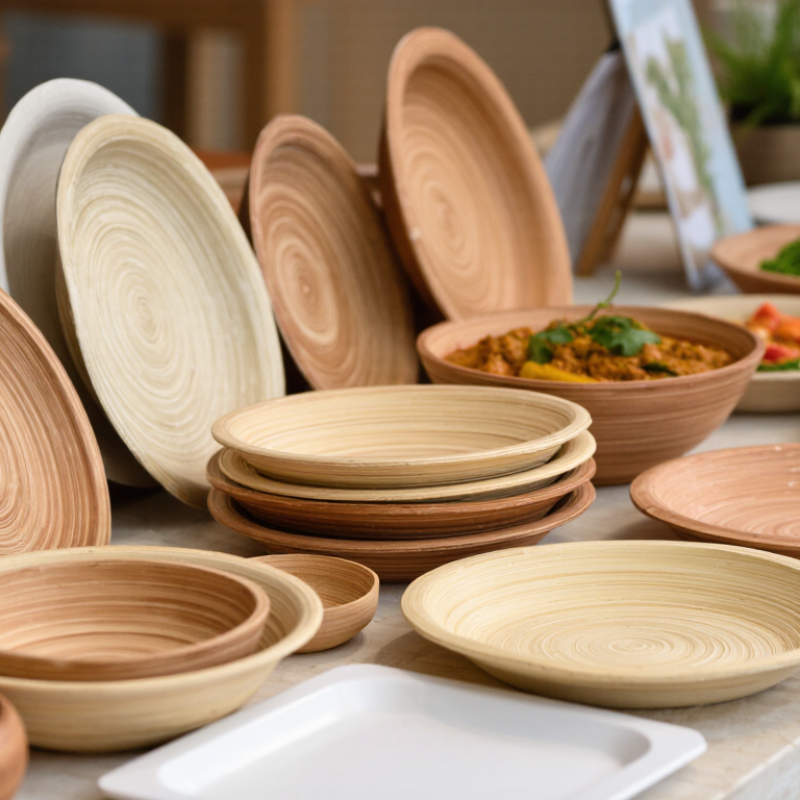
Private label palm leaf plates are tableware products made for one business, not for a shared public label. Manufacturers usually press naturally shed areca palm leaves into plates, bowls, or trays. Heat and pressure shape the material without adding conventional plastic coatings. The result feels firm, lightly textured, and often varies in color. That variation is normal.
Private labeling adds control over the product experience. A buyer can specify plate size, edge depth, packing format, carton artwork, and product labeling. However, a logo does not prove quality. Reliable suppliers should provide food-contact test records, moisture resistance results, microbial testing, and compostability documentation where applicable. The term “compostable” also needs care. Industrial composting conditions may differ from home composting. This is where some product claims become too simple.
Demand is linked to packaging concerns. The Ellen MacArthur Foundation reported that packaging represents about 40% of global plastic use. UNEP’s 2023 Turning off the Tap report found that global plastic pollution could be reduced by 80% by 2040 through existing solutions. Palm leaf plates cannot solve that problem alone. They can, however, offer a plant-based option for catering, events, and takeaway food. Buyers should check leaf sourcing, production hygiene, shipping protection, and end-of-life instructions. A practical sample test matters. Plates may look excellent but soften under oily food or long service periods.
| Evaluation Dimension | Private Label Palm Leaf Plates | Practical Value |
|---|---|---|
| Basic Definition | Disposable plates made from naturally shed palm leaves and sold under a buyer’s own label, packaging, or product identity. | Combines a plant-based product with customized market positioning. |
| Primary Raw Material | Fallen palm leaves collected after natural shedding. The leaves are generally cleaned, dried, and inspected before forming. | Uses an agricultural by-product without requiring the harvesting of leaves from living trees. |
| Manufacturing Process | Leaves are washed, heat-pressed or molded into shape, trimmed, quality-checked, and packed. | The process can produce plates with a natural grain pattern and firm structure. |
| Material Composition | Typically made primarily from leaf material, with no need for petroleum-based plastic. Exact composition depends on the specification and production process. | Supports plant-based product claims when verified by appropriate documentation. |
| Appearance | Natural brown or tan color with visible leaf texture. Color, grain, and surface pattern may vary from piece to piece. | Creates a distinctive rustic appearance for catering, events, food service, and retail packaging. |
| Common Product Formats | Round, square, rectangular, compartment, and serving plates in various diameters and depths. | Allows a private-label range to address snacks, meals, desserts, buffets, and takeaway service. |
| Strength and Rigidity | Rigid enough for many dry, moist, and moderately heavy foods when correctly formed and handled. | Offers a more stable eating experience than many lightweight paper plates; performance varies by design and thickness. |
| Heat Performance | Suitable for serving hot foods, subject to the supplier’s tested temperature limits and food-contact requirements. | Useful for hot meals and catering applications, but exact use conditions should be confirmed before sale. |
| Oil and Moisture Resistance | Naturally offers some resistance, but performance depends on food type, contact time, plate design, and whether a coating is used. | Appropriate for many short-service applications; extended exposure to liquids should be evaluated through product testing. |
| Single-Use Function | Designed primarily for one-time food service and disposal after use. | Reduces washing requirements for events, outdoor dining, catering, and takeaway operations. |
| End-of-Life Profile | Uncoated, plant-based plates may biodegrade or compost under suitable conditions. Actual disposal performance depends on coatings, additives, local rules, and facility conditions. | Can support waste-reduction goals when disposal claims are verified and communicated accurately. |
| Private Label Customization | Packaging can be customized with the buyer’s product name, logo, colors, barcode, usage instructions, and regulatory information. | Improves shelf recognition and helps create a consistent product portfolio. |
| Quality Control Priorities | Food-contact safety, cleanliness, odor, moisture, structural integrity, size consistency, packaging accuracy, and traceability. | Helps maintain reliable performance and supports compliance with applicable food-contact regulations. |
| Best-Suited Applications | Restaurants, food trucks, catering services, festivals, picnics, parties, hotels, institutional dining, and retail food-service supplies. | Provides a practical disposable serving option across food-service and consumer markets. |
| Main Considerations Before Purchase | Confirm food-contact documentation, dimensions, load capacity, moisture performance, coating composition, packaging requirements, minimum order quantity, and applicable disposal claims. | Ensures the private-label product matches the intended market, food types, and legal requirements. |
Note: Product performance, compostability, food-contact compliance, and disposal instructions should be confirmed through supplier documentation and testing for the specific plate design and destination market.
Workers collect fallen palm sheaths. They wash and dry them carefully. Heat and pressure shape them into plates, bowls, or trays. No plastic coating is required.
Yes. Buyers can select sizes, edge profiles, pack quantities, and carton designs. Deeper plates suit saucy foods. Wider plates suit shared dishes.
Not always. Natural fibers can show color changes, fine lines, and slight shape differences. This is normal. Perfect uniformity may be unrealistic.
Simple embossing can place a design directly on the surface. Deep details may weaken the plate. Printed sleeves or boxes offer more space for instructions.
Packaging can describe materials, care instructions, origin details, and disposal guidance. Clear production information supports customer trust. Vague environmental claims should be avoided.
Suppliers should inspect thickness, cleanliness, odor, strength, and moisture. Buyers should test samples and record breakage rates. One sample is not enough.
They are often suitable for composting systems. However, local facilities may not accept them. Disposal guidance should match the destination market.
Use dry warehouses and sealed cartons. Moisture can cause warping or mold. Practical shipping tests can reveal weak packaging. Storage is easy to underestimate.
Businesses gain more control over shapes, serving sizes, and packaging. Consistent presentation may support repeat orders. A polished package cannot fix weak plates.
Discuss thickness, edge strength, moisture resistance, testing methods, and documentation. Review several samples and supplier records. Some expectations may need revision.
Private Label Palm Leaf Plates are disposable tableware products made from naturally fallen palm leaves and sold under a business’s own name or product line. The leaves are cleaned, heat-pressed into different shapes, and carefully finished before packaging and branding. This process allows businesses to offer distinctive tableware without building their own manufacturing facilities, while creating opportunities for customized sizes, designs, packaging, and product positioning.
For businesses, these plates can support eco-conscious marketing, convenient food service, and a consistent customer experience. When evaluating suppliers, buyers should check material quality, plate strength, food-contact safety, hygiene procedures, and responsible sourcing practices. Sustainability also depends on how leaves are collected, how products are processed, and whether packaging is appropriately selected. Sourcing decisions and costs may vary according to order volume, customization, product specifications, packaging requirements, shipping distance, and supplier capabilities. Careful comparison helps businesses balance quality, reliability, environmental goals, and overall budget.