Engineered for commercial catering, retail channels, packaging distributors, and sustainable QSR infrastructure.
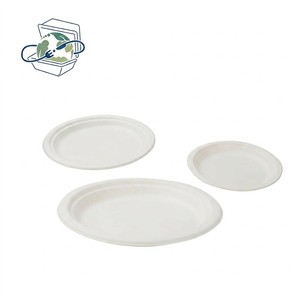
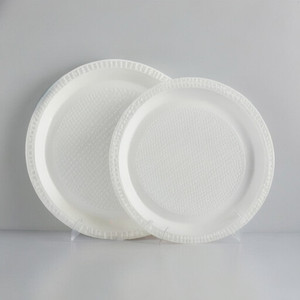
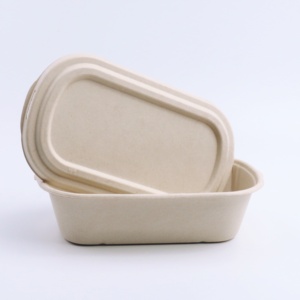
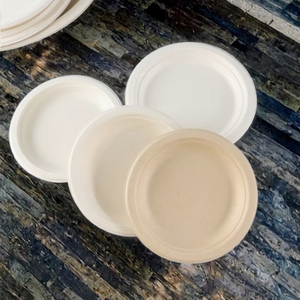
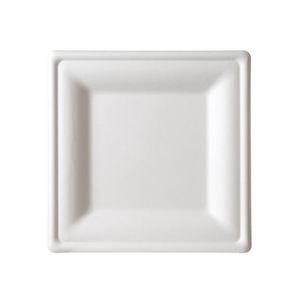
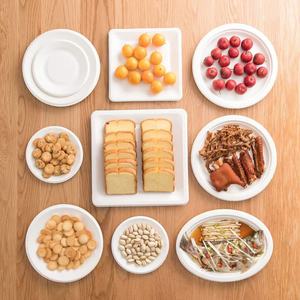
As global regulations tighten around single-use plastics (SUPs) and per- and polyfluoroalkyl substances (PFAS), international food distributors, airline caterers, hospitality conglomerates, and supermarket procurement teams require verified material transparency. Operating as a premier manufacturing complex in China, our facility integrates high-precision pulping, automated thermoforming, thermal barrier coating, and dual-stage UV-C sterilization to supply market-compliant eco plates globally.
Derived from upcycled agricultural byproduct fibers, sugarcane bagasse undergoes mechanical refining and high-density hydraulic pressing at 200°C. The resulting fibrous inter-locking matrix exhibits exceptional tensile strength, zero chemical binders, and complete 90-day industrial compostability under DIN EN 13432 protocols.
To comply with North American (CA AB 1200, NY S4371A) and European Union environmental safety standards, our proprietary oil and hydro-phobic treatments eliminate long- and short-chain fluorinated compounds while providing 100°C water and oil resistance for over 30 minutes without leakage.
Our cornstarch-based plates utilize non-GMO plant starch blended with biodegradable PLA or bio-polyesters. This technique creates a smooth, moisture-impermeable plate structure with superior cut-resistance, engineered specifically for high-moisture foods and deep-freezing applications.
Unlike intermediary trading vendors, our direct manufacturing infrastructure operates under TÜV-certified ISO 9001:2015 Quality Management and ISO 14001:2015 Environmental Management systems. To guarantee supply chain continuity for large FCL (Full Container Load) buyers, standard supply agreements incorporate a documented 1%-per-day SLA delay penalty written directly in the buyer's favor, backed by real-time production tracking.
Comprehensive physical and ecological benchmark analysis for commercial eco plates.
| Material Category | Thermal Limits | Oil & Water Resistance | Composting Timeline | Microplastic Status | Primary Commercial Use |
|---|---|---|---|---|---|
| Sugarcane Bagasse | -20°C to 120°C (Microwave/Oven) | High (PFAS-Free Barrier) | 60–90 Days (Industrial) | 0% Microplastics | QSR Takeaway, Events, Catering |
| Modified Cornstarch | -18°C to 100°C (Microwave) | 100% Waterproof | 180 Days (Controlled) | 0% Microplastics | Retail Sets, Institutional Dining |
| Areca Palm Sheath | -20°C to 200°C (Oven Safe) | Natural Fiber Resistance | 60 Days (Home Compostable) | 0% Microplastics | Premium Events, Eco-Resorts |
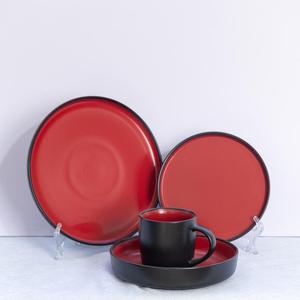
| Modern Porcelain Ceramic | Up to 1000°C (Commercial Dishwasher) | 100% Impermeable | Reusable (Multi-Year Lifecycle) | Non-Degradable | Fine Dining, Hotel Hospitality |
Key operational trends re-shaping the global eco tableware manufacturing ecosystem.
International importers are increasingly held accountable for Scope 3 emissions under EU Corporate Sustainability Due Diligence Directive (CSDDD). China's leading factories are responding by integrating rooftop photovoltaic power arrays directly into thermoforming production facilities, reducing the embedded carbon footprint of sugarcane and cornstarch plates by up to 42% compared to grid-reliant manufacturing.
The industrial elimination of fluorinated oil-repellents has accelerated research into plant-derived nanocellulose crystals (NCC) and bio-wax formulations. These microscopic cellulose networks form a dense physical barrier against lipid molecules, offering superior heat stability without compromising organic composting rates or violating regional chemical safety acts.
Driven by the rapid growth of meal-kit deliveries and airline catering customization, OEM factories must provide rapid prototyping. Utilizing modern 5-axis CNC machining, custom compartment layouts, debossed brand logos, and optimized nestability geometry can now transition from CAD design to mass production within 14 calendar days.
Navigating international customs requires robust technical files. A factory partner must maintain updated documentation dossiers for immediate deployment upon container clearance:
Why global brand owners, importers, and regional distributors select our Chinese manufacturing base.
We support over 30+ international white-label brands with complete packaging design, retail shrink-wrapping, barcode integration, custom inner cartons, and multilingual compliance labeling. Minimum order quantity (MOQ) starts at one 40-foot High-Cube container with flexible mixed-SKU configurations.
Operating 90 automated press lines with an monthly output capacity exceeding 4.5 million units, our raw material supply chain relies on direct agricultural partnerships. This ensures year-round inventory stability for bagasse pulp and cornstarch resins, shielding buyers from seasonal market price volatility.
Located near primary deep-water shipping hubs, our automated container loading bays achieve a 10-day turnaround from confirmed purchase order to vessel loading. Comprehensive shipping dossiers, including phytosanitary certificates, container loading photographs, and weight slips, are delivered within 24 hours of departure.
Direct operational answers for institutional buyers, supply chain managers, and distribution partners.
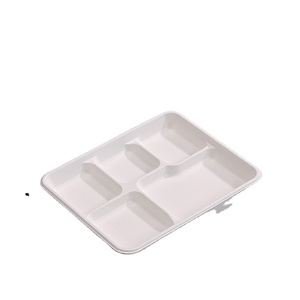
Our standard export MOQ is one 40-foot High-Cube container (approx. 67 m³), yielding roughly 300,000 to 350,000 pieces depending on plate dimensions and stacking density. We support mixed SKU loading within a single container at no additional processing fee, allowing buyers to combine round plates, square plates, compartment trays, and bowls in a single shipment.
Bagasse pulp plates are thermal-molded under high pressure, demonstrating oil resistance up to 120°C and water resistance up to 100°C. They remain structurally rigid in microwaves and conventional ovens for short periods (up to 200°C for natural sheath variants). Cornstarch formulations offer 100% waterproof performance for cold and warm food items, eliminating sogginess or liquid trans-wicking during prolonged food contact.
Yes. We supply 100% fluorine-free (PFAS-Free) bagasse tableware line formulations. Third-party testing under EN 14582 and total organic fluorine (TOF) laboratory protocols verifies compliance with North American state regulations (including California AB 1200 and New York S4371A) as well as European Union REACH and LFGB safety requirements.
Standard production cycles range from 10 to 14 days from deposit confirmation to FCL loading at port. Our export agreements feature a buyer-protection clause incorporating a 1%-per-day late loading penalty in the buyer's favor. Automated inventory software tracks real-time status from raw pulp slurry preparation to final shrink wrapping and palletization.
Yes. Our in-house mold tooling department engineers custom debossed branding logos directly onto plate rims or bases. Additionally, our packaging division offers customized retail master cartons, barcoded inner sleeves, display PDQ boxes, and retail-ready shrink film with customized print inserts for supermarket chains and private-label distributors.
Connect with our senior technical sales team to request full product specification sheets, lab test dossiers, FOB price charts, and container loading layout plans.
Get Catalog