ISO 9001 & 14001 · LFGB §30/§31 [email protected] FOB New Mangalore Port, Buy eco-friendly plant tableware wholesale from a trusted manufacturer. High-quality compostable plates, cups, and cutlery for global B2B buyers. Contact us today for factory-direct bulk pricing!

China Top Plant Tableware Manufacturers & Exporters

Whitepaper & Procurement Guide: Bio-Based Plant Fiber Dinnerware, Sugarcane Bagasse Molding, Cornstarch PLA, and Fluorine-Free Global Compliance Solutions

Factory-Direct Catalog

Featured Eco-Friendly Plant Tableware Products

Rigid, microwave-safe, home-compostable tableware manufactured via high-precision hydraulic thermoforming. Exported under full container load (FCL) to North America, Europe, and Asia-Pacific.
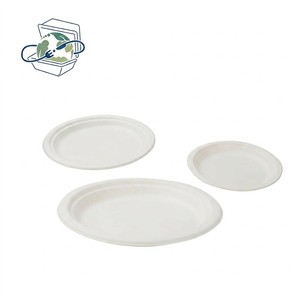
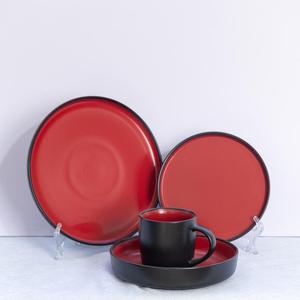
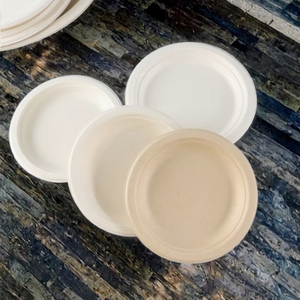
Sugarcane Bagasse Disposable Plates

Sugarcane Bagasse Disposable Compostable Plates for Catering & Hospitality

  • 100% Sugarcane Bagasse Pulp
  • PFAS-Free Water/Oil Resistance
  • Heat Resistance up to 220°C
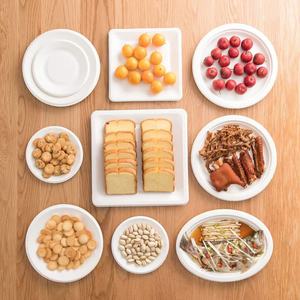
Modern Eco-Friendly Durable Bio Dinnerware Sets

Modern Minimalist Heavy-Duty Bio-Based Durable Plates & Dinnerware Sets

  • Reinforced Fiber Density
  • Commercial Dishwasher Safe
  • Zero Synthetic Resin Coating
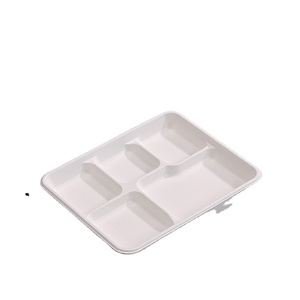
5 Compartments Sugarcane Tray

Wholesale Biodegradable 5-Compartment Meal Trays with Lids

  • Deep Partition Spill-Proof Design
  • Ideal for Meal Kits & Institutional Use
  • EN 13432 & BPI Certified
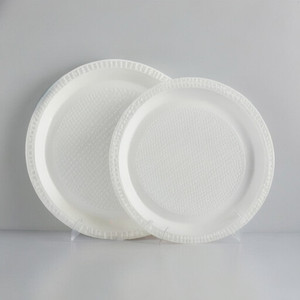
Biodegradable Cornstarch Round Plates

Biodegradable Eco-Friendly Cornstarch Round Plates (Multiple Sizes)

  • Cornstarch-Based Polymer Matrix
  • High Flexibility & Tensile Strength
  • Freezer Safe down to -20°C
Eco Disposable Bagasse Dinnerware Sets

Commercial Hot-Sale Eco Bagasse Dinnerware Sets & Custom Food Packaging

  • Retail-Ready Shrink & Carton Packs
  • Custom Embossed Logo Available
  • FDA 21 CFR 176.170 Compliant
Recyclable Cornstarch Plates

Recyclable Cornstarch Composite Party Plates & Banquet Utensils

  • Micro-Rib Stiffness Technology
  • Hydrophobic Barrier Protection
  • Zero Plasticizer Odor
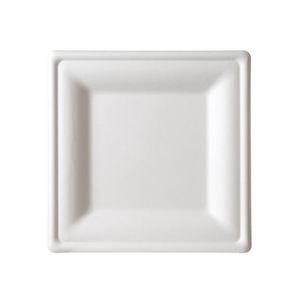
Biodegradable Square Plate Sets

Biodegradable Square Plant Fiber Plates for Resort Catering & Events

  • Elegant Square Rim Design
  • High-Density Fiber Pressing
  • 100% Home & Industrial Compostable
Sugarcane Bagasse Home Party Plates

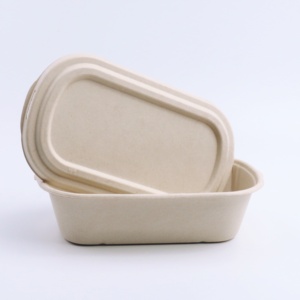
Heavy-Duty Disposable Sugarcane Bagasse Bowls & Salad Dishes

  • Deep Basin Oil-Proof Wall
  • Hot Soup Safe (up to 100°C Liquid)
  • OK Compost Industrial Certified
50,000 MT
Annual Pulp Capacity
100%
PFAS-Free Compliant
7-10 Days
FCL Container Lead Time
65+
Global Export Markets
Executive B2B Report

China Plant Tableware Industry Whitepaper: Manufacturing, Compliance & Material Engineering

The global foodservice, packaging, and commercial catering industries are undergoing an unprecedented structural transition. Accelerated by the European Union Single-Use Plastics Directive (EU 2019/904), state-level PFAS mandates across North America (such as California AB 1200 and New York ECL § 37-0209), and stringent ESG reporting standards (CSRD), procurement officers can no longer rely on conventional polystyrene (EPS) or fluorinated paper plates.

"Information Gain Insight: China's plant tableware manufacturing ecosystem has evolved beyond simple virgin pulp pressing. Modern Tier-1 manufacturers utilize closed-loop thermoforming, high-consistency sugarcane bagasse refining, bio-based AKD sizing agents, and zero-PFAS barrier technologies to deliver high-tensile, heat-resistant food containers at commercial parity."

1. Fiber Rheology & Raw Material Sourcing Vectors

The primary bio-based feedstocks powering China's premier tableware exporting hubs (located predominantly in Zhejiang, Guangdong, Jiangsu, and Shandong provinces) consist of agricultural upcycled biomass:

  • Sugarcane Bagasse Fiber (Saccharum officinarum): The fibrous residue remaining after sugar extraction. Rich in cellulose (45-55%) and hemicellulose (20-25%), bagasse fibers possess a high aspect ratio (length-to-width ratio), enabling tight inter-fiber hydrogen bonding during thermoforming. This results in superior structural rigidity and hot-oil resistance.
  • Modified Cornstarch (PLA/PBAT Composites): Biopolymer formulations utilizing thermoplastic starch (TPS) blended with Polybutylene Adipate Terephthalate (PBAT) or Polylactic Acid (PLA). These matrixes offer high ductility, smooth surface finish, and total moisture impermeability for cold-chain catering applications.
  • Bamboo Pulp (Bambusoideae): Incorporating long bamboo fibers yields an exceptional tensile modulus, allowing manufacturers to reduce wall thickness by up to 15% without sacrificing stacking strength or rim stiffness.
  • Areca Leaf Sheath & Agricultural Residues: Naturally shed leaves pressed under heat offer unique organic textures, catering to high-end eco-boutique and outdoor event markets.

2. Advanced Thermoforming & Manufacturing Process Flow

Achieving international food-contact safety standards (FDA 21 CFR 176.170, EU 1935/2004, LFGB §30/31) requires an 8-stage automated production process:

1. Hydrapulping & Refining

Raw bagasse bales are micro-refined in industrial hydrapulpers to achieve an optimal Schopper-Riegler (°SR) freeness rating, ensuring consistent fiber slurry hydration.

2. Wet-End Chemical Addition

Fluorine-free alkyl ketene dimer (AKD) and bio-wax emulsions are dosing-controlled to establish internal hydrophobic and oleophobic barriers throughout the fiber web.

3. Vacuum Forming

Fiber slurry (0.8% consistency) is sucked onto precision CNC brass wire mesh molds using positive-vacuum displacement to form uniform wet preforms.

4. Hydraulic Thermoforming

Wet preforms are compressed under 200°C to 230°C heated hydraulic dies at 15-20 MPa pressure, evaporating residual moisture and heat-setting inter-fiber bonds.

5. Edge Trimming & Deburring

Automated robotic arm cutters trim perimeter flashings, delivering smooth, burr-free plate edges for seamless automatic denesting in commercial packaging lines.

6. UV Sterilization & QC

Products pass through high-intensity UV-C radiation tunnels for microbial decontamination followed by 100% optical camera inspection for pinhole or oil-stain rejection.

Material Science Matrix

Comprehensive Material Comparison: Plant Fiber vs. Traditional Alternatives

Technical decision matrix for enterprise procurement teams evaluating physical properties, environmental footprints, and compliance vectors.

Performance Parameter Sugarcane Bagasse Pulp Cornstarch PLA Blend Bamboo Pulp Composite Recycled Paperboard Expanded Polystyrene (EPS)
Primary Raw Material Agricultural Bagasse Residue Thermoplastic Corn Starch Virgin Bamboo Fiber Post-Consumer Recycled Paper Styrene Monomer Petroleum
Tensile Strength (MPa) 18 - 25 MPa 25 - 35 MPa 22 - 30 MPa 12 - 16 MPa 1.2 - 2.5 MPa
Thermal Range (°C) -20°C to +220°C -20°C to +85°C -20°C to +220°C 0°C to +90°C -10°C to +80°C
Microwave & Oven Safe Yes (Full Microwave & Oven) Microwave Only (Low Heat) Yes (Full Microwave & Oven) Limited (Microwave Only) No (Toxic Leach Risk)
PFAS Oil Barrier Technology Fluorine-Free AKD / Bio-Wax Inherently Hydrophobic Fluorine-Free AKD Sizing PE / PET Synthetic Coating Not Applicable
Home Compostability (EN 13432) 100% Pass (60-90 Days) Requires Industrial Facility 100% Pass (45-75 Days) Conditional (Lamination dependent) Non-Biodegradable
Carbon Footprint (kg CO2e/kg) ~0.48 kg ~1.25 kg ~0.62 kg ~1.10 kg ~3.45 kg
Strategic Procurement Trends

5 Defining Trends Shaping Plant Tableware Sourcing (2025–2030)

Key market shifts and technological advancements every B2B buyer, importer, and distributor must integrate into their supply chain roadmap.

1. The Universal Transition to Total PFAS-Free Formulations

Per- and polyfluoroalkyl substances (PFAS) have historically provided grease-proofing for molded pulp products. With global regulatory bodies enforcing near-zero limits (e.g., total fluorine < 100 ppm), China’s top manufacturers have pioneered plant-based lipid barrier technologies. Utilizing cross-linked alkyl ketene dimers (AKD), modified starch matrices, and bio-silica coatings, modern tableware delivers 24-hour hot-oil resistance without carcinogenic fluorinated compounds.

2. Lightweighting via Micro-Rib Structural Engineering

Rising ocean freight costs and raw fiber prices are driving structural innovation. Through Finite Element Analysis (FEA) computer modeling, advanced manufacturers mold micro-reinforcement ribs along the rim and base of plates. This structural optimization reduces total product weight by 12% to 18% while simultaneously increasing flexural modulus and stacking crush-resistance during shipping.

3. On-Demand OEM Embossing & Automated Retail Customization

Private label brand owners require rapid SKU differentiation. High-speed thermoforming lines now feature quick-change inserts that emboss custom brand logos, recycling symbols, and localized barcoding directly into the fiber during the 200°C press cycle—eliminating costly post-printing inks and preserving 100% home-compostable purity.

4. Closed-Loop Water Recycling & Solar-Powered Factories

ESG transparency is now a mandatory prerequisite for Western retail audits. Leading Chinese plant tableware exporters operate zero-liquid-discharge (ZLD) wastewater treatment plants, recycling over 95% of process water back into pulping units. Furthermore, rooftop photovoltaic solar arrays supply up to 35% of total thermal and mechanical energy, significantly dropping the embodied LCA footprint per unit.

5. Hybrid Fiber Blending for Cold-Chain & Heavy-Gravy Dishes

Traditional single-origin bagasse can soften when holding high-moisture gravies over extended periods. Next-generation products blend bagasse with long-fiber softwood kraft pulp or bamboo micro-fibrils, creating an interconnected mechanical weave that eliminates liquid weeping and bowl wall sagging during prolonged takeout delivery cycles.

Enterprise Sourcing Advantage

Why Global Importers Partner with Premier Chinese Manufacturers

As a verified leader in sustainable tableware manufacturing, our OEM/ODM ecosystem integrates complete raw material refining, automated toolmaking, and high-speed FCL logistics. We provide full trade security, transparent testing dossiers, and dedicated account management for international wholesale buyers.

30-Day Mold Tooling

Rapid CNC brass mold development for custom geometric shapes, compartment layouts, and retail retail-ready packaging.

Comprehensive Compliance

Certified under BPI, OK Compost Industrial/Home (EN 13432), FDA 21 CFR 176.170, LFGB, ISO 9001, and amfori BSCI.

Direct FCL Port Logistics

Streamlined loading from Ningbo, Shanghai, or Qingdao ports with guaranteed 10-day container dispatch SLAs.

Inquire Now — Connect with Our B2B Engineering Team
Procurement Knowledge Base

Frequently Asked Questions for B2B Importers & Distributors

Clear, authoritative answers addressing technical specs, compliance standards, MOQs, and private label execution.

What is the minimum order quantity (MOQ) for factory-direct container shipments?
Our standard minimum order quantity for custom manufacturing or wholesale pricing is one 40-foot High-Cube (40' HC) container. Floor-loaded, a 40' HC container accommodates approximately 65 to 68 cubic meters of volume, representing roughly 300,000 to 450,000 individual plates or bowls depending on SKU dimensions. We allow buyers to mix up to 4 distinct product SKUs within a single container at no additional consolidation fee.
How do your products comply with North American and EU PFAS bans?
All our plant fiber tableware utilizes advanced fluorine-free alkyl ketene dimer (AKD) and bio-based sizing chemistry. Our products undergo rigorous third-party laboratory testing (SGS, TÜV, Eurofins) to verify Total Fluorine content below 50 ppm (far exceeding the 100 ppm regulatory ceiling mandated by California AB 1200, Washington HB 1168, and EU REACH annexes). Test reports are attached to all shipping manifests.
What are the thermal limits for sugarcane bagasse vs. cornstarch dinnerware?
Sugarcane bagasse products feature a thermal operating range from -20°C up to +220°C (-4°F to +428°F), making them fully safe for microwave reheating and conventional oven use (up to 20 minutes at 200°C). Cornstarch PLA/PBAT biopolymer products are ideal for cold-chain packaging, refrigerated foods, and warm liquids up to 85°C (+185°F).
What certifications are required to import bio-tableware into Europe and the USA?
For North America, key certifications include BPI (Biodegradable Products Institute) ASTM D6400 compliance and FDA 21 CFR 176.170 food-contact safety authorization. For Europe, essential documentation includes TÜV OK Compost Industrial / Home (EN 13432 standard) and LFGB §30/31 food-contact safety certificates. Our export compliance department supplies complete regulatory documentation dossiers for customs clearance.
What is the lead time from order confirmation to container port delivery?
For repeat standard SKUs, production and container loading require 7 to 10 working days. First-time OEM custom-printed or embossed orders require approximately 20 to 25 days, which includes brass mold tooling customization, sample sign-off, mass thermoforming, automated packaging, and pre-shipment quality inspection.
How do plant fiber plates behave under long-term humid storage?
Our products undergo high-temperature hydraulic drying and moisture-barrier treatment, maintaining a residual moisture content below 7%. When stored in original vacuum-sealed master cartons in dry warehouse conditions (relative humidity < 70%, temperature 15-30°C), products maintain full structural integrity and a guaranteed shelf life of 24 to 36 months without degradation or mold formation.
Can you manufacture private label retail packaging with custom barcoding?
Yes. We provide complete OEM/ODM private label packaging services. Options include retail shrink wraps with soy-based printed labels, inner polybags, custom kraft inner boxes, and master carton branding with GS1-compliant EAN/UPC barcodes, multi-lingual ingredient/compostability text, and FSC-certified corrugated shipping boxes.
What is the difference between home compostable and industrially compostable tableware?
Industrial composting (EN 13432 / ASTM D6400) requires managed facility conditions where temperatures reach 55-60°C with controlled humidity, breaking down products within 90 days. Home composting (OK Compost Home) verifies that products fully decompose in ambient garden compost heaps (temperatures 20-30°C) within 180 days without leaving toxic heavy metals or microplastics. Our molded bagasse plates pass both home and industrial standards.

Ready to Source Direct from China's Top Plant Tableware Factory?

Request factory-direct FOB/CIF quotes, technical data sheets, PFAS-free test reports, or custom sample packs. Our international B2B export desk responds within 4 business hours.

Inquire Now