High-performance porcelain, bone china, and 100% A5 food-grade melamine solutions built for high-volume foodservice, banqueting, and luxury dining environments.
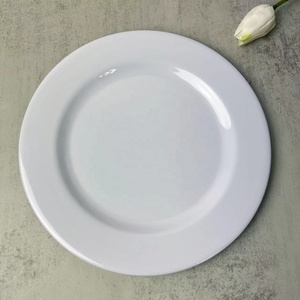
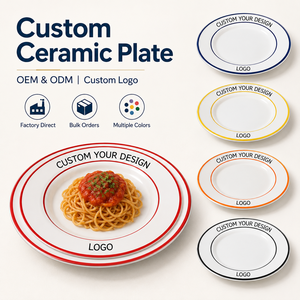
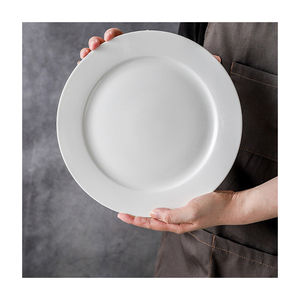
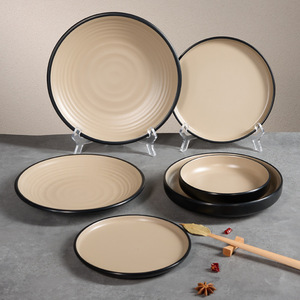
In the modern global hospitality and commercial foodservice sector, procurement decisions for dinnerware have evolved far beyond basic aesthetics. Today’s procurement executives, hotel procurement managers, and restaurant group operations directors require engineered solutions that bridge the gap between high-concept culinary presentation and rigorous operational durability. Selecting a direct Custom OEM Commercial Dinnerware Supplier & Suppliers is no longer merely a purchasing transaction—it is a strategic alignment with a manufacturing partner capable of executing precise material formulation, custom structural tooling, rigid quality assurance (QA), and resilient international logistics.
As commercial kitchens adopt automated, high-temperature flight-type dishwashers, and as multi-unit restaurant chains expand across international jurisdictions, dinnerware must withstand extreme mechanical impact, thermal shock cycles, harsh chemical detergents, and continuous stacking pressure. This technical guide outlines the structural mechanics, material science, OEM/ODM custom development workflows, and market trend forecasts necessary to make data-backed procurement decisions for hospitality enterprises worldwide.
SEO & Procurement Key Takeaway: High-performance commercial dinnerware must balance mechanical strength (chip resistance) with non-porous surface vitrification to eliminate bacterial harbourage, ensure full LFGB/FDA food-contact compliance, and lower the annual replacement cost (amortised cost per cover).
A master OEM manufacturer operates across multiple material disciplines. Understanding the technical boundary conditions of high-fired ceramic compositions versus high-density thermo-set melamine polymers is critical for matching product selection to specific commercial operational environments.
Commercial porcelain utilized in high-intensity hotel and dining facilities relies on precise kaolin clay, feldspar, and quartz formulations. Fired in computer-controlled tunnel kilns at temperatures ranging between 1,320°C and 1,380°C, the silica and clay particles undergo complete vitrification. This process reduces the material’s porosity to below 0.1%, preventing moisture penetration, grease absorption, and micro-cracking over extended service lifespans.
For fine dining and luxury banquet environments, High Bone China incorporates up to 45% tri-calcium phosphate (derived from synthesized or natural bone ash). This yields an exceptional strength-to-weight ratio, high translucency, and superior chip resistance despite thin profile geometries. The outer protective glaze layer—engineered from lead-free, cadmium-free frits—forms a crystalline matrix resistant to metal cutlery scratching (cutlery marking) and chemical erosion from acidic foodstuffs.
For high-volume catering, outdoor pool decks, buffet lines, and quick-service restaurant (QSR) chains, breakage rates of traditional ceramics can drastically inflate operating expenses. OEM suppliers engineer 100% A5 pure melamine formaldehyde resin dinnerware to solve this challenge. Compression-moulded under high pressure (150–200 tons) and temperatures exceeding 160°C, A5 melamine forms a thermosetting molecular structure that is virtually unbreakable, scratch-resistant, and completely BPA-free.
Unlike lower-tier A1 or A3 compounds (which blend urea-formaldehyde fillers prone to toxic leaching), pure A5 melamine strictly complies with EU Regulation No. 10/2011, US FDA 21 CFR, and German LFGB §30/§31 standards. It retains heat efficiently while remaining cool to the touch, drastically lowering serving staff burn risks during high-tempo operations.
Custom 3D mold development within 7 to 10 days for proprietary rim profiles, deep-welled pasta bowls, and modular banquet platters.
High-temperature decal fusion at 800°C–1250°C ensures brand logos and custom color rims never fade, peel, or leach into food.
Fully compliant with FDA, LFGB, EU 1935/2004, and ISO 9001:2015. Every production batch undergoes rigorous heavy metal leaching tests.
To assist procurement directors in selecting the optimal dinnerware substrate, the technical matrix below details key performance metrics across commercial application criteria.
| Performance Parameter | Reinforced Hard Porcelain | High Fine Bone China | 100% A5 Melamine Compound |
|---|---|---|---|
| Firing / Molding Temp | 1,350°C – 1,380°C | 1,250°C – 1,280°C | 160°C – 180°C (Hot Press) |
| Water Absorption | < 0.1% (Non-porous) | < 0.2% (Vitreous) | 0.00% (Impenetrable) |
| Impact Resistance (Edge) | High (Reinforced Rim) | Moderate to High | Extreme (Unbreakable) |
| Thermal Shock Tolerance | ΔT = 160°C Rapid Change | ΔT = 140°C Rapid Change | -30°C to +120°C Max |
| Surface Hardness (Mohs) | 6.5 – 7.0 (Scratch Proof) | 6.0 – 6.5 | 3.5 – 4.0 (Anti-Drop) |
| Microwave / Oven Safety | Oven & Microwave Safe | Microwave Safe (No Metal) | Not Microwave / Oven Safe |
| Commercial Dishwasher Life | 3,000+ Cycles | 2,500+ Cycles | 2,000+ Cycles (Top/Bottom Rack) |
| Primary Target Application | Hotels, Bistros, Banquets | Fine Dining, VIP Suites, Events | Outdoor, Buffets, QSR, Catering |
Partnering with a true Custom OEM Commercial Dinnerware Supplier requires a transparent, step-by-step product development lifecycle. From concept sketch to container vessel loading, our facility executes rigid quality gates at every phase.
Clients provide reference samples, CAD files, or concept sketches. Our engineering team utilizes parametric 3D software to generate structural digital renders, optimizing foot rim stacking stability, sauce retention wells, and ergonomic grip margins. SLA 3D resin or CNC plaster prototypes are delivered within 5 business days for physical evaluation.
Once the prototype is approved, high-precision steel compression molds (for melamine) or CNC-machined aluminum/plaster working molds (for ceramics) are fabricated. Mold draft angles are calibrated to eliminate surface drag during automated release, ensuring flawlessly uniform wall thickness.
For custom color-rim plates, full-bleed reactive glazes, or intricate logo branding, color pigments are calibrated using spectrophotometers to achieve precise Pantone (PMS) matching. Ceramic decals are printed using inorganic, mineral-based metallic inks that permanently fuse into the glaze matrix during a secondary firing stage at 800°C–1,050°C. Melamine graphics are embedded under a clear protective foil layer prior to final curing, locking the design beneath a non-toxic clear shield.
Every batch undergoes stringent Quality Assurance protocol prior to packaging:
As global hospitality brands adapt to shifting consumer preferences and regulatory frameworks, several macro trends are reshaping the commercial dinnerware manufacturing landscape:
Traditional bright-white stark dinnerware is increasingly complemented by tactile, organic forms. Reactive glaze ceramics—where metallic oxides within the glaze react uniquely to heat variations during firing—create bespoke, artisanal appearances while preserving industrial non-porous durability. OEM suppliers capable of mass-producing reactive glazes with consistent dimensional tolerances are gaining significant market share in boutique hotel chains and upscale fusion dining.
Banqueting operations and global airline caterers prioritize weight reduction without compromising structural integrity. Advanced slip-casting technology allows OEM suppliers to reduce overall plate weight by 15–20%, reducing freight costs, lowering worker strain during service clearing, and reducing thermal energy requirements during kiln firing cycles.
Corporate Social Responsibility (CSR) initiatives require hotel chains to track scope 3 supply chain emissions. High-end commercial manufacturers now provide 5-year edge-chip warranties on reinforced porcelain lines, incentivizing initial investments in superior material formulations that drastically diminish long-term landfill contribution.
Direct answers to essential technical, logistics, and customization questions from global commercial buyers.
Our baseline OEM MOQ for custom logo printing or custom color glaze on standard shapes starts at 1,000 pieces per SKU. For entirely custom-molded shapes requiring unique CNC steel tooling, MOQ ranges from 3,000 to 5,000 pieces per item. Mixed SKU full-container loads (FCL) are supported with optimized master carton stacking designs.
All raw materials undergo pre-production testing. Our ceramic glazes are 100% lead-free and cadmium-free, meeting US FDA 7117.06/07, California Proposition 65, and European Union Directive 84/500/EEC. Our melamine dinnerware uses exclusively 100% A5 virgin resin tested under EU 10/2011 and LFGB §30/§31 parameters. Official test reports from SGS, TÜV, or Intertek are provided with every batch.
Sample fabrication and CAD approval take 7 to 12 days. Mass manufacturing for standard full-container load orders (20ft/40ft HQ) takes approximately 30 to 45 days depending on material complexity (e.g., reactive glaze firing vs. standard white melamine compression). Expedited production schedules are available for contract hotel openings.
Yes. Our in-house ceramic laboratory uses computerized color matching to replicate exact Pantone (PMS) or RAL color codes. We adjust glaze formulation and firing atmosphere controls to achieve consistent color fidelity across high-volume multi-batch production runs.
Our 100% A5 commercial melamine dinnerware is rated for industrial dishwashers operating up to 85°C–90°C water wash and rinse cycles. It features a hard glaze finish that prevents surface dulling and staining, even when exposed to heavy tea, coffee, and spice residue over thousands of commercial cycles.