Full container load (FCL) ready, private-label packaging compliant, and certified for global food-contact safety (LFGB, EU 1935/2004, FDA).
An authoritative analysis on supply chain resilience, material science transition, and international compliance for enterprise buyers.
The global event management, luxury resort, and commercial hospitality sectors are undergoing a structural transformation. Driven by stringent regulatory enforcement—most notably the European Union’s Single-Use Plastics Directive (EU 2019/904), state-level extended producer responsibility (EPR) laws across North America, and tightening ESG corporate mandates—procurement officers can no longer rely on conventional polystyrene or polyethylene-lined disposables. Sourcing directors require primary OEM/ODM partners capable of delivering massive volume consistency, structural rigidity under high thermal loads, and absolute regulatory compliance without inflating total cost of ownership (TCO).
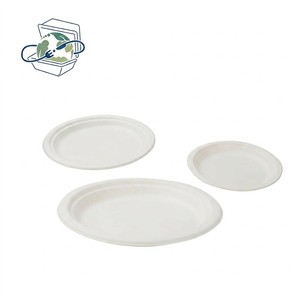
As a vertically integrated original equipment manufacturer operating solar-powered automated thermal pressing infrastructure, our enterprise model mitigates single-origin raw material risks. By synthesizing agricultural residual fibers—such as natural Areca palm sheaths (Areca catechu), refined sugarcane bagasse pulp, and modified bio-cornstarch matrices—we engineer disposable tableware engineered to exceed the structural parameters of traditional paper plates while retaining 100% biological compostability in accordance with EN 13432 and ASTM D6400 parameters.
Utilizing high-tonnage CNC hydraulic pressing at temperatures up to 200°C, our natural fiber cellular walls compress to maximum density. This achieves superior flexural modulus, preventing bending or buckling during heavy banquet service.
Eliminating per- and polyfluoroalkyl substances (PFAS/PFOS) entirely. Our proprietary plant-based lignin and bio-wax dispersions provide 100% hot oil (95°C) and aqueous liquid containment without compromising commercial compostability.
In-house CAD toolmaking enables bespoke mold creation within 14 business days. We provide precision debossing, custom compartment geometries, retail packaging customization, and private-label barcode integration.
Quantitative comparison of bio-based substrates for commercial catering performance metrics.
| Substrate Category | Thermal Resistance Range | Tensile / Flexural Strength | Hydrophobic / Lipophilic Barrier | Decomposition Profile | Ideal B2B Application |
|---|---|---|---|---|---|
| Areca Palm Leaf Sheath | -20°C to +200°C (Oven/Microwave) | Exceptional (Natural Wood Grain) | Natural Wax Layer (Zero Chemical Additives) | Home Compostable (60–90 Days) | Premium Hospitality, Upscale Weddings, Eco Resorts |
| Sugarcane Bagasse Pulp | -18°C to +120°C (Microwave Safe) | High (Molded Density: 0.65 g/cm³) | Bio-Resin Surface Sizing Applied | Industrial Compostable (30–60 Days) | High-Volume Festivals, Institutional Foodservice |
| Thermoplastic Cornstarch (PLA) | -10°C to +75°C (Cold/Warm Fill Only) | Moderate (Flexible Polymer Matrix) | Complete Hydrophobic Containment | Industrial Facility Required (180 Days) | Cold Salad Bars, Airline Meal Trays, Deli Service |
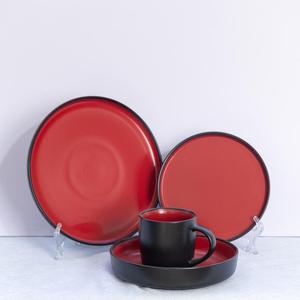
| High-Fired Porcelain Ceramic | -30°C to +300°C (All Equipment) | Vitrified (Maximum Durability) | Glazed Non-Porous Surface | Re-usable / Non-Degradable | Permanent Event Venues, Multi-Use Hotel Dining |
The strategic sourcing landscape for event tableware is migrating rapidly from reactive purchasing to proactive supply-chain engineering. Analysis of global contract awards and distributor RFP specifications reveals three non-negotiable macro-trends dominating the upcoming five-year cycle:
1. Absolute PFAS-Free Compliance and Traceable Fluorine Testing: Regulatory bodies across the US (EPA restrictions) and Western Europe are enforcing strict total organic fluorine (TOF) limits under 50 ppm. Modern buyers must demand verified batch-level laboratory testing ensuring zero fluorinated grease-proofing chemicals are present in bagasse or pulp fibers.
2. Solar-Powered Carbon Intensity Reduction: Enterprise procurement teams are requiring Scope 3 emission audits from foreign suppliers. Manufacturing operations that utilize grid power generated by coal are suffering carbon tariff penalties. Facilities operating grid-tied or off-grid solar photovoltaic infrastructure—such as our 90 solar-powered pressing units in Karnataka—offer buyers a verifiable reduction in product carbon footprint (PCF).
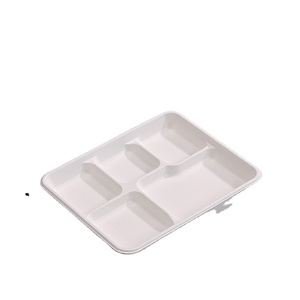
3. Closed-Loop Supply Chain Integration & Custom Compartmentation: Large-scale event venues are partnering directly with OEMs to develop custom compartment trays optimized for specific menu layouts and automated waste sorting. Custom tooling that incorporates structural ribbing reduces overall raw material mass by up to 15% while enhancing stack stability during mass staging.
Critical commercial, technical, and logistical insights for international buyers and white-label brand owners.
Our standard Minimum Order Quantity (MOQ) for direct factory export is one 40-foot high-cube (40ft HC) container. A floor-loaded 40ft HC container holds approximately 67 cubic meters, which translates to between 300,000 and 350,000 finished pieces depending on the product mix. We support multi-SKU consolidation within a single container at no additional charge, allowing distributors to mix round plates, square plates, compartment trays, and deep bowls to test market demand.
Standard production and container loading require exactly 10 calendar days from confirmed deposit and artwork sign-off to container sealing at New Mangalore Port, India. To guarantee operational reliability, standard Ecodyne supply contracts incorporate a 1%-per-day late loading penalty written in favor of the buyer. Global transit times range from 14 to 28 days depending on the destination port in Europe, North America, or the Middle East.
Every commercial production run is supported by a comprehensive laboratory documentation dossier. This includes ISO 9001:2015 (Quality Management) and ISO 14001:2015 (Environmental Management) issued by TÜV India, LFGB §30 and §31 food-contact safety parameters for European markets, EU Regulation 1935/2004 compliance, USDA BioPreferred program registration, amfori BSCI social compliance audit certification, and EN 13432 compostability test reports.
No. Our natural Areca palm sheath tableware is manufactured using zero added chemicals, synthetic resins, laminates, dyes, or binders. Collected naturally shed sheaths undergo a hydro-pressure wash, pure water hydration, and thermal shaping at 200°C in CNC hydraulic molds. Heat and natural lignin perform the bonding, resulting in a 100% natural, food-safe product that composts naturally within 60 to 90 days without soil contamination.
Yes. We currently produce for 32 private-label brands across 19 export markets. OEM services include custom 3D mold tooling for proprietary product shapes, logo debossing directly onto plate bases, specialized retail shrink-wrap packaging with custom printed inner sleeves, EAN/UPC barcoding, and multilingual master carton labeling tailored to destination customs rules.
Both substrates offer high structural rigidity superior to standard paper disposable plates. Natural Areca sheath plates feature inherent wood-grain rigidity capable of supporting heavy steaks, carving stations, and wet sauces without bending or leaking. Sugarcane bagasse molded pulp plates feature an engineered fibrous matrix designed to handle hot liquids up to 100°C and cold oil without structural softening. Both materials are microwave-safe for up to 3 minutes and oven-safe at 200°C for short reheating cycles.
Raw material security is backed by a structured network of approximately 810 partner farming families across four certified agricultural districts in Karnataka, India, spanning over 2,000 hectares of organic cultivation. Guided by a 7-year partnership with the Central Plantation Crops Research Institute (CPCRI / ICAR), our raw material pipeline processes naturally fallen sheaths continuously, allowing factory output to scale smoothly from 4.5 million to 9 million units per month within 75 days against guaranteed annual supply agreements.
Standard export pricing is quoted FOB New Mangalore Port (IN NML 1). Financial terms generally involve a 30% T/T deposit upon order confirmation, with the balance 70% payable against presentation of the ocean Bill of Lading (B/L) and phytosanitary certificates. Confirmed, irrevocable Letters of Credit (L/C at sight) from tier-one international banking institutions are also accepted for multi-container annual supply contracts.
Connect directly with our engineering and export desk for container optimization analysis, custom tooling feasibility, and instant FOB quotation.
Get a Quote