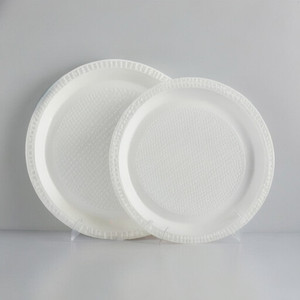
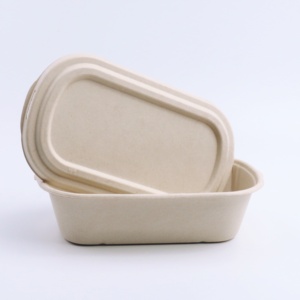
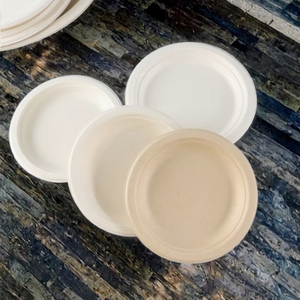
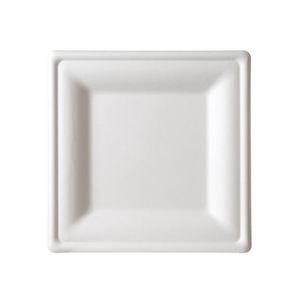
Direct export configurations featuring standardized thermal limits (-20°C to +200°C), 100% compostability certifications, and custom private label packaging for international distributors and catering brands.
The global single-use packaging and commercial dinnerware landscape is undergoing an unprecedented structural transition. Accelerated by stringent regulatory mandates—such as the European Union’s Single-Use Plastics Directive (EU 2019/904), national plastic bans across Canada and Australia, and evolving state-level PFAS prohibitions in the United States—enterprise procurement directors are forced to re-engineer their supply chains. The search for dependable OEM/ODM biodegradable bowls factories and suppliers is no longer merely an environmental corporate social responsibility initiative; it is a critical operational risk-mitigation strategy.
Historically, commercial disposable bowls relied on petroleum-based polymers (polystyrene, expanded EPS, polypropylene) or fluorinated paperboard lining. These legacy systems present severe environmental hazards and legal liabilities due to forever chemicals (PFAS) and microplastic pollution. Modern eco-friendly manufacturing leverages plant-derived biomass matrix engineering—specifically sugarcane bagasse pulp, cornstarch poly-lactic formulations, and heat-pressed Areca palm sheath substrates (under enterprise brands like Ecodyne Tableware, a brand of Conservia Partners). Achieving structural integrity, thermal tolerance, and extended oil barrier protection without synthetic coatings requires advanced thermal hydraulics, CNC mold engineering, and rigorous biopolymer selection.
Utilizing high-density natural cellulose fibers pressed at 200°C to form dense structural bonds without chemical glues or plastics.
Fully compliant with ECHA REACH, US State-level PFAS bans, and EU Regulation 1935/2004 for direct, unlined food contact safety.
Dedicated mold design capabilities allowing quick prototyping for branded bowl depths, rim shapes, and debossed logos.
When specifying OEM/ODM biodegradable bowls for commercial catering, retail distribution, or quick-service restaurant (QSR) chains, selecting the appropriate substrate is paramount. Each material exhibits distinct mechanical properties, aesthetic profiles, thermal operating windows, and biodegradation kinetics.
| Performance Parameter | Sugarcane Bagasse Pulp | Areca Palm Sheath (Ecodyne) | Cornstarch Bio-Resin (PLA) |
|---|---|---|---|
| Raw Material Origin | Agricultural sugarcane waste fiber | Naturally fallen Areca palm sheaths | Fermented plant starch / PLA resins |
| Thermal Operating Window | -20°C to +120°C (Microwave/Freezer) | -20°C to +200°C (Oven/Microwave/Freezer) | -10°C to +65°C (Cold/Warm food only) |
| Structural Rigidness (GSM) | 350 - 550 GSM equivalent | 800 - 1400 GSM natural density | 400 - 600 GSM semi-flexible |
| Oil & Moisture Barrier | High resistance (Natural fiber interlock) | Extreme resistance (Natural wax coating) | 100% Liquid impermeable |
| Additive / Chemical Usage | Zero additives in premium grades | Zero chemicals, binders, or dyes | Requires bio-plasticizers |
| Industrial Compostability | EN 13432 / ASTM D6400 (30-60 days) | EN 13432 PASS (< 90 days) | Industrial facility required (< 180 days) |
| Home Compostability | PASS (60-90 days) | PASS 100% natural decay | Limited (Requires elevated temp) |
A persistent technical challenge for standard pulp bowl manufacturers has been preventing hot soup grease and boiling liquid from softening the bowl base over a 45-minute dining window. Traditional paper bowls achieved water resistance by laminating a Polyethylene (PE) or Poly-perfluoroalkyl (PFAS) chemical shield onto the board.
In our advanced manufacturing facility in Bhadravathi, Karnataka, and through our standardized molded sugarcane fiber processes, we employ double-stage high-tonnage hydraulic compression (up to 200°C at 250 Bar pressure). This thermo-mechanical compaction collapses the cellular lumen of the plant fibers, creating a dense mechanical barrier that retains boiling broth without requiring synthetic polymer liners.
Operating out of 90 decentralized production units coordinated via our central hub in Bhadravathi, Shivamogga district, Karnataka, Ecodyne Tableware operates India’s most robust export-oriented biomass tableware production infrastructure. Every container shipped FOB New Mangalore Port undergoes a standardized eight-stage quality management protocol.
Naturally shed Areca sheaths and agricultural sugarcane bagasse fibers are harvested directly from over 810 partner farming families across 2,000 hectares of organic plantations.
Individual raw sheaths and pulp batches are rigorously screened for grain consistency, tensile strength, moisture levels, and surface purity prior to processing.
Substrates undergo multi-stage pressure washing using recirculated purified water to eliminate field dust, sand, and organic soil residue without chlorine bleaching.
Natural fibers are hydrated in climate-controlled tanks to optimize elasticity, preventing structural micro-fissures during high-pressure thermal molding.
Hydrated biomass is placed inside custom CNC-machined aluminum hydraulic molds. Pressed under high tonnage at 200°C to lock structural shape and eliminate moisture.
Molded bowls pass through 24-hour heat-dehydration chambers operating at 60°C to stabilize equilibrium moisture content below 10%, preventing mold during maritime transit.
Products pass through an inline UV-C sterilization tunnel operating at 254nm wave spectrum, guaranteeing total microbial sanitation before retail packing.
100% visual inspection is conducted. Unsuitable units (15-17% initial rejection rate) are re-pulped or composted. Certified units are shrink-wrapped and carton-sealed.
As corporate purchasing organizations revise their annual vendor selection matrix, four macroeconomic trends are reshaping how procurement directors evaluate biodegradable bowl suppliers and OEM factory partners:
Regulatory authorities in Western markets are enforcing zero-tolerance policies for per- and polyfluoroalkyl substances (PFAS) added for grease resistance. Importers are now legally liable for importing contaminated tableware. Factory partners must provide verified third-party laboratory reports (such as LFGB §30 & §31 testing or EPA Method 537) confirming undetectable fluorine levels.
Scope 3 emissions accounting requires brand owners to audit their overseas suppliers' carbon footprints. Manufacturing biodegradable tableware using fossil-fuel grid electricity negates the product’s lifecycle environmental benefit. Ecodyne Tableware operates full rooftop solar photovoltaic arrays across its primary Karnataka manufacturing bases, drastically lowering the embodied carbon score of every exported full container load (FCL).
Generic commodity bowls are rapidly giving way to custom-engineered OEM shapes tailored for specific QSR menu items—such as wide-rim ramen bowls, deep poke bowls, and compartmentalized meal prep containers. Leading factories now offer end-to-end ODM tooling: from CAD 3D modeling and 7-day rapid prototype sampling to high-speed CNC production mold creation.
Global supply chain volatility has made lead-time predictability a primary procurement metric. Top-tier B2B suppliers now back their manufacturing commitments with explicit contractual guarantees—such as Ecodyne’s standard 10-day order-to-loading SLA featuring a 1%-per-day late loading penalty clause written directly in favor of the buyer.
Before launching a white-label or OEM bio-bowl line in international markets, full regulatory clearance must be documented. Our manufacturing operations maintain an exhaustive suite of international certifications available for buyer verification:
Certified Quality and Environmental Management Systems issued by TÜV India, ensuring total process repeatability and zero industrial waste runoff.
Full compliance with German Food, Commodity and Feed Code standards for direct sensory, heavy metals, and chemical migration safety.
Certified safe for European food contact applications, verifying that no substances transfer into food in quantities that endanger human health.
Audited ethical production environments ensuring fair labor practices, safe working conditions, fair wages, and zero child or forced labor.
Our standard wholesale and private label MOQ is one 40-foot High-Cube (40ft HC) container. A 40ft HC holds roughly 67 m³, accommodating approximately 300,000 to 350,000 units depending on bowl diameter and depth. We allow mixed SKU configurations inside a single container at no extra charge.
Standard lead time is 10 business days from confirmed order deposit to container loading at New Mangalore Port, India. Standard contracts include a 1%-per-day delay penalty written in favor of the buyer to guarantee your shipping schedules.
No. Our Areca palm leaf and sugarcane bagasse bowls are pressed using heat and pressure only (200°C hydraulic moulds). They contain zero synthetic resins, dyes, wax coats, or fluorinated chemicals (PFAS), making them 100% home and industrially compostable.
Yes. We support over 32 white-label customer brands across 19 countries. OEM capabilities include custom inner shrink wraps, printed paper sleeves, branded retail display cartons, GS1 barcoding, and customized master carton markings.
Areca palm sheath bowls feature a dense natural waxy surface structure that naturally holds liquid hot soups, oily curries, and frozen desserts without softening, leaking, or altering food flavor profiles for extended dining durations.
We provide full ODM custom mold engineering. Customers submit 2D/3D CAD files or physical design concepts. We deliver 3D-printed or machined prototype samples within 7–10 days, followed by full CNC production tooling upon approval.
Our eco-friendly tableware fully complies with EN 13432 European compostability standards and ASTM D6400 parameters. Products decompose into organic humus, water, and CO2 within 60 to 90 days in standard soil compost conditions.
Yes. Current installed capacity is 4.5 million units per month across 90 production units. Capacity can be scaled up to 9 million units per month within 75 days against a confirmed annual supply contract through additional operational shifts.
Ecodyne Tableware is an established direct manufacturer-exporter headquartered in Manjeshwar, Kerala, with automated solar-powered production facilities in Bhadravathi, Karnataka. We are not a trading intermediary. When you partner with us for your OEM/ODM biodegradable bowls requirements, you access direct factory pricing, documented supply transparency, and dedicated engineering support.
Main processing plants run on clean solar power, giving your brand a verifiable Scope 3 low-carbon footprint story.
Direct supply contracts with 810+ farming families across 2,000 hectares of organic Areca palm cultivation guarantee stable pricing.
Strategic proximity to New Mangalore Port ensures fast ocean shipping schedules to Europe, North America, Middle East, and Australasia.
Discuss your specifications, request custom sample sets, or calculate container loading plans with our international export management team. Rapid response within 4 business hours.
Send an Inquiry