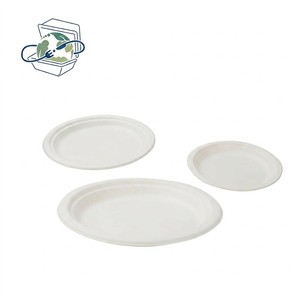
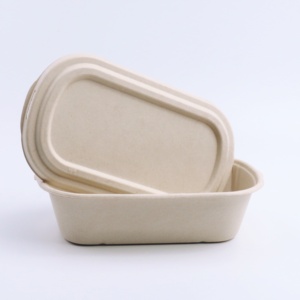
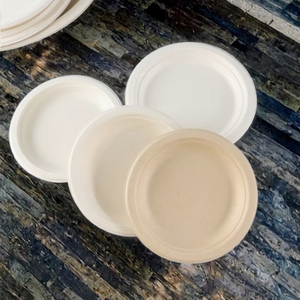
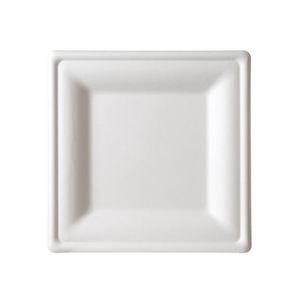
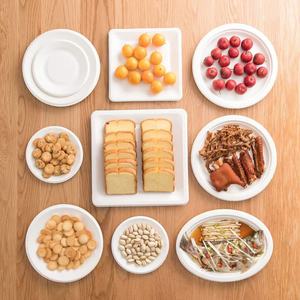
Direct export configurations pressed from raw sugarcane bagasse, naturally fallen areca sheaths, and refined bio-polymers.
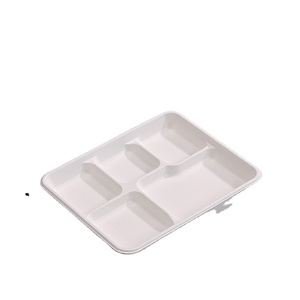
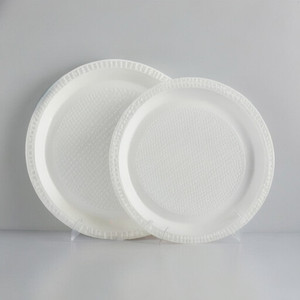
Navigating regulatory shifts, plastic-free directives, and structural engineering advancements in eco-friendly food packaging.
The global takeaway food packaging sector is undergoing a massive structural shift due to single-use plastic (SUP) bans across the European Union (Directive 2019/904), North America, and Australia. Corporate buyers now require rigorous verification of compostability standards such as EN 13432 and ASTM D6400.
Primary raw material selection dictates thermal resistance, structural rigidity, and hydrophobic performance. Leading OEM/ODM factories utilize sugarcane bagasse pulp, naturally shed Areca palm leaf sheaths, and modified cornstarch resins to engineered specifications.
High-volume commercial catering networks demand absolute stability in raw-material securing and manufacturing throughput. Reliable OEM suppliers mitigate seasonal agricultural variance by establishing decentralized collection grids and automated solar-powered pressing plants.
Historically, molders of bio-based food containers relied on per- and polyfluoroalkyl substances (PFAS) to achieve grease and water barrier efficiency. Next-generation OEM/ODM manufacturing protocols replace legacy fluorinated chemistry with plant-derived bio-wax emulsions and mechanical cross-linking during high-pressure thermal molding, resulting in 100% home and commercial compostability without toxic leachate.
Key technological, environmental, and commercial drivers reshaping international buyer specifications.
Foodservice brands, airline caterers, and meal-kit delivery providers are rapidly replacing single-chamber clamshells with engineered multi-compartment trays. OEM factories must offer custom mold tooling for meal separation, preventing flavor transfer while maintaining structural rigidity when stacked in thermal transit bags.
Enterprise buyers are taking Scope 3 supply-chain carbon accounting seriously. Manufacturing partners operating zero-emission or solar-powered production facilities offer immediate carbon-offset advantages. Utilizing decentralized rural pressing centers powered by rooftop solar grids significantly reduces the embodied carbon footprint per unit.
A rigorous engineering benchmark comparing bagasse, areca palm sheath, cornstarch PLA, and traditional plastics.
| Performance Parameter | Sugarcane Bagasse | Areca Palm Sheath | Cornstarch Bio-Resin | Legacy Plastic (PP/EPS) |
|---|---|---|---|---|
| Raw Material Source | Agricultural Upcycled Fiber | Naturally Shed Sheaths | Fermented Plant Starch | Petroleum Hydrocarbons |
| Thermal Resistance | -20°C to +120°C | -20°C to +200°C (Oven Safe) | -10°C to +80°C | -20°C to +100°C |
| Microwave & Oven Safe | Microwave Safe | Microwave & Oven Safe | Limited Microwave | Microwave Only (PP) |
| Oil & Water Barrier | High (PFAS-Free Wax Coated) | Naturally Hydrophobic | 100% Impermeable | 100% Impermeable |
| Compostability Timeline | 30-90 Days (Commercial) | 60-90 Days (Home/Soil) | 90-180 Days (Industrial) | Non-Degradable (500+ Yrs) |
| B2B Unit Cost Index | Highly Competitive | Premium Natural | Moderate | Fluctuating Energy Index |
How raw agricultural fibers are transformed into certified food-grade takeaway containers.
1. Natural Gathering: Raw inputs (fallen palm sheaths or bagasse pulp) are harvested from certified organic farming networks without harming host plants.
2. Rigorous Grading: Each batch is inspected for fiber thickness, density, and natural color consistency.
3. Hydro-Pressure Cleaning: High-pressure jets flush away field sediment, dust, and organic debris without chemical solvents.
4. Controlled Hydration Soaking: Fibers are soaked in pure softened water until optimal pliability for mold shaping is reached.
5. 200°C High-Pressure Molding: Pliable material is shaped in CNC-machined hydraulic press dies under extreme heat and tons of pressure.
6. Dehumidification Drying: Products spend 24 hours in temperature-controlled drying tunnels to fix equilibrium moisture content.
7. UV-C Sterilization: Finished containers pass under industrial ultraviolet sterilization units prior to primary packaging.
8. Manual Quality Control & Cartoning: Experienced QC inspectors conduct 100% visual and structural spot checks (15-17% initial rejection rate) before export cartoning.
Eliminating trading company markups while guaranteeing strict quality compliance and shipping timeliness.
Every shipment comes backed with complete laboratory test packages including ISO 9001:2015, ISO 14001:2015, amfori BSCI, LFGB, USDA BioPreferred, and EN 13432 certificates ready for customs release.
From order confirmation to 40ft High-Cube container loading at port in under 10 calendar days, supported by contractual delay indemnity guarantees in the buyer's favor.
Complete private-label execution including custom mold development, embossed brand logos, retail barcode creation, shelf-ready display cartons, and multi-language master cases.
Direct technical answers to common commercial, compliance, and supply chain queries.
Our standard MOQ is one 40-foot High-Cube (40ft HC) container. Floor-loaded, a 40ft HC accommodates approximately 67 cubic meters, carrying roughly 300,000 to 350,000 individual container pieces depending on product dimensions. We support mixed SKU loading within the same container at no additional service surcharge, allowing distributors to consolidate plates, bowls, trays, and compartment boxes in a single order.
Thermoformed sugarcane bagasse and Areca palm sheath containers feature natural structural densities that comfortably hold hot soups, gravies, and greasy items up to 100°C (water) and 120°C (oil) without thermal breakdown or softening. Areca leaf products are naturally hydrophobic and can even withstand conventional oven baking up to 200°C for up to 45 minutes.
Yes. All OEM/ODM takeaway products manufactured across our facilities strictly exclude per- and polyfluoroalkyl substances (PFAS), fluorinated polymers, synthetic plastics, phthalates, and artificial wax linings. Compliance is independently lab-verified under German LFGB §30/§31 regulations and European Union Regulation (EC) No 1935/2004.
Standard manufacturing and loading lead time is 10 business days from receipt of deposit or confirmed LC at port. For OEM private label requests requiring custom artwork printing or dedicated retail cartons, initial sample approval takes an additional 5 to 7 business days.
Absolutly. Our engineering tooling shop designs and manufactures custom CNC aluminum molds for unique shapes, customized compartment volumes, and debossed brand logos. Prototype mold samples are typically delivered for testing within 14 days of CAD drawing sign-off.
Through our long-standing agricultural partnerships with over 810 certified farming families across 2,000 certified-organic hectares, our facilities maintain raw material buffer stocks. This infrastructure guarantees continuous production capacity throughout monsoon and dry seasons without price volatility.
Contact our factory export desk today for full engineering specs, container loading plans, custom OEM mold quotes, and complete laboratory certification dossiers.
Get Catalog