Direct export configurations engineered for commercial hospitality, retail private labels, eco-events, and institutional catering.
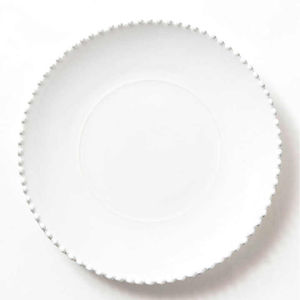
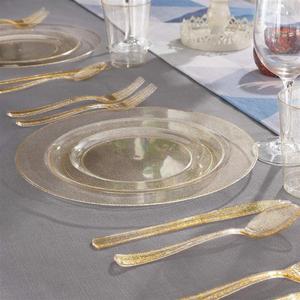
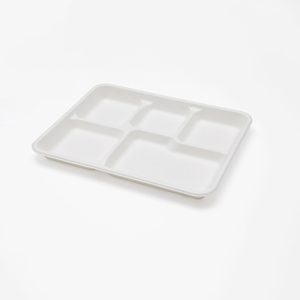
The global commercial tableware market is undergoing a seismic shift driven by strict regulatory frameworks—such as the European Union’s Single-Use Plastics Directive (SUPD), German LFGB §30/§31 parameters, and US FDA 21 CFR food contact mandates. B2B buyers, hospitality procurement directors, retail chain buyers, and private label importers no longer evaluate factories purely on unit FOB costs. Modern procurement strategies require rigorous audits of material composition, thermal shock stability, heavy metal leaching, industrial dishwasher longevity, and verified ESG environmental metrics.
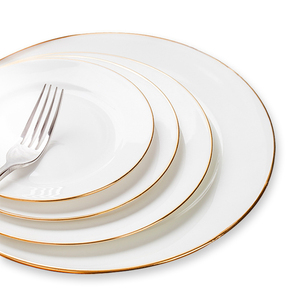
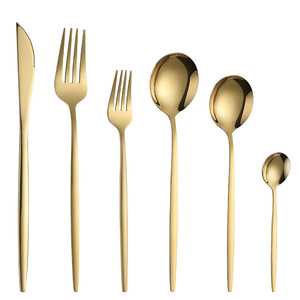
Whether sourcing ultra-durable 1380°C fired bone porcelain for luxury hotel chains, PVD titanium-coated 316 stainless steel flatware for commercial banquets, zero-plastic melamine chargers for high-volume restaurants, or 200°C heat-pressed areca palm leaf sheath and sugarcane bagasse dinnerware for eco-conscious events, working directly with accredited original equipment manufacturers (OEM) and original design manufacturers (ODM) is vital to securing margin advantage and compliance security.
As a vertically integrated enterprise operating 90 standardized production units powered by dedicated rooftop solar photovoltaic arrays, our manufacturing ecosystem resolves the core vulnerabilities of traditional middleman sourcing: fragmented quality control, extended lead times, unverified raw material origin, and compliance failure at customs ports. By establishing robust direct manufacturing, buyers gain documented access to raw material traceability, CNC precision tooling, and fully automated UV-sterilization packaging lines.
Selecting the optimal substrate requires balancing structural durability against operating environments. Below is our engineering benchmark across six primary commercial tableware materials produced across our factory network:
| Material Category | Thermal Range (°C) | Water Absorption | Dishwasher Longevity | Food Safety Certifications | Primary Commercial Use |
|---|---|---|---|---|---|
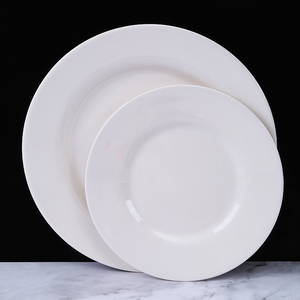
| Reinforced Bone China / Porcelain | -20°C to 250°C | < 0.2% (Vitreous) | 5,000+ Cycles | FDA, LFGB, EU 1935/2004 | Luxury Hotels, Fine Dining, Banquets |
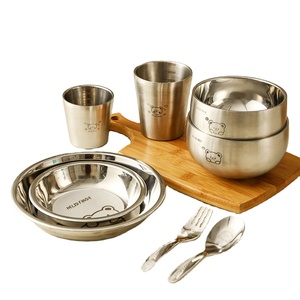
| 304 / 316 Stainless Steel | -40°C to 300°C | 0.00% (Non-porous) | 10,000+ Cycles | LFGB §31, GB 4806.9, NSF | Hospitality, Pediatric Tableware, Airlines |
| 100% A5 Pure Melamine Resin | -30°C to 120°C | < 0.5% | 2,000+ Commercial Cycles | FDA 21 CFR, EU 10/2011, NSF | Buffets, Fast-Casual Chains, Outdoor Venues |
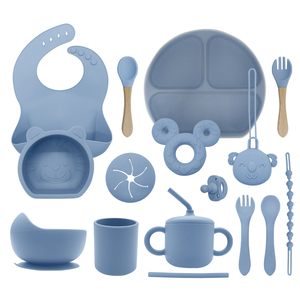
| Platinum Food-Grade Silicone | -40°C to 230°C | 0.00% (Hydrophobic) | Sterilizer & Microwave Safe | FDA, LFGB, BPA-Free Certified | Infant & Toddler Feeding Sets, Specialty OEM |
| Heat-Pressed Areca Leaf / Bagasse | -18°C to 200°C | Oil & Hydrophobic (4 hrs) | 100% Compostable (EN 13432) | USDA BioPreferred, LFGB §30 | Sustainable Catering, Eco-Festivals, Retail |
Our engineered ceramic glazes utilize zero lead or cadmium compounds, undergoing high-temperature vitrification at 1380°C that eliminates surface microporosity. For metalware, our physical vapor deposition (PVD) titanium plating creates a molecular bond with 304 and 316 stainless steel substrates, preventing flaking, discoloration, or chemical leaching during high-temperature commercial sanitation cycles.
We provide full-spectrum OEM and ODM support for global brands, hospitality purchasing groups, and private label distributors. From CAD/CAM mold development to retail-ready custom carton packaging, our eight-stage standardized engineering pipeline guarantees structural repeatability and brand consistency across high-cube container volumes.
In-house CNC mold production allows rapid 3D prototyping and custom shape engineering within 7–12 working days, drastically shortening your product launch window.
High-precision decal application, 24K real gold rim electroplating, laser engraving, and custom PVD color matching (Rose Gold, Matte Black, Champagne, Iridescent).
FSC-certified retail inner boxes, multi-lingual compliance labelling, GS1 barcode integration, and drop-test certified heavy-duty corrugated export master cartons.
Every batch leaving our manufacturing lines is subjected to an unyielding 8-stage quality assurance process: 1. Raw material spectral inspection → 2. Hydro-pressure cleaning & particle wash → 3. Thermal high-pressure forming/firing → 4. Automated edge polishing & burr removal → 5. 60°C moisture-stabilization drying → 6. Inline high-intensity UV-C sterilization → 7. 100% manual visual & dimensional inspection (15–17% standard defect rejection rate) → 8. Sealed container palletization.
For large-scale buyers and institutional importers, factory failure to meet delivery windows can paralyze retail seasonal calendars or hotel openings. We mitigate supply chain vulnerability through documented operational capacity, contractual guarantees, and fully compliant labor practices:
Installed production capacity currently stands at 4.5 million finished units per month across our 90 automated units. Output can scale to 9 million units per month within 75 days against confirmed annual procurement programs.
Standard OEM/ODM orders are processed, packed, and loaded for FOB container shipping within 10 business days from order confirmation, backed by a strict contractually bound 1%-per-day late delivery penalty clause written in the buyer's favor.
Fully audited under amfori BSCI guidelines and certified under ISO 9001:2015 (Quality Management) and ISO 14001:2015 (Environmental Management). Facility operations are powered by integrated zero-emission solar infrastructure.
Our raw material security for natural leaf and bio-based tableware is grounded in long-term cooperative partnerships with approximately 810 certified farming families across 2,000 hectares of organic agricultural groves, ensuring year-round supply stability immune to seasonal raw material shortages.
As the international tableware sector evolves, purchasing directors must align their product portfolios with four critical long-term trends shaping retail and commercial food service:
1. PFAS-Free Bio-Coatings & Zero-Additive Fiber Pressing: Global regulations are rapidly banning per- and polyfluoroalkyl substances (PFAS) traditionally used for oil and water resistance in disposable tableware. Next-generation manufacturing relies on natural physical heat-compression at 200°C of raw agricultural sheaths and virgin bagasse without synthetic binders, chemical coatings, or fluorinated additives.
2. PVD Eco-Coloration in Stainless Steel Cutlery: Electroplating methods utilizing toxic cyanide baths are being completely phased out by tier-1 global hotel brands. Physical Vapor Deposition (PVD) vacuum plasma coating has become the gold standard, delivering superior scratch resistance while operating as a 100% eco-friendly, zero-discharge manufacturing process.
3. Lightweight High-Strength Vitrified Ceramics: Commercial dining establishments are demanding lower unit weight without sacrificing mechanical edge strength. Advanced formulation of aluminum oxide (alumina) additives in porcelain bodies increases impact resistance by 40%, reducing annual breakage replacement costs for hospitality operators.
4. Closed-Loop Circular Sourcing Audits: European and North American customs authorities increasingly require full carbon footprint documentation and verification of social compliance down to the farm level. Importers partnering with solar-powered, BSCI-audited original manufacturers gain immediate exemption from emerging carbon border adjustment tariffs.
Connect with our B2B export desk today for wholesale pricing tiers, technical certification dossiers, custom OEM CAD mold development, and container loading optimization.
Inquire Now