Direct factory supply of high-performance sugarcane bagasse, areca palm sheath, and cornstarch PLA tableware solutions engineered for international commercial compliance.
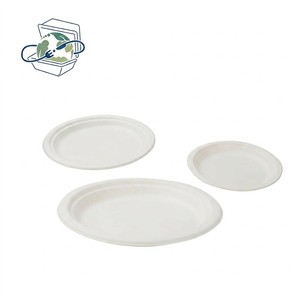
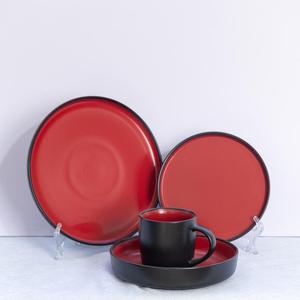
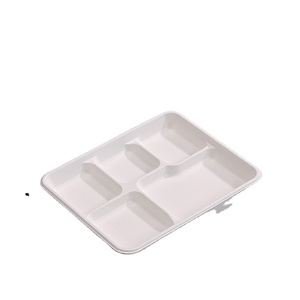
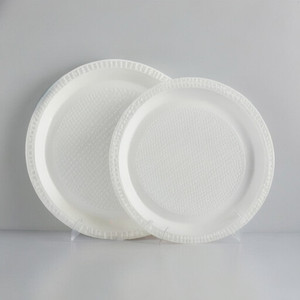
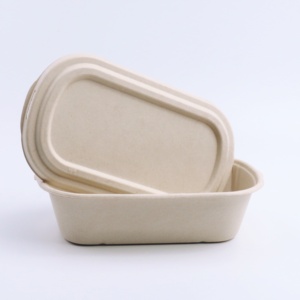
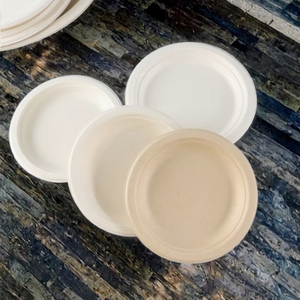
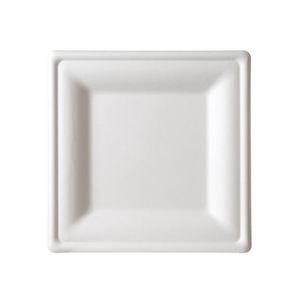
An authoritative evaluation of raw material supply chains, compliance metrics, and industrial manufacturing standards for institutional bio-based dinnerware procurement.
The global single-use tableland industry is undergoing a structural paradigm shift driven by EU Directive 2019/904 (Single-Use Plastics) and North American state-level PFAS prohibitions. Modern B2B procurement demands advanced biomass conversion techniques.
Sugarcane bagasse (upcycled agricultural fiber) and Areca palm leaf sheaths represent the peak of zero-carbon material innovation, offering tensile strength ratings upwards of 18–25 MPa without synthetic polymer binders.
As international health authorities outlaw Per- and Polyfluoroalkyl Substances (PFAS) in food-contact items, leading export factories have transitioned to bio-wax, lignin matrices, and mechanical thermoforming density adjustments to maintain water and hot-oil resistance.
Ensuring compliance with German LFGB §30/§31, EU Regulation 1935/2004, and US FDA 21 CFR standards is no longer optional—it is a mandatory prerequisite for tier-1 distributors.
Enterprise buyers require total visibility from agricultural origin to ocean transit. Utilizing direct farming integration (such as the CPCRI ICAR certified organic partnerships in South India), factories eliminate middleman volatility while guaranteeing fair-trade labor practices audited under amfori BSCI.
Solar-powered manufacturing facilities further reduce the embodied carbon footprint per unit by up to 68% compared to traditional polystyrene factories.
Technical Procurement Note: Commercial buyer evaluations show that high-density sugarcane bagasse tableware (pressed at 200°C under 150-ton hydraulic pressure) maintains zero liquid permeation for up to 4 hours with hot oil (95°C) and hot soup (100°C), making it the premier eco-friendly alternative for high-volume commercial catering.
A comprehensive comparison of physical performance, compostability standard compliance, and cost efficiency across primary eco-friendly dinnerware substrates.
| Material Substrate | Thermal Limits (Oven / Microw.) | Oil & Water Resistance | Compostability Timeline | PFAS Status | Commercial Target |
|---|---|---|---|---|---|
| Sugarcane Bagasse | -20°C to +200°C | High (Bio-Barrier) | 30 - 90 Days (Home/Ind) | 100% PFAS-Free Available | QSR, Takeaway, Commercial Catering |
| Areca Palm Leaf Sheath | -20°C to +220°C | Natural Oleophobic Texture | 60 - 90 Days (Home) | Naturally 0% PFAS | Resorts, Luxury Events, Weddings |
| Cornstarch Resin (PLA Mix) | -18°C to +75°C | Ultra High (Waterproof) | 180 Days (Industrial Only) | 100% PFAS-Free | Cold Foods, Deli, Supermarket Retail |
| Durable Eco-Porcelain | Up to 1000°C | 100% Impermeable | Reusable / Recyclable | 0% Organic Chemicals | Fine Dining, Hotel Hospitality |
Key macroeconomic and technological trajectories transforming how B2B buyers source sustainable disposable tableware globally.
The era of fluorinated water repellents is officially over in the European Union and North America. Procurement officers are rapidly replacing legacy bagasse stock with 2nd-generation fluorine-free formulations. Utilizing natural plant waxes, alkyl ketene dimers (AKD), and nano-cellulose crystalline matrices, factories now provide oil repellency up to 95°C without compromising 90-day soil compostability.
Scope 3 supply chain emissions are now central to corporate sustainability reporting under the EU Corporate Sustainability Due Diligence Directive (CSDDD). Leading manufacturers are integrating rooftop photovoltaic solar arrays to power high-temperature hydraulic thermoforming equipment, reducing fossil fuel consumption to zero during peak manufacturing cycles.
To satisfy high-speed automated packaging lines for retail giants, exporters are replacing manual rim trimming with multi-axis CNC robotic cutters and high-resolution AI optical scanners. This ensures rim uniformity within ±0.3mm tolerance and eliminates micro-burrs, guaranteeing seamless automated shrink-wrapping and retail shelf consistency.
Institutional buyers no longer accept plain bulk cartons. Top-tier exporters now offer complete private-label OEM integration, including multi-lingual compliance labeling, custom FSC-certified shelf cartons, GS1 retail barcoding, and automated container cube-density loading to maximize freight cost efficiency.
From raw agricultural biomass collection to automated UV sterilisation and pallet loading—how we maintain quality leadership across 19 global export markets.
Sourcing 100% naturally fallen areca sheaths and virgin sugarcane bagasse without cutting down a single tree.
Multi-stage purified water jet washing to remove field soil, silica particulates, and natural organic surface residue.
Controlled thermal soaking to soften organic fibers, ensuring maximum flexibility prior to high-pressure moulding.
Precision compression under 150 tons of hydraulic force at 200°C to bond fibers organically without artificial resins.
Automated high-speed contour cutting ensures clean edges, uniform rim thickness, and exact stackability.
24-hour climate-controlled drying at 60°C to reduce internal moisture content below 8%, preventing transit mold.
100% inline germicidal UV-C light treatment eliminating microbial contaminants before final primary packaging.
Individual hand inspection, shrink-wrapping with desiccant packs, and moisture-sealed master carton loading.
Detailed answers regarding factory MOQs, international compliance certifications, private-label capabilities, and ocean freight logistics.
Our standard export MOQ is one 40-foot high-cube (40ft HC) container. A floor-loaded 40ft HC container accommodates approximately 67 cubic meters, equating to roughly 300,000 to 350,000 pieces of mixed sugarcane bagasse or areca palm plates. We support mixed SKU loading at no additional surcharges, allowing importers to combine round plates, square plates, bowls, and compartment trays in a single shipment.
Standard production time from confirmed deposit to loading at New Mangalore Port (India) is exactly 10 business days for standardized catalog SKUs. For continuous contract buyers, we guarantee a strict 1%-per-day late loading penalty clause written into commercial supply contracts in favor of the buyer.
Our facilities and products hold comprehensive global approvals: ISO 9001:2015 (Quality Management) and ISO 14001:2015 (Environmental Management) certified by TÜV India, amfori BSCI social compliance audit pass, German LFGB §30 & §31 parameters tested, EU Regulation 1935/2004 compliance, USDA BioPreferred certification, and EN 13432 / ASTM D6400 industrial and home compostability certifications.
Yes. We manufacture strictly compliant fluorine-free dinnerware. By utilizing specialized plant-derived biowax and lignin formulation technologies, our plates pass all North American state-level fluorine testing limits (under 100 ppm total organic fluorine) and European chemical safety thresholds without sacrificing oil or water resistance.
Absolutely. We currently produce white-label products for 32 established eco-friendly brands across North America, Europe, and Australia. Our OEM capabilities cover custom inner polybag artwork, FSC-certified inner retail boxes, barcode printing (UPC/EAN/GS1), customized outer master carton branding, and multi-language nutrition/compliance text printed directly on packaging.
Our current installed production capacity stands at 4.5 million units per month across 90 dedicated solar-powered manufacturing units. With an established raw material supply reserve covering over 2,000 certified-organic farming hectares, we possess documented operational scalability to ramp output to 9 million units monthly within 75 days against confirmed annual delivery schedules.
Areca palm sheath dinnerware is naturally dense and thermal-resistant. Plates safely withstand oven temperatures up to 200°C for 45 minutes and microwave reheating for up to 2 minutes without structural deformation, burning, or toxic off-gassing. They are also liquid-impermeable for up to 4 hours with hot soups and gravies.
Moisture control is paramount for natural fiber exports. Every production lot undergoes 24-hour industrial dehumidification drying to lock internal moisture below 8%. Plates are then shrink-wrapped with food-grade silica desiccant packs inside heavy-duty 5-ply corrugated master cartons lined with vapor-barrier polyethylene wrapping.
Sugarcane bagasse consists of 100% natural upcycled plant cellulose fibers. In a commercial composting facility, bagasse plates fully disintegrate within 30 to 60 days. In typical home backyard composting conditions, complete biodegradation occurs within 90 days, yielding nutrient-rich organic humus with zero microplastic residues.
Our standard pricing term is FOB New Mangalore Port (IN NML), India. However, we also provide CIF (Cost, Insurance, Freight) and DDP (Delivered Duty Paid) quotes through our long-standing global ocean freight partners, offering seamless container delivery directly to your regional distribution centers in Rotterdam, Hamburg, Los Angeles, New York, Sydney, and Dubai.