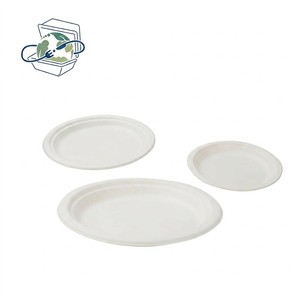
Direct-from-factory compostable dinnerware engineered for commercial foodservice, high-volume event catering, and wholesale distribution across North America.
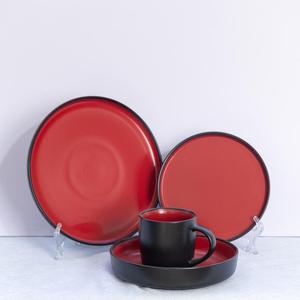
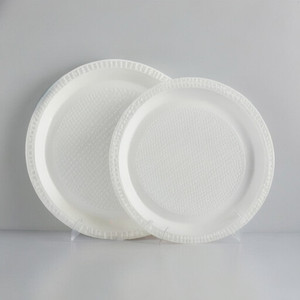
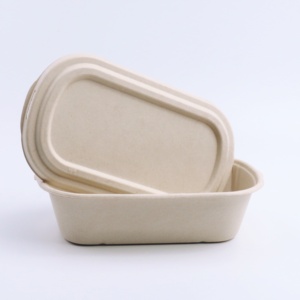
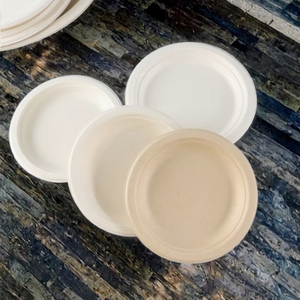
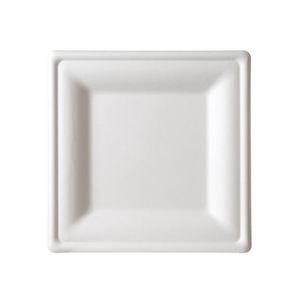
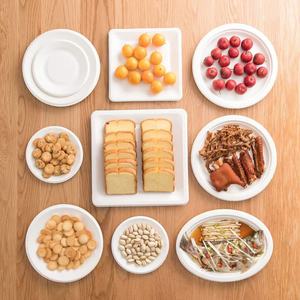
As corporate sustainability mandates accelerate across North America, enterprise procurement officers in Greater Houston require clear engineering benchmarks over greenwashing claims. The modern bio-tableware industry has evolved beyond basic recycled paperboard into advanced thermally pressed plant-fiber matrix engineering and micro-structured cornstarch bio-resins.
Our manufacturing matrix focuses on two primary bio-based raw materials: Sugarcane Bagasse Fiber (a byproduct of sugar refining) and Modified Cornstarch Resins (PSM). Understanding the molecular structural differences between traditional expanded polystyrene (EPS), traditional petroleum plastics, and molded plant fibers is vital for enterprise food distributors, hospital chains, and stadium concessionaires.
| Performance Metrics | Sugarcane Bagasse Pulp | Cornstarch (PSM) Resin | Expanded Polystyrene (EPS) |
|---|---|---|---|
| Thermal Bounds (Hot Liquids/Oils) | -20°C to +200°C (-4°F to 392°F) | -20°C to +120°C (-4°F to 248°F) | Deforms above 80°C (176°F) |
| Microwave & Oven Performance | Oven Safe (up to 200°C for 20 min) | Microwave Safe (up to 3 min) | Hazardous chemical leaching risk |
| Tensile & Rigidity Index | High Structural Lignin Density | Semi-flexible Polymer Lattice | Brittle under shear force |
| Degradation Lifecycle | 60–90 Days in Commercial Compost | 120–180 Days (Soil / Industrial) | 500+ Years (Non-degradable) |
| BPI & ASTM D6400 Compliance | Fully Certified (ASTM D6400 / EN 13432) | Certified Bio-based (50-80% bio blend) | Non-Compliant |
By leveraging high-pressure hydraulic molding presses operating at 200°C, natural lignin within sugarcane sheaths and bagasse fibers melts and re-binds the cellulosic structure without requiring synthetic chemical adhesives, artificial glues, or fluorinated coatings (PFAS-free options). This creates an impenetrable barrier against hot oil, animal fat, and boiling water.
Engineered to excel in Texas’s unique culinary landscape—from high-temperature barbecue catering to oceanfront Gulf Coast events.
Standard paper plates quickly break down when exposed to rendered brisket fat, hot sausage grease, and high-acid tomato-based barbecue sauces. Our heavy-duty sugarcane bagasse platters resist grease penetration up to 200°C, maintaining structural rigidity even under heavy 2-lb meat portions without bending, tearing, or leaking onto diners' hands.
Home to the world's largest medical complex, Houston’s healthcare hubs demand strict hygiene, non-toxic food contact safety, and zero chemical off-gassing. Our dinnerware holds LFGB §30/§31 and EU Regulation 1935/2004 compliance, guaranteeing that hot patient meal trays remain free of heavy metals, plasticizers, and phthalates.
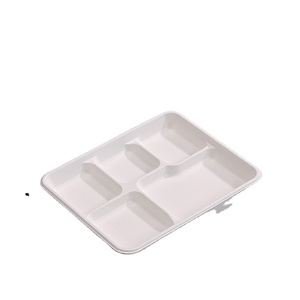
From Galveston coastal seafood boils to outdoor events like the Houston Livestock Show and Rodeo, high humidity and direct contact with boiling broth require robust dinnerware. Our deep-pressed sugarcane bowls and 5-compartment food containers deliver impenetrable liquid barriers that prevent sogginess during extended outdoor service.
Fortune 500 energy headquarters along Katy Freeway and Downtown Houston are setting aggressive Zero Waste to Landfill mandates. Supplying 100% USDA BioPreferred compostable bagasse plates enables corporate cafeterias to divert thousands of tons of waste away from Harris County landfills directly into municipal composting streams.
While federal standards evolve, commercial procurement trends across Greater Houston, Austin, and Dallas-Fort Worth are shifting rapidly toward high-performance bio-based alternatives. Institutional buyers face pressure from three converging forces:
Municipal environmental initiatives and progressive corporate policies across Texas cities are voluntarily phasing out EPS foam containers. Sugarcane bagasse presents the most cost-effective direct substitute for high-density foam food packaging.
As the nation's top port in foreign waterborne tonnage, the Port of Houston provides direct ocean freight lanes from our manufacturing manufacturing hubs. This eliminates transcontinental rail delay and reduces domestic freight drayage costs for Southwestern US distributors.
Enterprise buyers can no longer rely on unverified "biodegradable" statements. Modern Texas waste-management networks require certified compostable documentation (ASTM D6400 / EN 13432) to ensure products break down completely without toxicity in commercial facilities.
Eliminate middleman margins and secure direct container supply chains with verified quality control systems.
Our primary production facility operates on high-efficiency rooftop solar photovoltaics. We manufacture bio-tableware using clean, renewable energy, ensuring your supply chain maintains an exceptionally low carbon footprint from raw material harvesting to container loading.
We maintain full auditing transparency with ISO 9001:2015 (Quality Management) and ISO 14001:2015 (Environmental Management) issued by TÜV India, alongside an amfori BSCI social compliance rating for ethical workplace standards.
We support high-volume distribution networks with guaranteed container turnaround. Once an order is confirmed, full container loads (FCL 40ft High Cube) are produced, quality-inspected, and loaded within 10 business days for prompt ocean dispatch.
We serve over 32 international white-label brands. From custom rim debossing and retail box artwork design to barcode integration and multi-lingual compliance packaging, our OEM team turns your brand concept into market-ready retail SKUs.
Direct technical and logistical answers for commercial purchasers, wholesale importers, and supply chain directors.
Our standard MOQ for wholesale direct-factory orders is one 40-foot High-Cube (40ft HC) container. Floor-loaded, a 40ft HC holds approximately 67 cubic meters, which translates to roughly 300,000 to 350,000 individual tableware pieces depending on the product mix. We support consolidated multi-SKU loads (combining round plates, square plates, bowls, and compartment trays) within a single container at no extra fee.
Our sugarcane bagasse dinnerware undergoes high-density thermoforming at 200°C under CNC hydraulic pressure. This process fuses the dense cellulosic fibers into a rigid, non-porous structure. The resulting plates naturally resist hot grease, animal fat, and liquids up to 200°C (392°F) without absorbing oil or losing structural integrity, completely eliminating the need for plastic or wax linings.
We quote on FOB (Free On Board) terms from New Mangalore Port or CIF terms directly to the Port of Houston (Barbours Cut / Bayport Terminals). Once your 40ft HC container is loaded (typically within 10 days of order confirmation), typical ocean transit time to Houston ranges between 26 to 32 days depending on vessel routing. Full shipping documentation, bill of lading, phytosanitary certificates, and packing slips are issued immediately upon vessel departure.
No. We manufacture zero-PFAS added products that comply with strict North American and European regulations regarding food contact packaging. Our items pass extensive food safety screening under LFGB §30/§31 and EU Regulation 1935/2004 standards, guaranteeing zero fluorine-based water/grease repellent additives.
Yes. We specialize in OEM and private label manufacturing for 32 international brands. We provide retail-ready shrink wrapping, barcoded retail color boxes, custom master carton graphics, and custom inner sleeve counts (e.g., 10-pack, 25-pack, or 50-pack shrink sleeves with custom printed inserts) formatted to meet UPC/GTIN standards for US supermarket shelf placement.
Traditional paper plates are made from wood pulp paperboard that requires chemical coatings to resist moisture, often collapsing when overloaded with heavy or wet food. Sugarcane bagasse tableware utilizes virgin plant pulp pressed into a thick 3D molded shape. It possesses significantly higher flexural strength, superior cut resistance, and complete stability in microwaves and hot holding ovens.
Yes, our sugarcane bagasse and bio-fiber products pass rigorous EN 13432 and ASTM D6400 commercial compostability testing requirements. In industrial composting facilities, our plates fully disintegrate into natural organic humus, carbon dioxide, and water within 60 to 90 days, leaving zero toxic residues, synthetic microplastics, or persistent heavy metals behind.
Connect directly with our export engineering desk to receive comprehensive product specification sheets, FCL load calculation charts, and direct FOB/CIF Houston shipping quotations within 4 business hours.
Inquire Now