Engineered for French HORECA distributors, catering networks, and institutional buyers seeking 100% plastic-free, circular economy compliance.
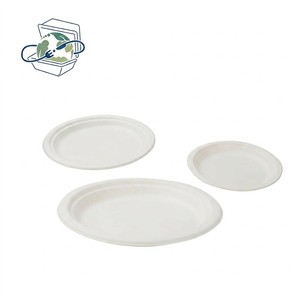
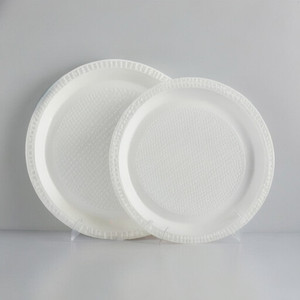
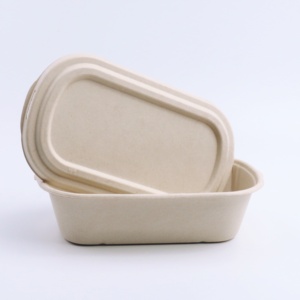
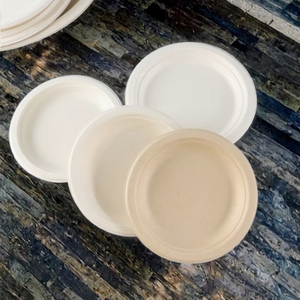
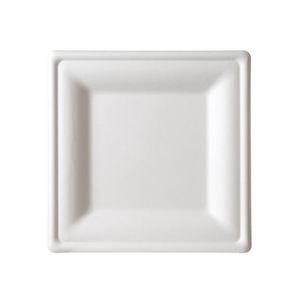
Bypassing trading intermediaries to secure direct factory pricing, guaranteed regulatory compliance, and customized OEM supply chains into the French market.
France’s Anti-Waste for a Circular Economy (Loi AGEC) law sets strict deadlines for single-use plastics. Our sugarcane bagasse, areca palm sheath, and plant-starch lines are 100% bio-based, fluorochemical-free (PFAS-free options), and EN 13432 certified for industrial and home composting.
Operating across 90 solar-powered production units, our primary plant in Karnataka produces 4.5 million pieces monthly under zero-fossil energy systems. This provides French corporate clients with verifiable ESG and Scope 3 emissions reduction data for carbon audit disclosures.
Optimized ocean freight logistics from New Mangalore Port directly to France's premier maritime gateways (Grand Port Maritime du Havre and Grand Port Maritime de Marseille / Fos-sur-Mer). Guaranteed 10-day FCL container loading backed by a 1%-per-day SLA delay penalty.
The disposable tableware landscape in France is undergoing an unprecedented structural transition driven by stringent national legislation and evolving European environmental frameworks. As French foodservice buyers, cash-and-carry wholesalers, institutional caterers (Restauration Collective), and HORECA procurement leads re-evaluate their supply chains, sourcing directly from verified, certified manufacturers of natural plant-fiber dinnerware has transformed from a strategic cost-advantage into an operational imperative.
This industry white paper evaluates the technical parameters, regulatory mandates, material science, and supply chain logistics involved in importing bulk biodegradable disposable tableware into France. By analyzing raw material behavior under heat, moisture, and mechanical stress alongside compliance requirements under the French Loi AGEC (Anti-gaspillage pour une économie circulaire), this document serves as a comprehensive procurement framework for commercial decision-makers.
Under France's AGEC law and Decree No. 2020-1828, conventional single-use plastic tableware—including expanded polystyrene (PSE), oxo-degradable plastics, and plastic-lined paper plates—is strictly prohibited for both on-premise and take-away foodservice. Compliance requires 100% bio-based materials certified under European standard EN 13432 or French home composting standard NF T51-800.
Selecting the appropriate eco-friendly disposable tableware substrate requires a deep understanding of food physics, thermal retention, and structural integrity under prolonged contact with oils and liquids. Below, our engineering team breaks down the three primary non-plastic disposable dinnerware substrates utilized across France’s commercial food channels:
Sugarcane bagasse is the fibrous residue remaining after sugar juice extraction. Through high-tonnage hydraulic molding at temperatures exceeding 200°C, bagasse fibers interlock to form dense, rigid dinnerware. Bagasse features exceptional natural hydrophobic and oleophobic properties, making it the premier replacement for traditional expanded polystyrene (EPS) trays and plastic-coated paper plates in fast casuals, food trucks, and bakery takeaway lines across France.
Areca palm leaf tableware represents the pinnacle of premium, zero-chemical disposable dinnerware. Collected exclusively from naturally fallen sheaths of the Areca Catechu palm, each leaf is washed with high-pressure water jets, soaked, and heat-pressed in CNC hydraulic molds at 200°C. No chemicals, glues, synthetic resins, or laminates are added at any point during manufacturing.
Cornstarch-based disposable plates and cutlery utilize plant-derived starches processed into bio-polymers. Engineered for cold and medium-temperature catering applications, cornstarch dinnerware delivers a smooth, clean aesthetic resembling traditional plastic while maintaining full compostability.
| Material Substrate | Max Temp Range | Oil & Water Resistance | Compostability Standard | Primary French Market Use Case |
|---|---|---|---|---|
| Sugarcane Bagasse | -25°C to +120°C | High (Up to 4 hours) | EN 13432 (Industrial) | Fast Food, Food Trucks, Boulangeries, Takeaway |
| Areca Palm Leaf | -20°C to +200°C | Extreme (4+ hours heavy liquid) | NF T51-800 (Home Compost) | High-End Catering, Event Hospitality, Resorts |
| Plant Cornstarch | -15°C to +85°C | High (Cold / Warm applications) | EN 13432 / OK Biobased | Institutional Catering, Salads, Corporate Events |
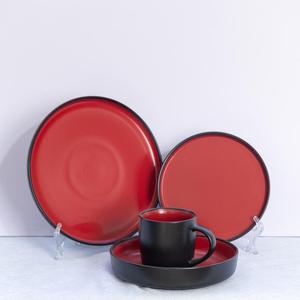
| Porcelain Eco-Blend | -30°C to +300°C | Complete Impermeability | Reusable / Circular HORECA | Bistro, Fine Dining, Hotel Breakfast Buffets |
Commercial tableware adoption varies significantly across regional sectors in France. Understanding these micro-market dynamics enables French distributors and importers to specify the exact product mix for their customer base:
With Paris, Lyon, Marseille, and Bordeaux hosting thousands of dining establishments, the mandate for eco-friendly, non-plastic tableware is total. Urban bistros and fast-casual concepts rely heavily on 9-inch round bagasse dinner plates and 3-compartment containers for quick lunch meal-deals (Formule Déjeuner). The structural rigidity prevents sauce leakage during bike courier delivery via platforms like Deliveroo and UberEats.
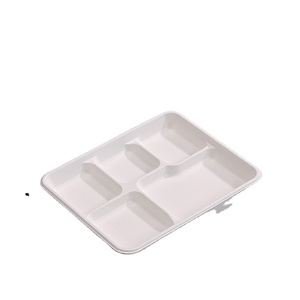
School canteens, university dining halls, hospital cafeterias, and corporate canteens (Restaurants Inter-Entreprises - RIE) require high-volume, cost-effective, compartmentalized solutions. Our 5-compartment sugarcane pulp trays provide separated sections for appetizers, main proteins, starch sides, cheeses, and desserts—perfectly matching traditional French multi-course cafeteria meal standards while reducing washing energy costs.
From summer festivals along the French Riviera (Nice, Cannes, Saint-Tropez) to alpine ski resorts in Chamonix and Val d'Isère, regional municipalities enforce zero-plastic outdoor dining rules. Square areca palm leaf plate sets and heavy-duty bagasse trays are widely deployed across these seasonal hotspots due to their ability to handle hearty meals in high-wind, outdoor environments without breaking.
Importing disposable tableware into France requires strict adherence to both EU-wide and French national safety codes. Custom authorities at port Le Havre or Fos-sur-Mer enforce rigorous verification protocol checks prior to container release:
Unlike commercial trading companies or regional brokers, our solar-powered manufacturing network operates 90 specialized production units, outputting 4.5 million finished pieces per month. This dedicated infrastructure grants our French procurement partners unparalleled supply stability:
Direct answers regarding MOQ, shipping logistics, customs documentation, and private labeling into France.
Our standard wholesale MOQ is one 40-foot High-Cube (40ft HC) container, holding approximately 67 m³ (around 300,000 to 350,000 pieces depending on SKU mix). We offer free SKU mixing inside a single container, allowing you to combine round plates, compartment trays, bowls, and platters without surcharges.
We routinely ship FOB from New Mangalore Port directly to Grand Port Maritime du Havre (Le Havre) for Northern France / Paris access, and Grand Port Maritime de Marseille / Fos-sur-Mer for Southern France. Ocean transit time typically ranges between 22 to 28 days depending on the shipping line chosen.
Yes, 100%. Our sugarcane bagasse, cornstarch, and naturally pressed areca palm leaf dinnerware contain zero single-use conventional plastics. They meet EN 13432 (industrial composting) and NF T51-800 (home composting) standards required under French law.
Yes. In response to French and European regulatory updates regarding per- and polyfluoroalkyl substances, we provide third-party accredited laboratory test reports verifying zero added PFAS in our molded pulp and bio-wax barrier formulations.
Absolutely. Over 35% of our production volume is dedicated to white-label manufacturing for international brand owners. We provide customized retail inner bags, shelf-ready master display cartons, multi-lingual French/English compliance labeling, and EAN-13 barcoding.
Our heat-pressed bagasse and areca palm leaf tableware are engineered for heavy commercial catering. They resist hot oils (up to 120°C) and water penetration for over 4 hours without leaking, softening, or imparting odor/taste to food.
Primary HS codes include 4823 70 90 (Molded pulp tableware from sugarcane bagasse) and 1404 90 00 / 4419 90 00 (Vegetable material / areca leaf tableware). We supply full customs documentation including Certificate of Origin, Bill of Lading, Packing List, Commercial Invoice, and Phytosanitary Certificates.
For verified French distributors committed to annual supply agreements, we offer fixed pricing agreements valid for up to 12 to 24 months, shielding your business from raw material fluctuations and currency volatility.
Contact our export department today for custom FOB/CFR pricing quotes, product sample kits, and complete technical compliance dossiers for the French market.