Export-Grade Biodegradable, Compostable, and Heat-Sealed Meal Packaging Engineered for Commercial F&B Procurement
Analyzing Policy Directives, Environmental Physics, and Commercial Procurement Needs in the Red River Delta Region
As the commercial and political hub of Northern Vietnam, Hanoi is undergoing a seismic structural shift in its food-service packaging supply chain. Driven by the Vietnamese Prime Minister’s National Action Plan on Marine Plastic Litter Management, Decrees reinforcing Extended Producer Responsibility (EPR), and municipal directives targeting single-use plastics in high-density cultural hubs like Hoan Kiem, Ba Dinh, and Tay Ho, commercial enterprises are rapidly replacing polystyrene and non-recyclable plastic containers with high-performance bio-based alternatives.
For large-scale B2B buyers—including F&B hotel chains, institutional catering contract holders for industrial parks in Bac Ninh, Thai Nguyen, and Hung Yen, as well as rapid-delivery aggregators (GrabFood, ShopeeFood, Baemin)—procuring eco-friendly trays is no longer merely a brand positioning tactic; it is an urgent operational compliance necessity. However, Northern Vietnam's unique sub-tropical climate poses severe engineering challenges for bio-degradable packaging. In particular, the infamous "Nồm" humid season (February to April), characterized by relative humidity levels soaring above 95%, frequently causes low-grade paperboard and unsealed fiber products to absorb ambient moisture, suffer structural collapse, or develop micro-fungal contamination during warehouse storage.
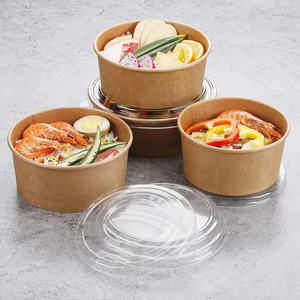
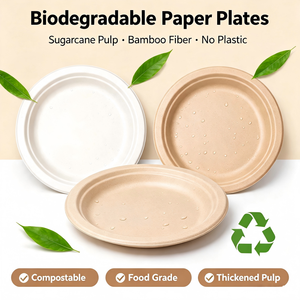
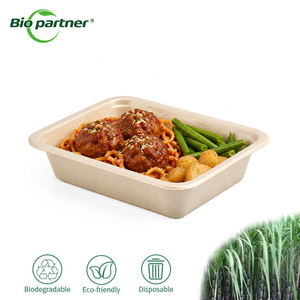
As a specialized primary manufacturer and international exporter of natural fiber and bio-pulp trays, our production infrastructure operates at the intersection of raw material science, heat-press engineering, and stringent international compliance. Our product portfolio—spanning naturally fallen Areca catechu leaf sheath plates, thermoformed sugarcane bagasse pulp trays, kraft paper carriers, and top-sealable Modified Atmosphere Packaging (MAP) meal containers—is specifically engineered to withstand the thermal, structural, and moisture-barrier requirements of Hanoi's dynamic gastronomy and food supply network.
Quantitative Data Benchmark for Areca Sheath, Sugarcane Bagasse, Kraft Paper, and MAP Bio-Trays
| Material / Product Class | Thermal Resistance Range | Oil & Moisture Vapor Barrier | Tensile & Flexural Strength | Hanoi Climate Suitability (High Humidity) | Compostability Standard |
|---|---|---|---|---|---|
| Heat-Pressed Areca Leaf Sheath | -25°C to +220°C (Oven & Microwave Safe) | High natural wax density; hydrophobic up to 4 hours hot liquid exposure | Exceptionally High (Rigid wood-like structural matrix; >25 MPa) | Excellent; natural sheath structure resists ambient moisture absorption during Nồm weather | 100% Home Compostable within 60–90 days (Zero industrial chemical processing) |
| Thermoformed Sugarcane Bagasse | -20°C to +120°C (Microwave & Freezer Safe) | PFAS-free bio-resin treated; greaseproof up to 100°C cooking oil | Medium-High (Pulp density 0.65–0.80 g/cm³, resists bending) | Good; requires sealed PE/Biopolym packaging in bulk warehouse transit | EN 13432 & OK Compost Industrial Certified (Degrades in 90 days) |
| Heavy-Duty Fluted Kraft Paperboard | -10°C to +90°C (Short-term warm thermal retention) | Aqueous coating or bio-wax lining; oil resistant ASTM D4263 standard | High flexural rigidity due to corrugated inner core structure | Moderate; requires moisture-barrier master carton wrapping | 100% Recyclable with paper stream & Biodegradable (FSC Certified) |
| MAP Top-Sealing Laminated Bagasse | -30°C to +140°C (Retort & MAP Sealing Compatible) | Hermetic barrier seal; oxygen transmission rate (OTR) < 2.5 cc/m²/day | High (Reinforced rim flanges for high-pressure film heat-sealing) | Outstanding; vacuum film barrier completely isolates meal from ambient atmospheric humidity | Compostable substrate with removable high-barrier bio-lamination film |
Customized Packaging Engineering for Regional Culinary Formats, Industrial Logistics, and Retail Networks
Hanoi’s world-renowned culinary culture relies heavily on hot broths, chili oils, and freshly fried items. Standard plastic containers melt or leach phthalates when exposed to boiling soups (90°C–100°C).
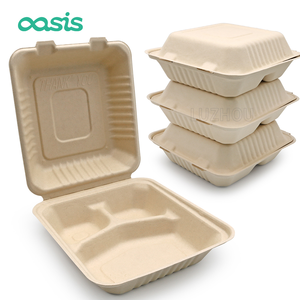
Our deep-pressed 3-compartment sugarcane bagasse trays and high-density Areca leaf bowls possess natural thermal resistance up to 120°C and 220°C respectively. They retain structural integrity without softening or transferring heat to the consumer's hands, making them the ultimate eco-vehicle for Hanoi's high-speed street food takeaway delivery platforms.
The manufacturing corridors surrounding Greater Hanoi host massive industrial workforce canteens (electronics, automotive, textiles) serving tens of thousands of portioned meals daily.
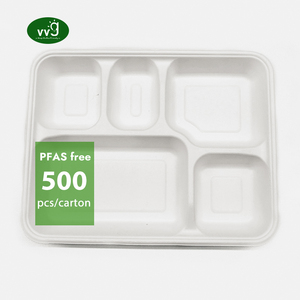
The 5-Compartment VVG Bagasse School & Factory Lunch Tray provides separate, non-communicating food partitions for rice, savory mains (Thịt kho, Cá kho), fresh greens, dipping sauces, and soup. High stackability and rapid industrial compostability allow facilities to eliminate dishwashing labor costs and lower water usage while maintaining strict ESG environmental benchmarks.
Modern retail chains across Hanoi (WinMart, Lotte Mart, FujiMart) require long shelf-life solution sets for ready-to-eat (RTE) meals, fresh marinated meats, and prepared produce.
Our Top-Sealing Laminated Bagasse MAP Trays integrate seamlessly with automated film sealers. The bio-laminated surface enables gas-flushing (N₂/CO₂ replacement), extending product shelf life by 300% while offering consumers a premium, earth-friendly tray that degrades rapidly upon disposal once the barrier film is peeled.
Why B2B Procurement Managers Are Restructuring Supply Chains Toward Primary Bio-Tray Manufacturers
Vietnam's Decree No. 08/2022/ND-CP enforces strict regulations on non-biodegradable plastic bags and single-use plastic containers. Urban centers, beginning with Hanoi, have established zero-plastic zones around heritage sites, lake districts, and government institutions. Importers securing container-load bio-trays gain a significant compliance head-start over competitors relying on non-compliant EPS foam.
Hanoi's expanding middle-class demographic demonstrates a marked willingness to patronize F&B establishments that utilize visible eco-friendly packaging. Restaurants adopting natural Areca leaf or rustic unbleached sugarcane trays report higher customer retention rates, enhanced social media engagement, and elevated perceived brand equity compared to legacy plastic packaging.
Direct Primary Manufacturing, Solar-Powered Production Infrastructure, and Strict QC Management
Operating as a brand of Conservia Partners with head offices in Manjeshwar, Kerala, and primary manufacturing hubs located in the heart of India's raw material belt in Bhadravathi, Karnataka, we operate 90 fully owned production units. Every tray shipped to Hai Phong Port is pressed, inspected, and packed in our own facility under rigorous quality oversight.
With an installed manufacturing capacity of 4.5 million units per month, our supply lines offer rock-solid reliability for large annual contract buyers. Against confirmed annual procurement schedules, our infrastructure can scale rapidly to 9 million units per month within 75 days via shift expansion, backed by over 810 partner farming families across 2,000 hectares of organic cultivation.
Navigating Vietnamese customs requires clear documentation. Our manufacturing holds global certifications: ISO 9001:2015 & ISO 14001:2015 (TÜV India), LFGB §30/§31 (German Food Safety Standards), EU Regulation 1935/2004 compliance, USDA BioPreferred verification, amfori BSCI social audit, and EN 13432 compostability clearance.
Direct Answers to Common Importing Questions regarding Shipping, Customs Clearance, Humidity Control, and MOQs
Request Factory Direct Pricing, Technical Data Sheets, and Complete Sample Dossiers for Your Hanoi Business Operations
Inquire Now