Precision heat-pressed naturally fallen Areca catechu palm sheaths. Tested to withstand -20°C to +200°C. Fully aligned with German EU-wide bio-tableware guidelines.
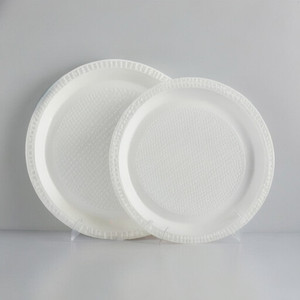
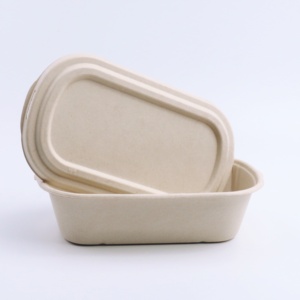
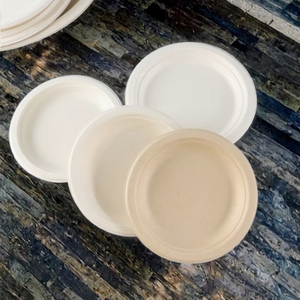
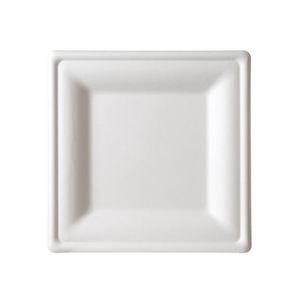
Germany represents Europe's strictest regulatory ecosystem for single-use food contact items. Following the enforcement of the EU Single-Use Plastics Directive (Directive EU 2019/904) and Germany’s corresponding national implementation through the Einwegkunststoffverbotsverordnung (EWKVerbotV), conventional plastic plates, expanded polystyrene (EPS) containers, and oxo-degradable tableware have been completely banned across the Federal Republic.
Concurrently, German commercial buyers, wholesale importers, and catering distributors face increasing scrutiny under the Verpackungsgesetz (VerpackG) and the Supply Chain Due Diligence Act (Lieferkettensorgfaltspflichtengesetz - LkSG). Importers must verify that alternative bio-based dinnerware is not merely eco-marketed, but technically sound, micro-biologically safe, free from fluorinated forever-chemicals (PFAS/PFOS), and fully compliant with German food safety codes under LFGB §30 and §31 (Lebensmittel-, Bedarfsgegenstände- und Futtermittelgesetzbuch).
Information Gain Insight for German Procurement Officers: Unlike molded bagasse or pulp plates which frequently rely on fluorochemical sizing agents for oil resistance, or paper plates requiring polyethylene (PE) or PLA laminates, high-grade Areca palm leaf tableware is pressed entirely from the unrefined, naturally shed leaf sheath of the Areca catechu palm. The natural lignin and structural cellulose density of the raw sheath eliminate the need for chemical additions, making it the cleanest bio-material option for the German market.
| Technical Parameter | UV-C Sterilized Areca Palm Leaf | Sugarcane Bagasse / Pulp | Coated Paperboard | PLA / C-PLA Bio-Plastics |
|---|---|---|---|---|
| Raw Material Source | 100% Naturally Fallen Areca Sheaths | Upcycled Agricultural Bagasse Fibre | Wood Pulp + Polymer Barrier | Fermented Plant Starch Polymer |
| Chemical Binders / PFOS | 0% (Zero Additives/PFAS Free) | May Contain Moisture Seals | Contains Poly Coatings | Synthetic Polymers Present |
| LFGB §30/§31 Compliance | Passed (Sensory & Heavy Metals) | Requires Specific Coating Check | Migration Risk at High Temp | Heat Distortion Limits |
| UV-C Sterilization Process | Dual-Band 254nm Integrated Conveyor | Standard Heat Drying Only | Heat Drying Only | Not Heat Compatible |
| Thermal Resistance Range | -20°C to +200°C (Oven & Microwave Safe) | -10°C to +100°C | 0°C to +80°C | Max 40°C to 70°C (Distorts) |
| DIN EN 13432 Compostability | 100% Home & Industrial (<90 Days) | Industrial Compostable | Limited by Plastic Layer | Industrial Plants Only (>60°C) |
Operating as Ecodyne Tableware (a specialized manufacturing division of Conservia Partners), our industrial presence in the heart of Karnataka’s Areca belt (Bhadravathi, Shivamogga district) represents India’s most technologically advanced palm leaf export operation. Unlike trading companies that aggregate unsterilized stock from uncontrolled cottage units, we manage an end-to-end integrated manufacturing ecosystem.
Across 90 standardized production units, our installed footprint delivers 4.5 million finished pieces per month. Scalable to 9.0 million units within 75 days under dedicated annual supply framework contracts for major European retail networks.
Every piece passes through automated UV-C sterilization tunnels (254nm wavelength) post-heat-pressing. This guarantees total elimination of mold spores, yeast, and bacterial load, achieving a zero-microbial standard mandatory for German customs clearance.
Our main production hub in Karnataka runs on rooftop solar photovoltaic arrays. By utilizing clean solar power for mold heating and wash-water recirculation, our manufacturing carbon footprint is reduced by 84% compared to grid-dependent factories.
To eliminate moisture-bound microbial growth—a common point of failure for low-grade palm leaf imports—Ecodyne operates a closed-loop 8-stage manufacturing process under ISO 9001:2015 and ISO 14001:2015 quality control systems:
Collection of naturally shed sheaths from ~810 certified farming families over 2,000 hectares of organic cultivation.
Visual and dimensional sorting to select thick, dense sheaths while discarding damaged or thin structural leaves.
High-pressure jet washing using purified recycled water to clean soil, organic debris, and micro-particles.
Controlled hydration baths to restore sheath elasticity prior to thermal molding without altering natural fibers.
Precision hydraulic pressing in CNC-machined metal dies at 200°C for 45–60 seconds, setting structural shape and curing natural resins.
24-hour climate-controlled drying at 60°C to lock final equilibrium moisture content below 8-10% to prevent transit mold.
Passing plates through dual-surface 254nm ultraviolet sterilization tunnels to eliminate 99.99% of surface micro-organisms.
100% manual inspection for edge smoothness, barcode shrink-wrapping, moisture-absorbent desiccant insertion, and master carton sealing.
German commercial buyers choose UV-sterilized palm leaf tableware for its premium aesthetic and environmental profile. Key deployment sectors across the 16 German federal states include:
From the Nuremberg Christkindlesmarkt to the Hamburg Harbor Festival, outdoor food vendors require sturdy, leak-proof plates capable of holding heavy, hot German cuisine like Currywurst, Sauerbraten, and hot sauces without bending or softening.
Leading organic food chains (including Denns BioMarkt, Alnatura, Edeka Bio, and Rewe Bio) demand retail-ready shrink-wrapped 6-pack and 10-pack consumer sets with German EAN-13 barcodes, LUCID-registered packaging, and bilingual (DE/EN) recycling instructions.
Major corporate hubs in Frankfurt, Munich, Stuttgart, and Berlin leverage palm tableware for corporate AGMs, trade fair catering (Messe Frankfurt, Messe München), and green business banquets to meet strict corporate carbon reduction targets.
Address key compliance, logistics, and quality assurance questions before placing container-level purchase orders.